We've counted up the remaining days. Granted, we lost a bit of precious time with the escorts early on, and then went and treated ourselves to that extra detour into the desert. But if we are being perfectly honest, we lacked something far more important in those opening days - sheer determination.
When tackling the Dakar or even the smaller rallies across Morocco and Tunisia, we used to squeeze every last drop out of each day. Up before first light, straight onto the trail, putting in some proper miles along the way. And now? We might start the day reasonably early, but then it's a leisurely coffee, extended pit-stops, and a general air of relaxation. It all stems from the fact that, until now, none of us truly believed we would manage to break through to the south and successfully press on without an escort. Yet, here we are in BOD, stocked up on fuel and everything we could possibly need, and suddenly I feel a massive surge of determination to make the absolute most of our remaining days. The plan is to complete the loop to Djanet first, and then venture further into the Hoggar Mountains. So, an early start it is. From now on, we shall seize every single hour left to us down here. We are back in the game, gentlemen!
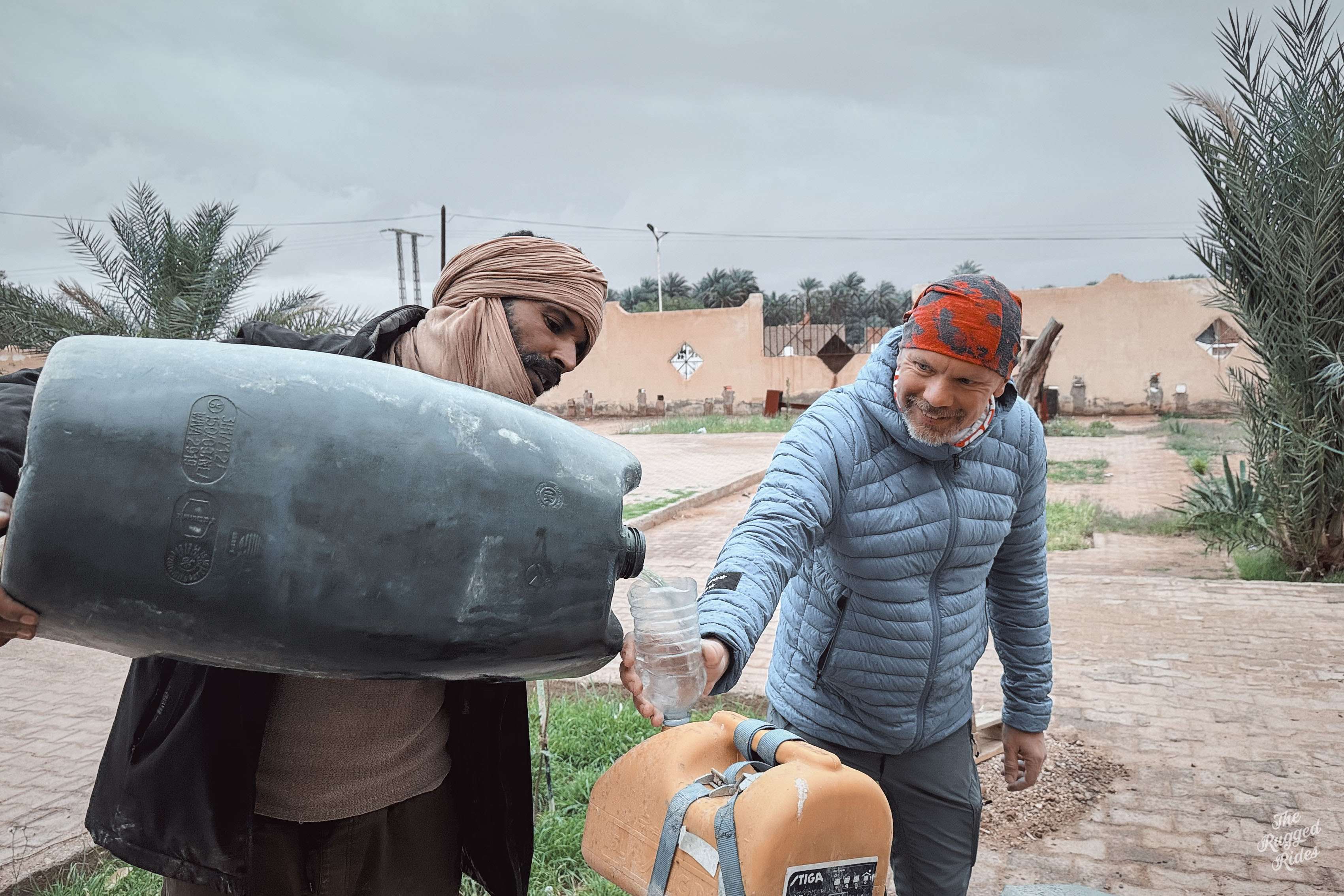
A quick spot of shopping in town first. As we are packing the water and provisions on the pavement outside the shop, the Gendarmerie pulls up. The chaps ask if everything is splendid with us. Of course, bien, off we go!
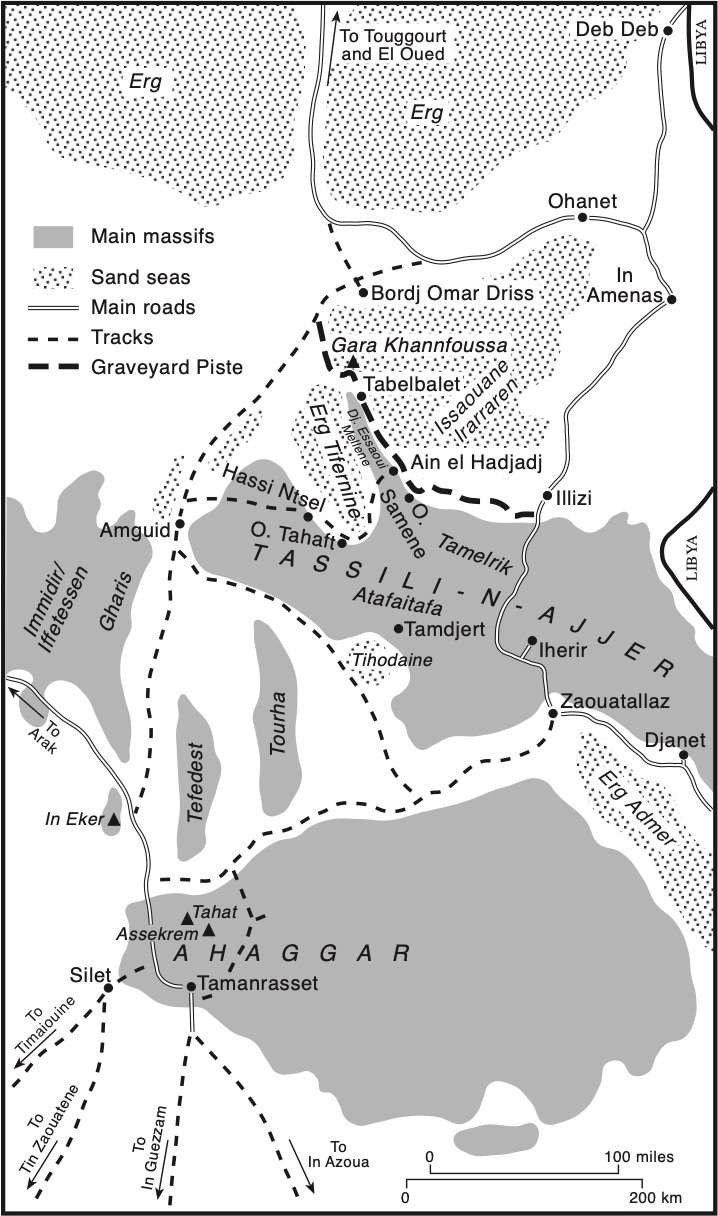
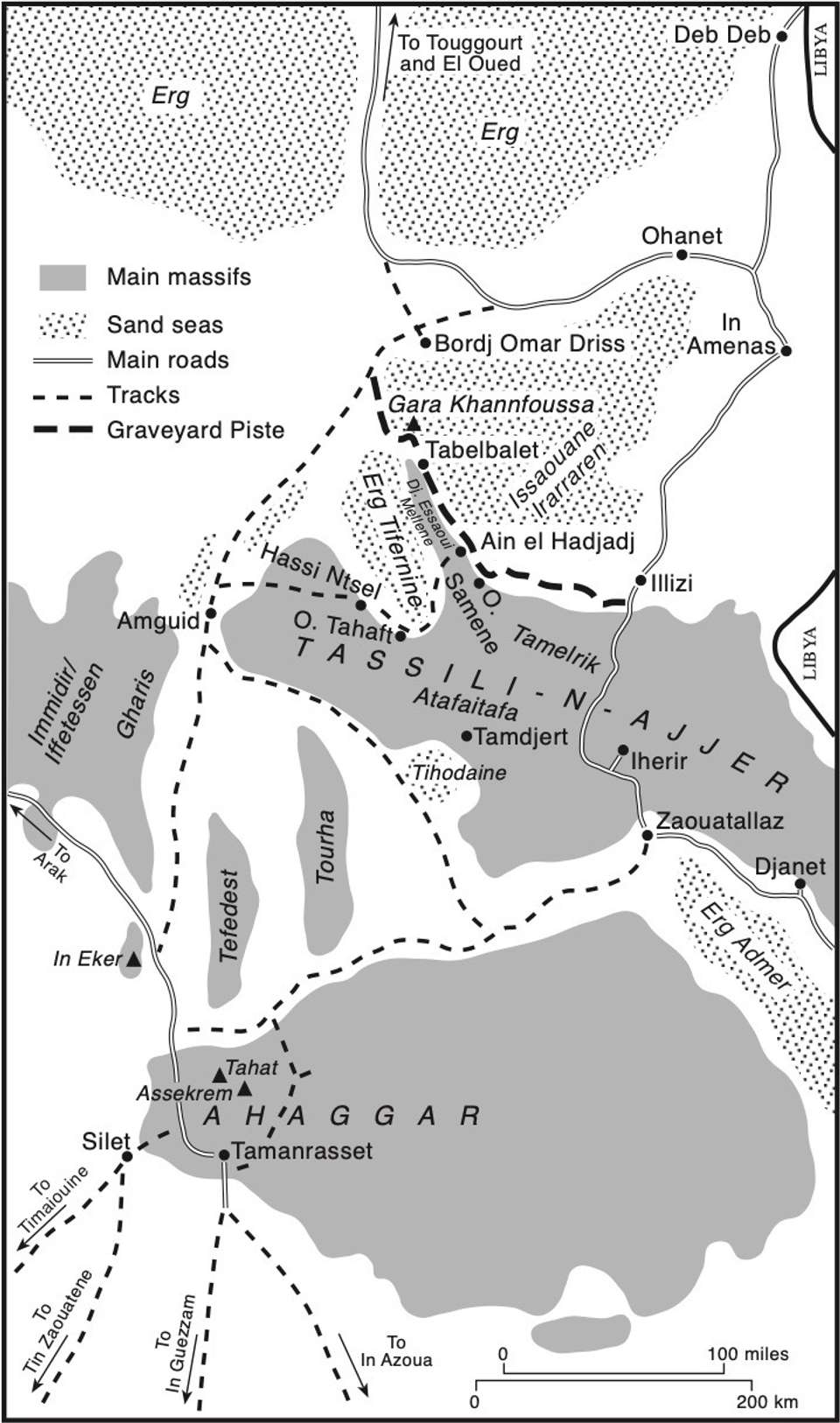
Ahead of us lies the legendary and unforgiving Graveyard Piste. A magnificent route, dotted with ancient pre-Islamic tombs, but also the rusted wrecks of abandoned vehicles. It is well over 450 km to Illizi. First along Erg Tifernine, and then onto the proper piste through the sweeping valley nestled between Erg Issaouane and the Tassili N'Ajjer plateau. I must say, I hold a healthy amount of respect for it. It might not be as long as the section we've just completed, but it is full of unknowns. I'm expecting far much more sand riding, so much so that I rather fear it might turn into a proper slog through dune fields at some point. Such a scenario would undoubtedly be fascinating, but frankly, we haven't the time. Be that as it may, I am convinced the track will be demanding and we have plenty of hard work ahead. The rough plan is to camp somewhere around two-thirds of the way to Illizi.
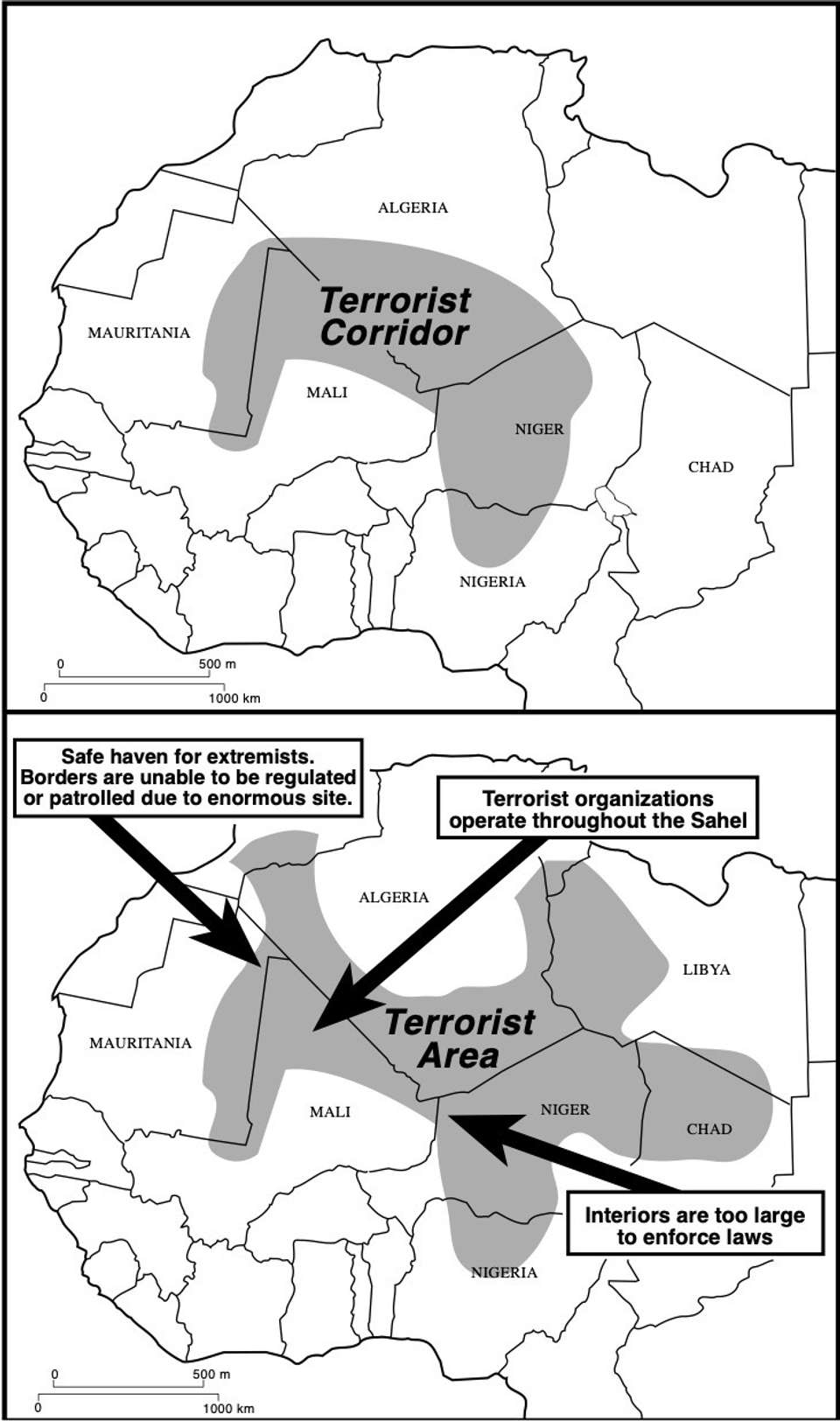
But there is something else on my mind. A matter I've researched quite thoroughly, which seems to get calmer by now, yet it still sits at the back of my mind - kidnappings.
The history of kidnappings in the Sahara, particularly in Algeria, is a tale of how this absolutely breathtaking region transformed into one of the more perilous zones in Africa. The pivotal turning point that changed the face of desert overlanding forever was the 2003 hostage crisis - a mere year after the end of the bloody civil war.
In March of that year, 32 European tourists were abducted in the region between Bordj Omar Driss and Illizi. The targets were overlanders in their own cars and on motorbikes. They were split into two groups and kept hidden away somewhere in the canyons running along the Graveyard Piste. For a long time, there was no contact whatsoever, no one knew where they were being held. In May, Algerian special forces launched a daring raid on one of the hideouts, freeing 17 hostages and terminating all terrorists. The remaining captors fled across the border into northern Mali with 15 hostages. There, under utterly brutal desert conditions, one of the German hostages tragically died of heatstroke. Finally, in August, the rest of the hostages regained their freedom. According to widespread reports, a colossal ransom was paid for them, estimated at around 4.6 to 5 million euros, funded unofficially by European governments.
Sadly, it did not end there. Escalating extremism triggered a wave of fresh kidnappings, which gradually brought Saharan tourism to brake. In many cases, those captured were plundered and sold for ransom to Islamic militias, including Al Qaeda in the Islamic Maghreb (AQIM) and groups aligned with ISIS, such as the Islamic State in the Greater Sahara (ISGS).
The darkest chapter came with the In Amenas massacre. This stands as the bloodiest terrorist attack on energy infrastructure in Algeria. In January 2013, roughly 40 heavily armed terrorists linked to AQIM stormed a gas processing facility near the town of In Amenas. The assailants arrived from parts of Libya and Mali. The hostages came from a multitude of nations, including the UK, Japan, Norway, France, the US, and the Philippines. In total, some 800 workers of various nationalities were inside the complex. The Algerian special forces opted for an immediate assault rather than engaging in prolonged negotiations. The toll was tragic, 39 hostages, an Algerian security guard, and 29 terrorists lost their lives.
The In Amenas attack proved that even heavily fortified facilities could become targets for well-prepared terrorist groups, so what hope is there for lone travellers in the middle of the desert? Kidnappings continued to grow, but thanks to the Algerian state's uncompromising response, the problem gradually shifted further south into countries like Mali and Niger.
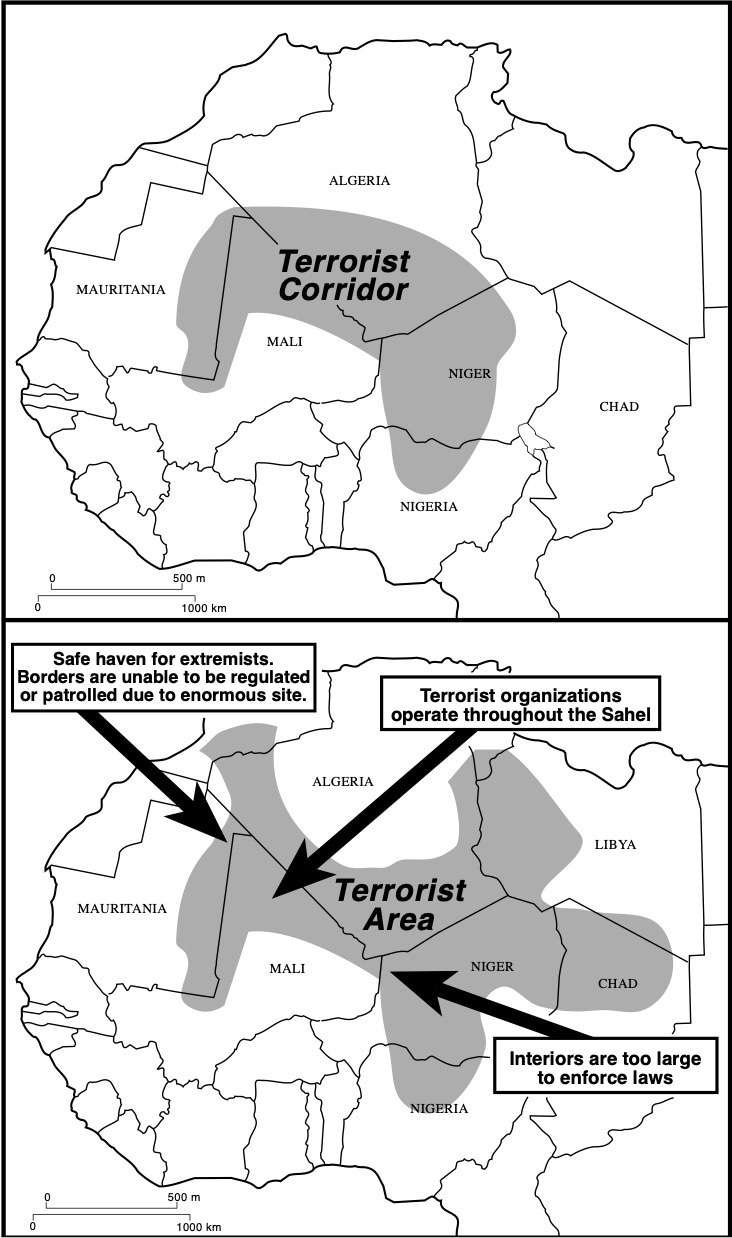
Nowadays, the kidnapping of foreign nationals in Algeria are rare, though the threat hasn't vanished entirely. For many years, the country was closed to independent travellers entering in their own vehicles. Tourists arrived by plane, remaining under the supervision of official guides and escorted by Gendarmerie convoys. Many of legendary pistes and entire regions became strictly off-limits.
Today, the Algerian military appears to have the majority of the southern Sahara well under control, and a berm has been constructed along the border with Mali, much like the one built years ago in Morocco to thwart the highly effective raids of the Sahrawi from the Polisario Front.
As for us, save for a few exceptions, we travel well away from the usual routes, following our own line across the desert. We appear, then vanish again. It's unlikely anyone will even notice us, let alone predict where we'll emerge next. We certainly aren't advertising our presence. All things considered, I don't believe we are in any real danger.
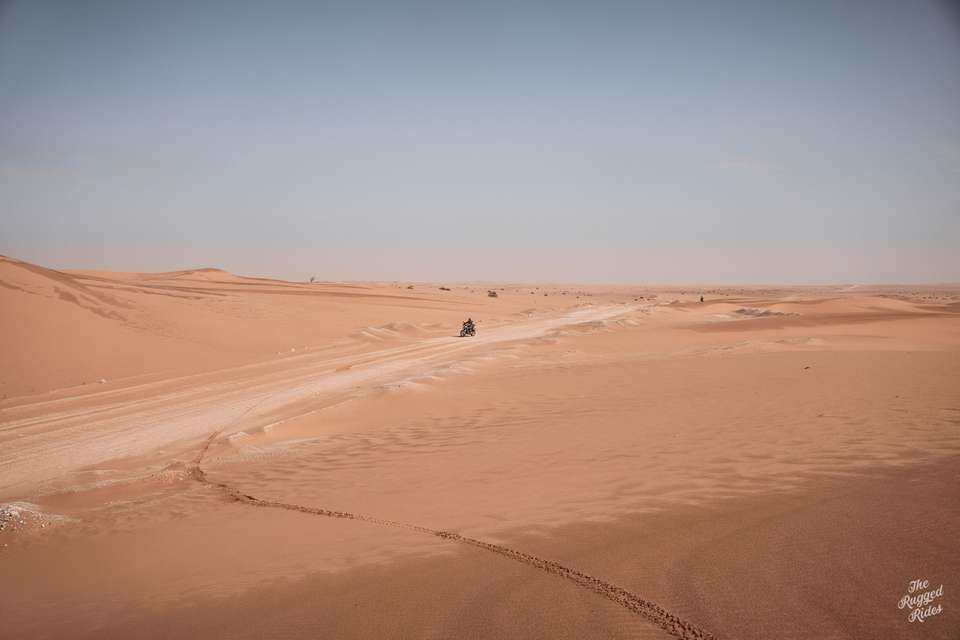
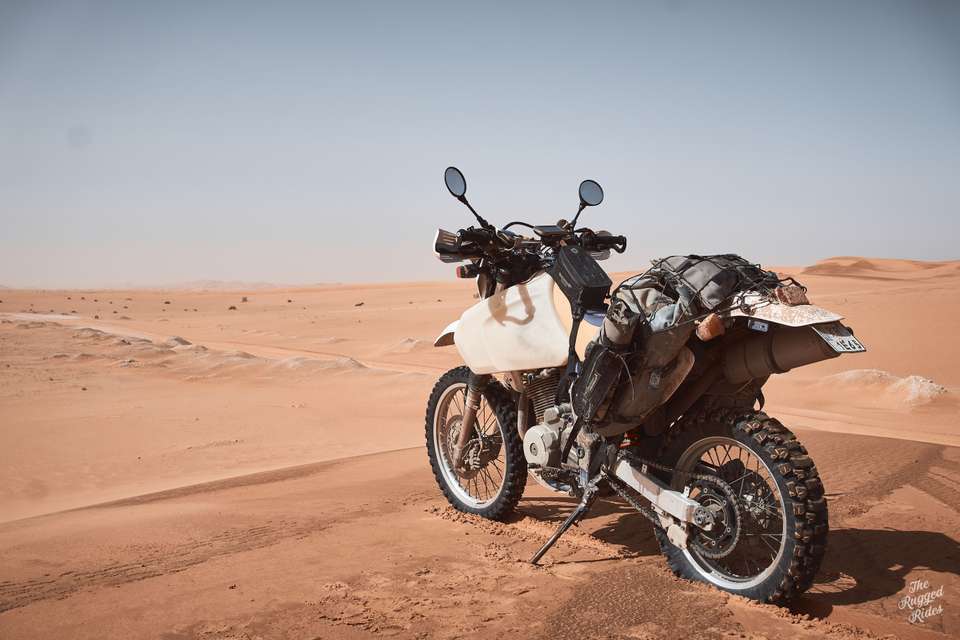
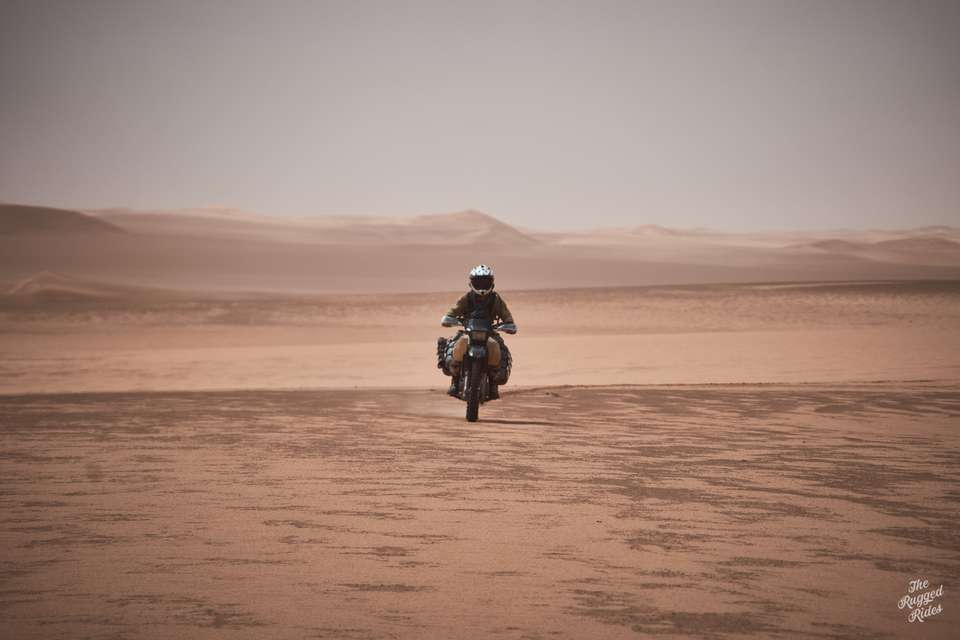
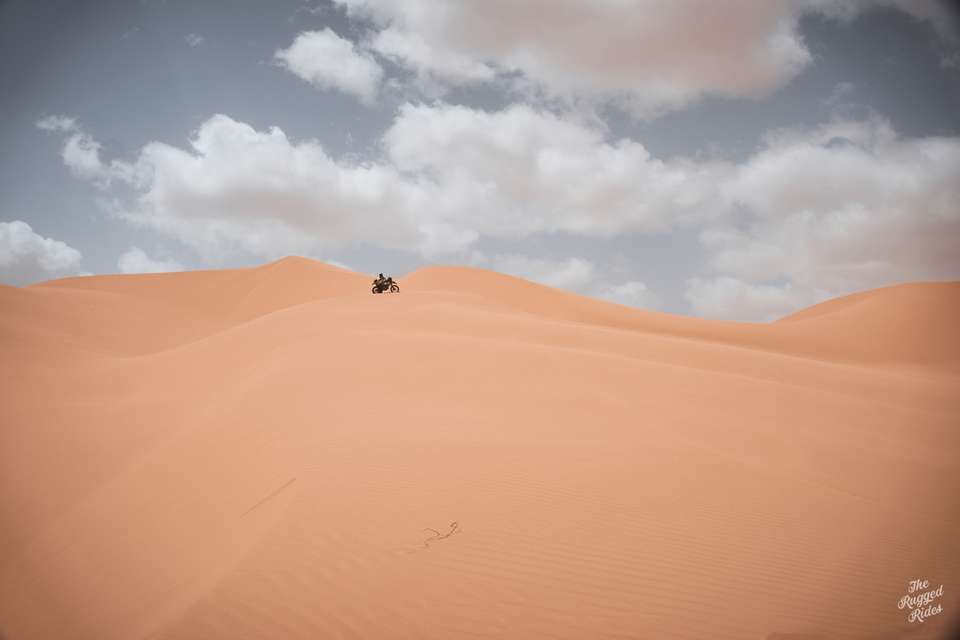
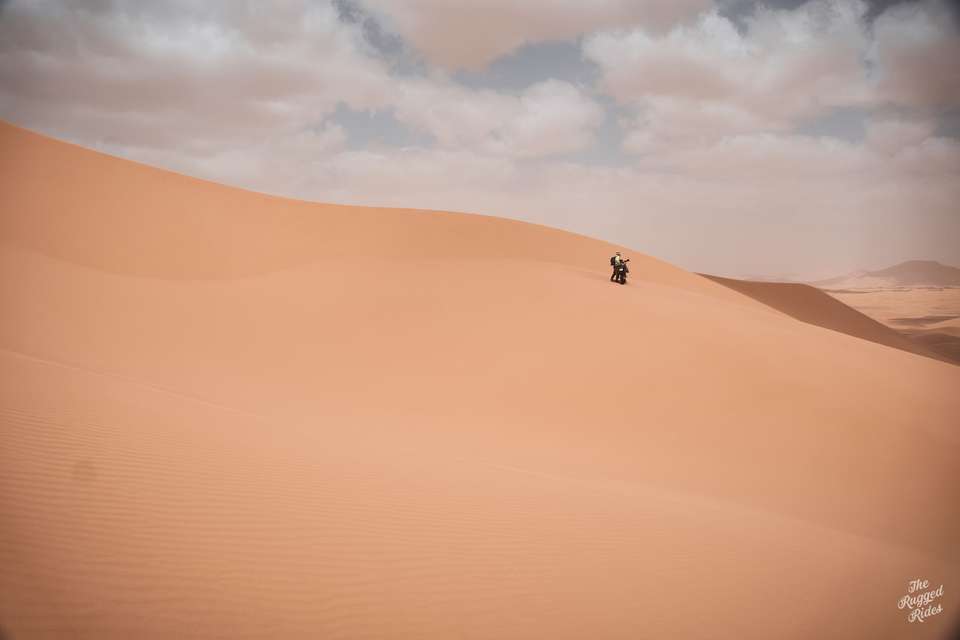
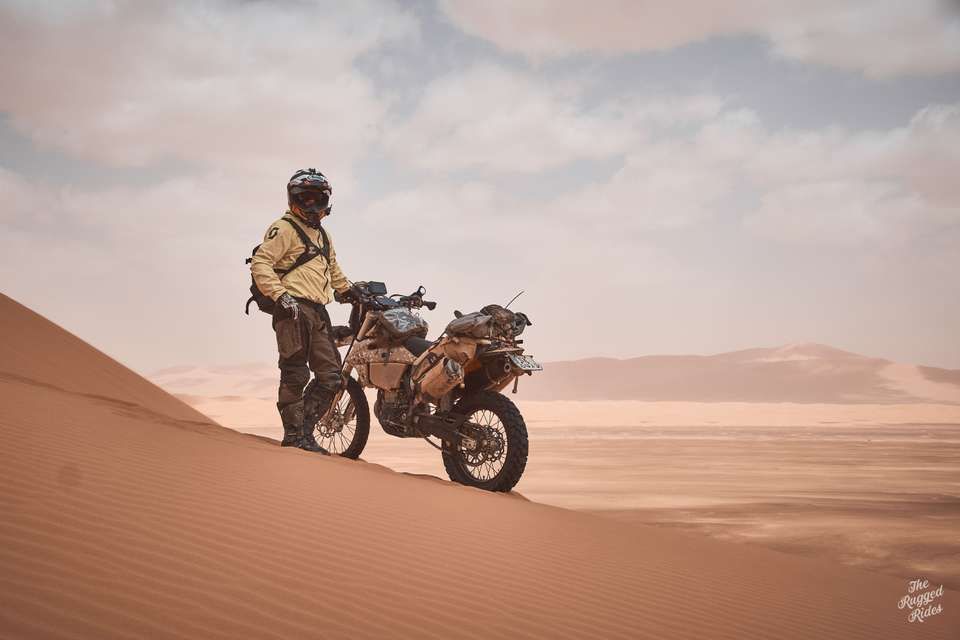
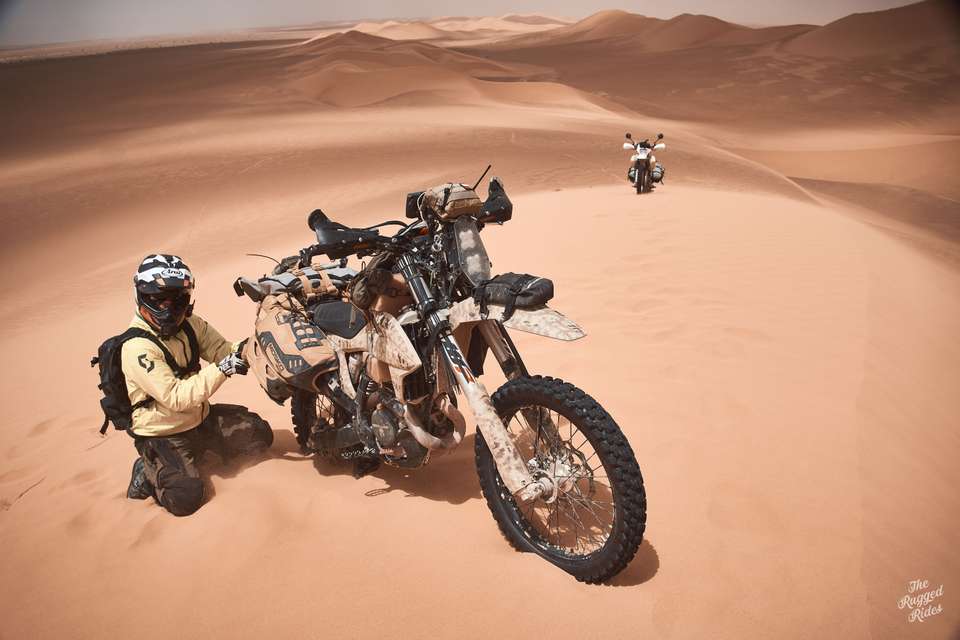
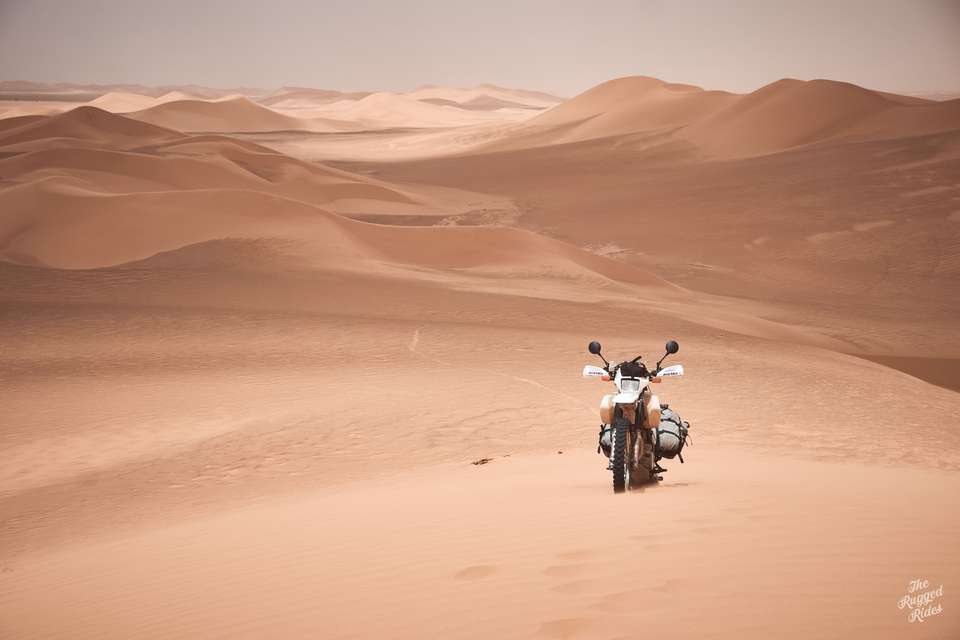
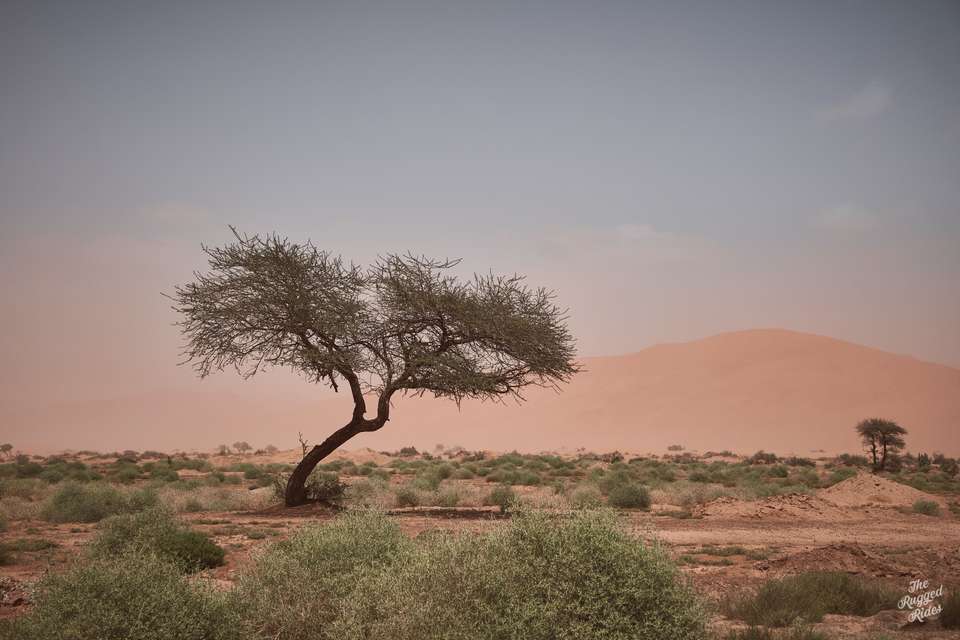
I am standing on a small ridge to have a proper look around. The dunes are still damp, there is a fair bit of moisture hanging in the air, but the sun is already out in full force. The contrasts settle softly between them, painting a rather fairytale-like scene. The orange hue is so remarkably vibrant, I've never seen anything quite like it in the desert before.
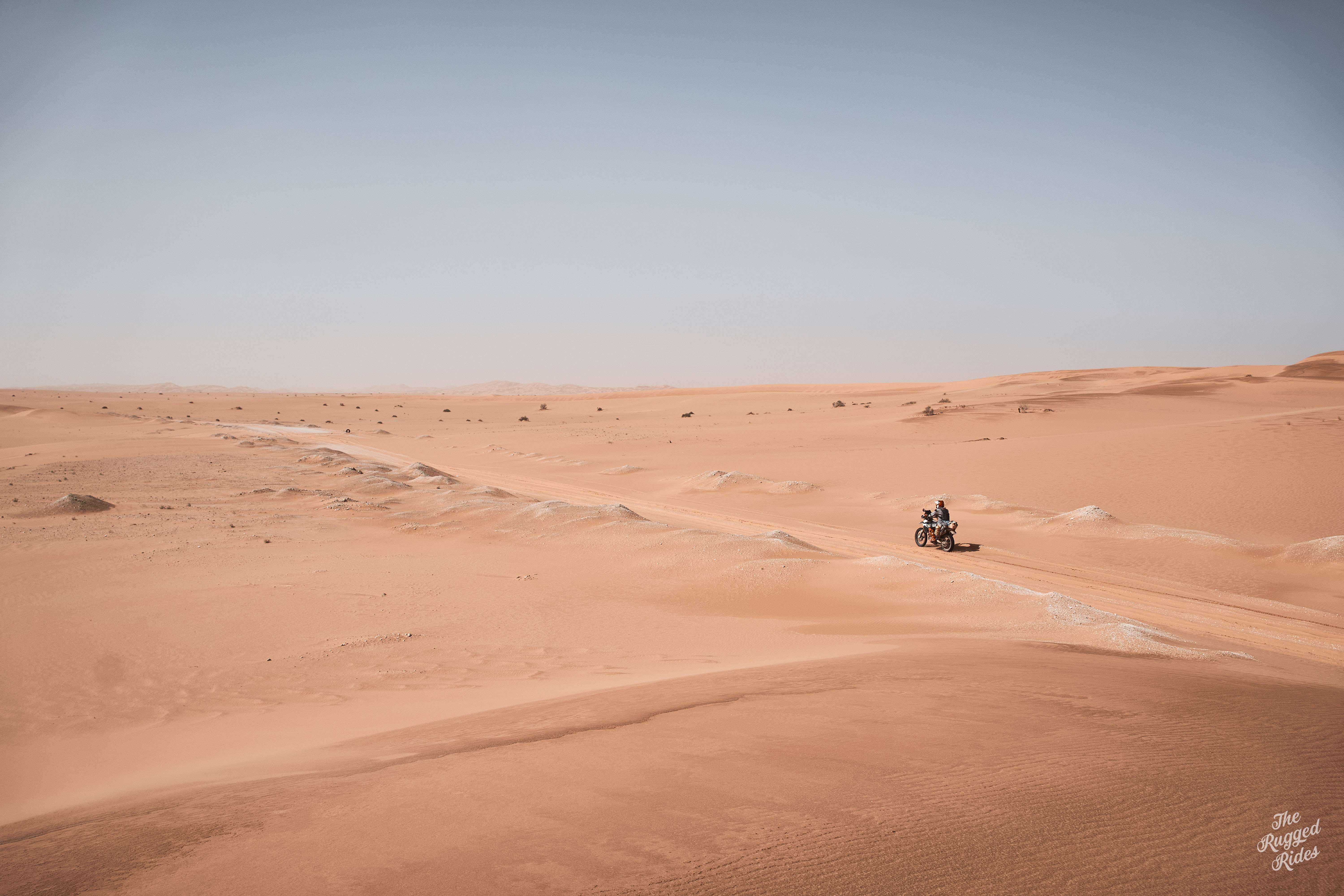
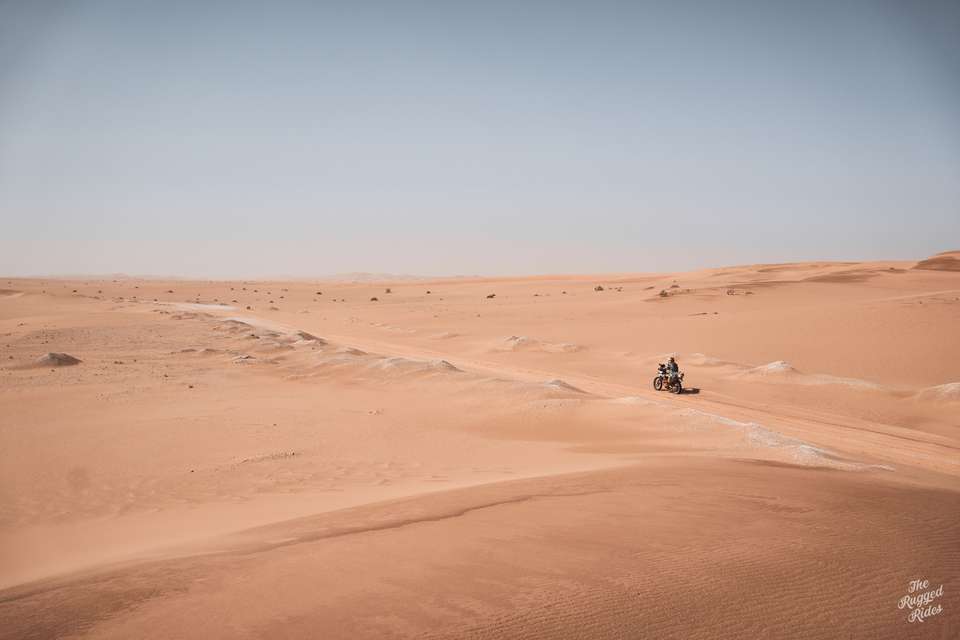
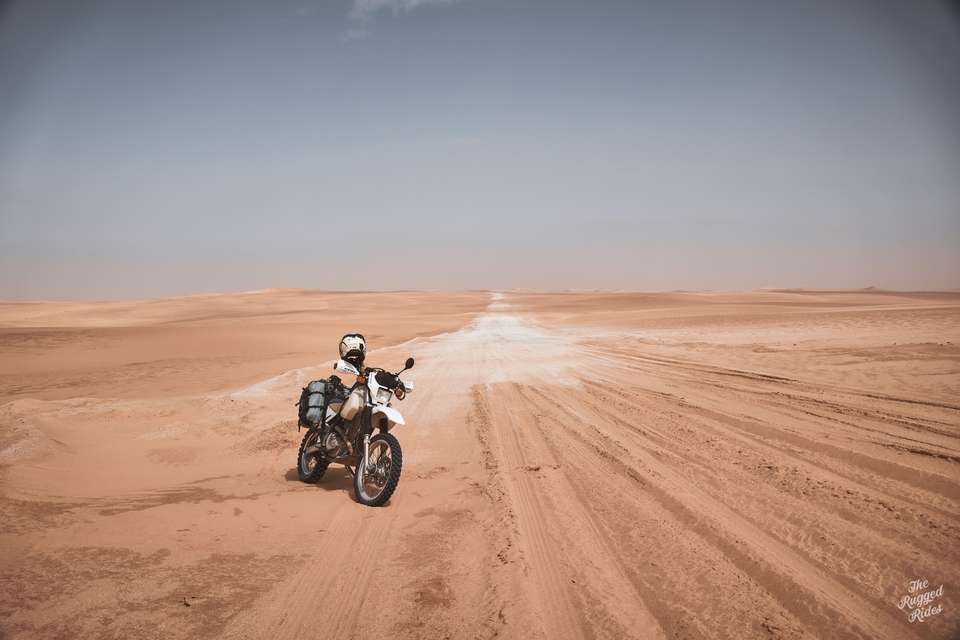
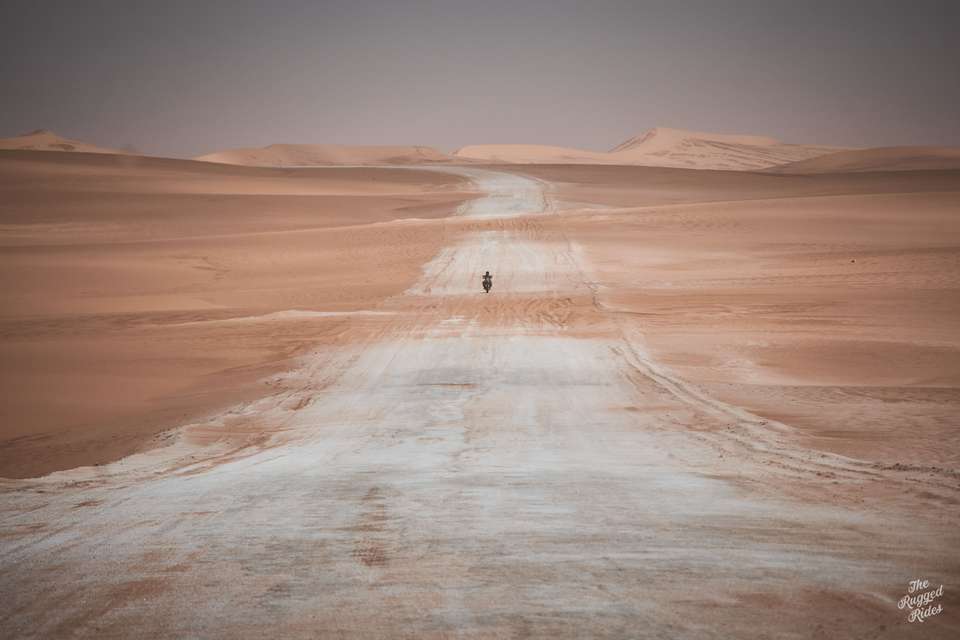
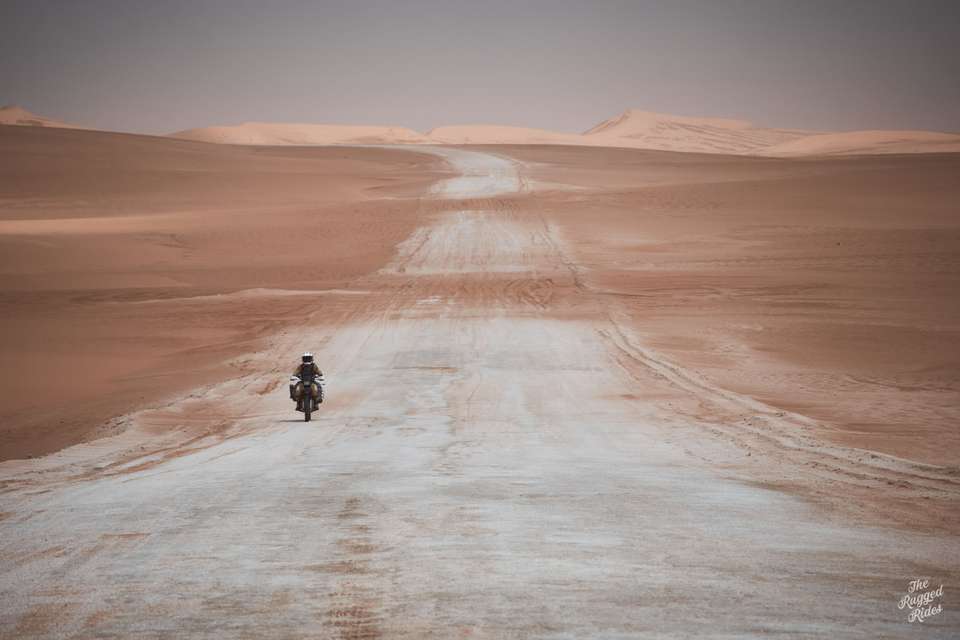
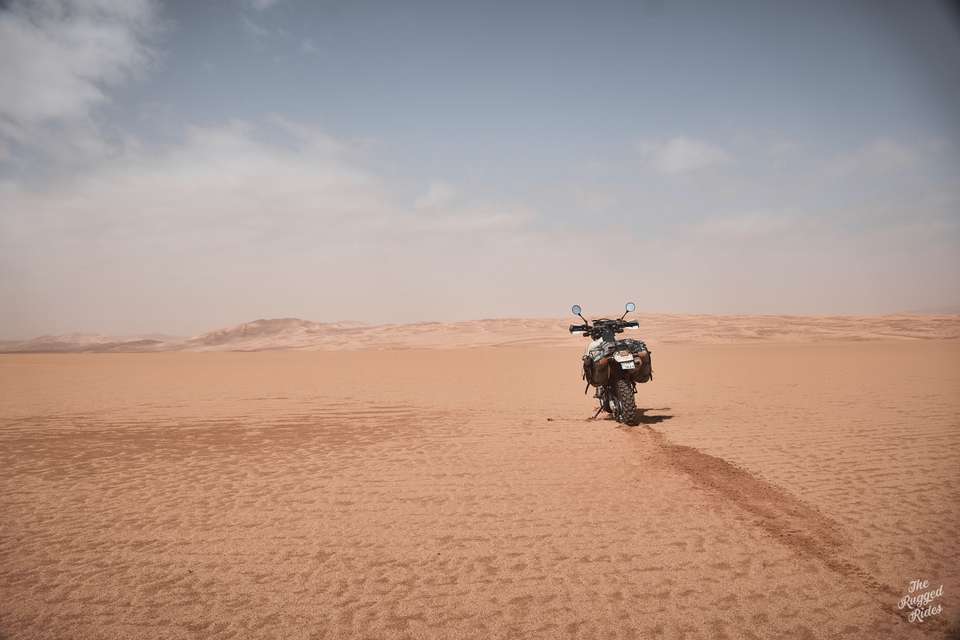
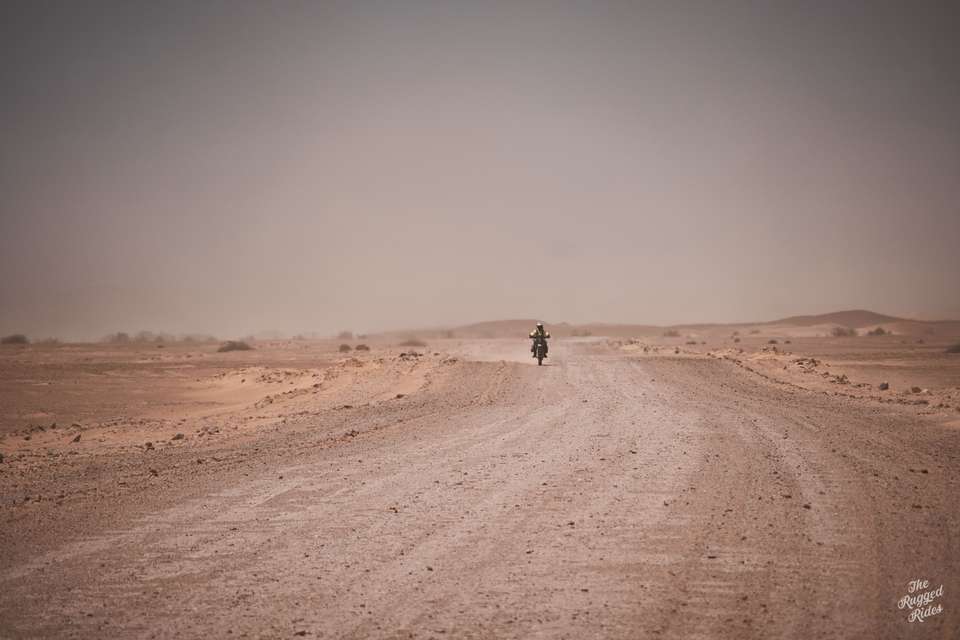
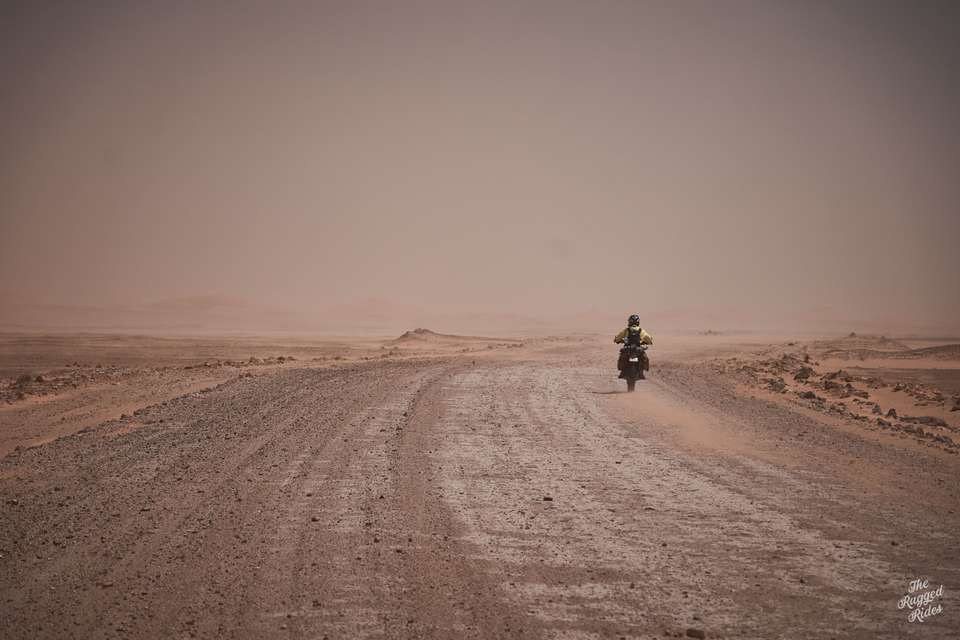
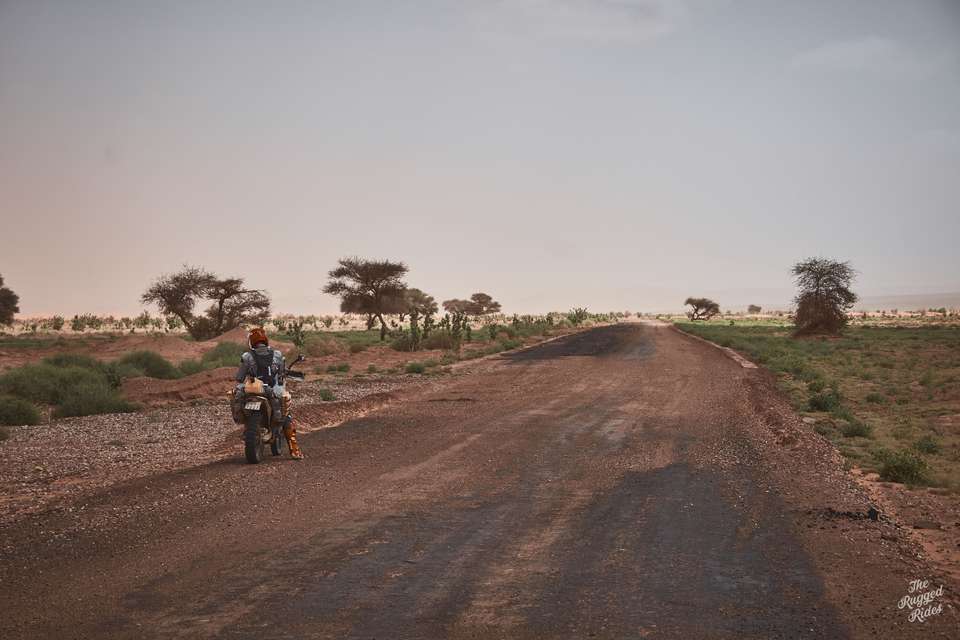
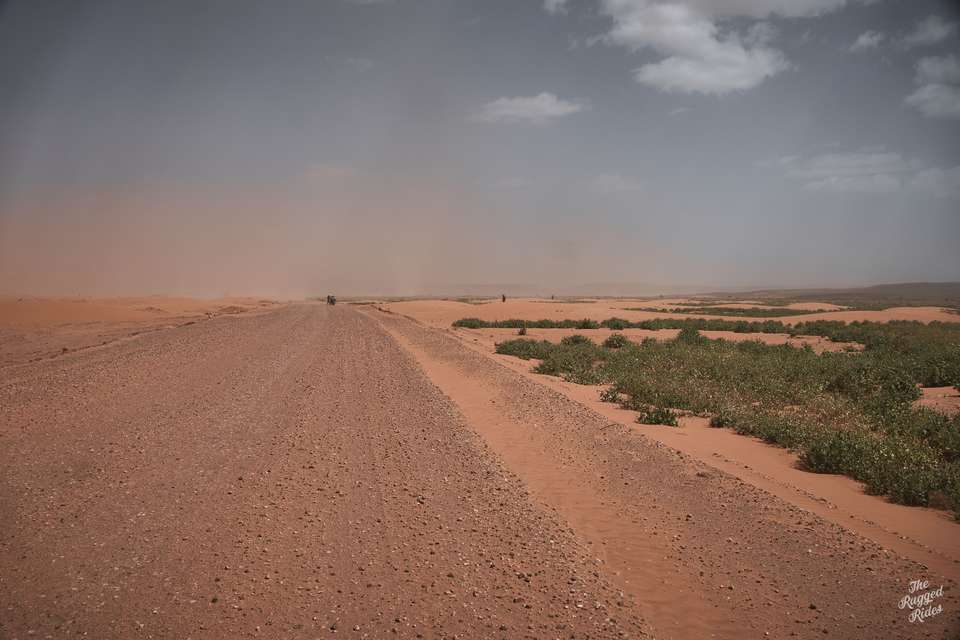
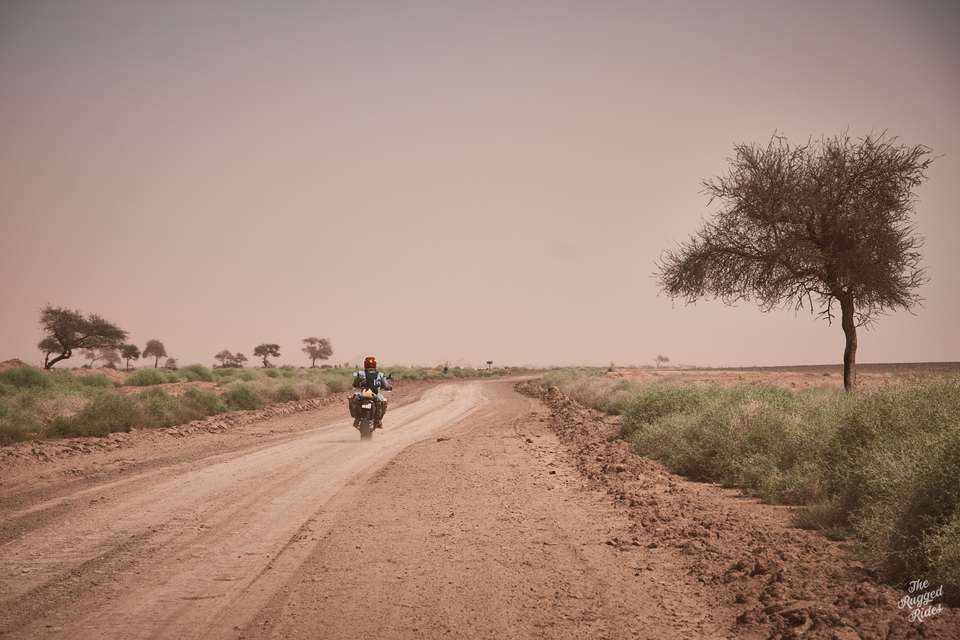
An absolutely stunning ribbon of pale gravel stretches straight south, vanishing over the horizon. This is almost certainly a new road, I fancy the classic piste wasn't nearly this wide or smooth. Perhaps that's no bad thing, as we shall make much better time on it. The old piste will have to wait for another occasion, when I'll likely pair it with a route around Erg Tifernine, and that's over 800 km of total autonomy, which sounds like a marvellous adventure.
The last travellers to drive the Graveyard Piste probably did so many years ago. So will we be the first? I doubt there are any checkpoints left that could turn us back or take over our journey. It seems we've pulled it off once again. My thoughts are interrupted by Kondzio blasting across the dunes beside me before disappearing into the distance. Right then, time to roll!
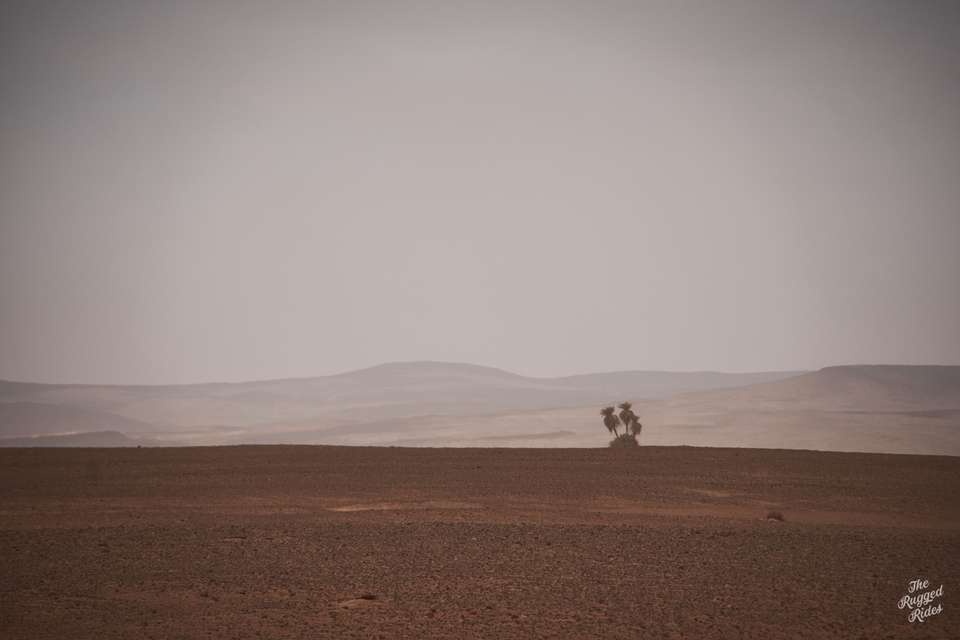
Initially, I keep a sharp lookout for any signs of vehicles or human presence. Nothing. Apart from two cars back on the outskirts of town, there isn't a soul or a thing out here. The route we are on is evidently a new variant, and I'm rather glad it has remained gravel, tarmac here would have utterly ruined the majesty of the place. Somewhere to my right, I can make a group of palm trees. That must be a spot on the old piste, a well or an oued sitting behind Gara Khanfoussa. We keep a brisk pace and the kilometres melt away. The views on either side are nothing short of spectacular.
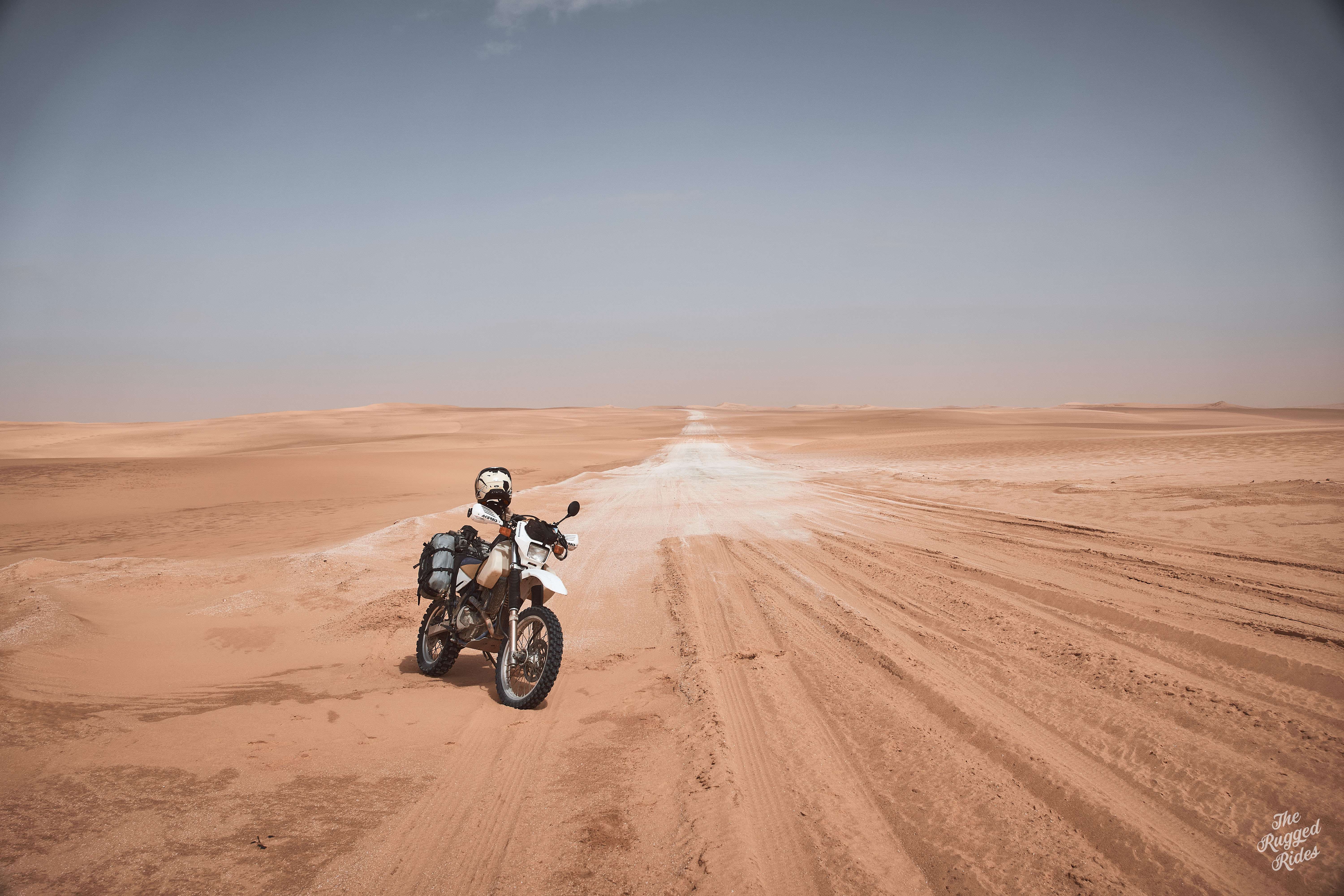
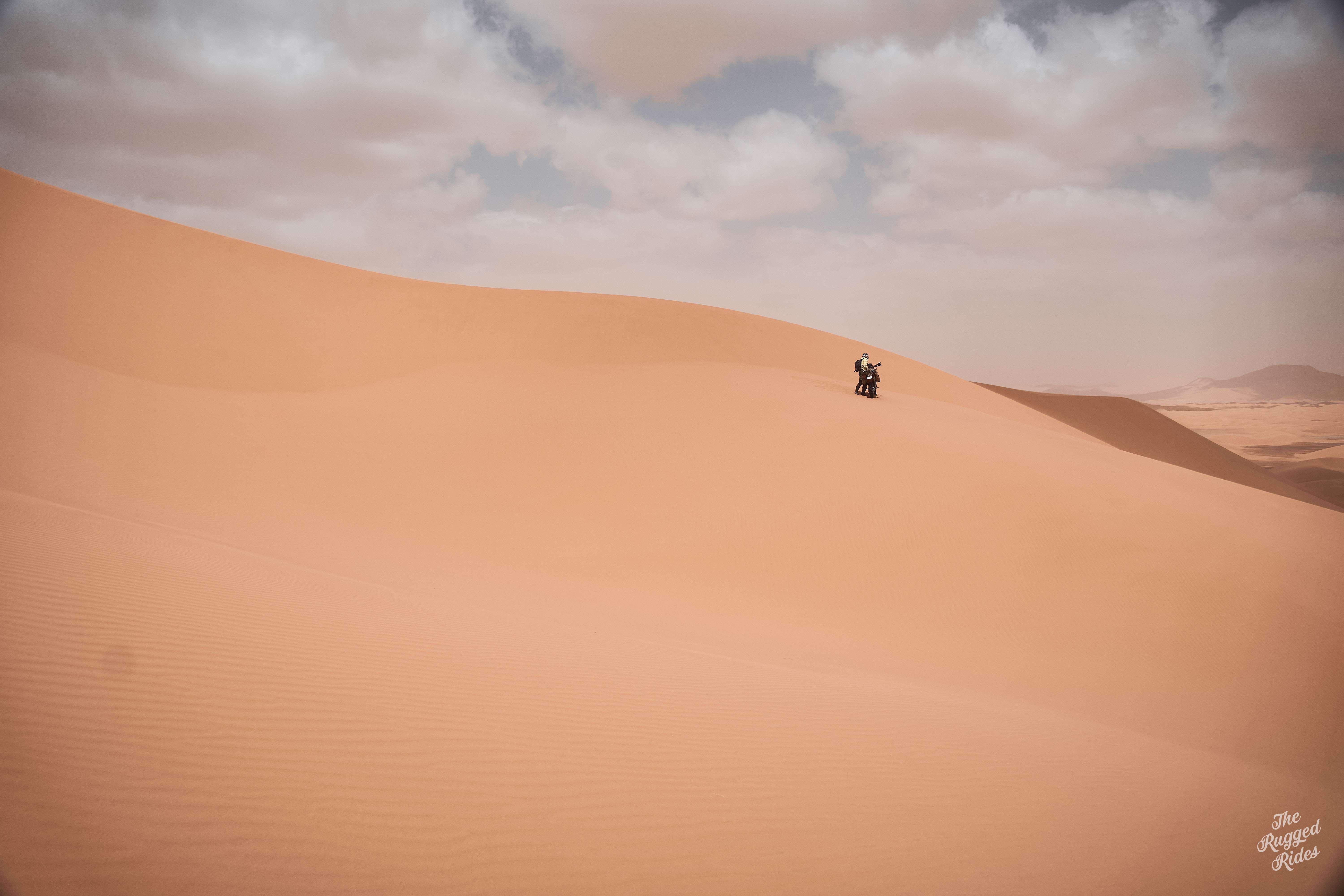
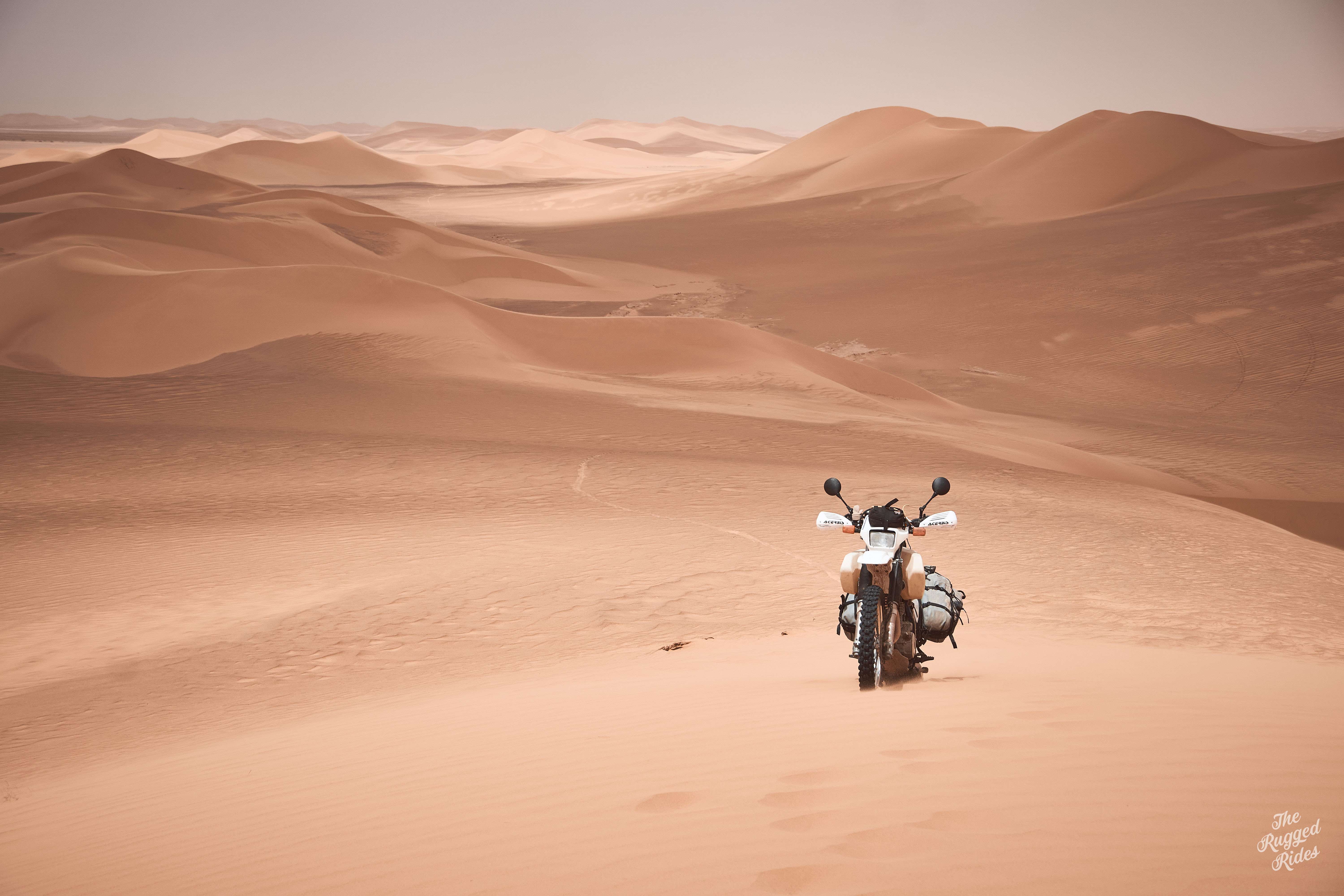
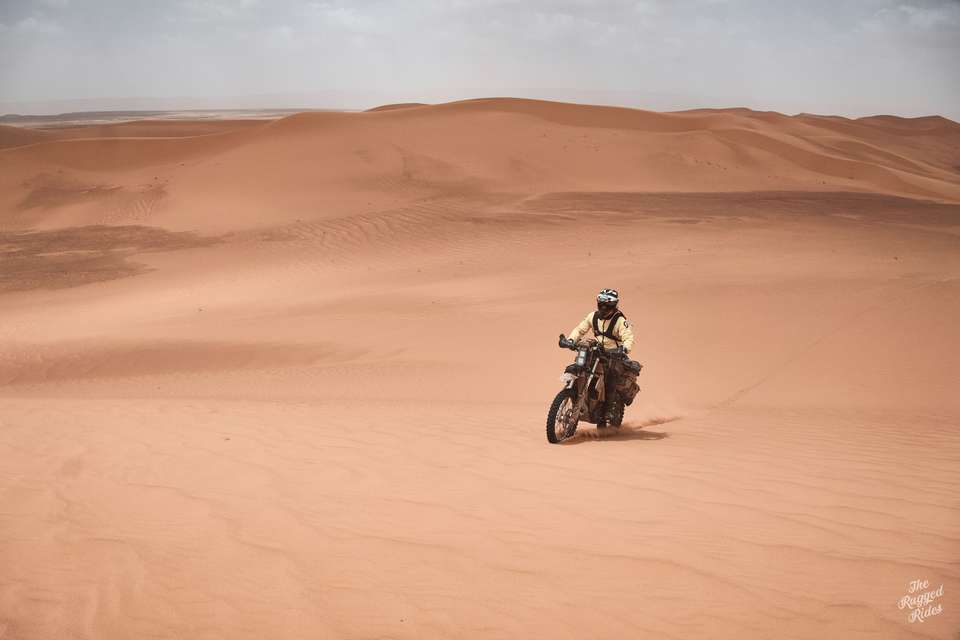
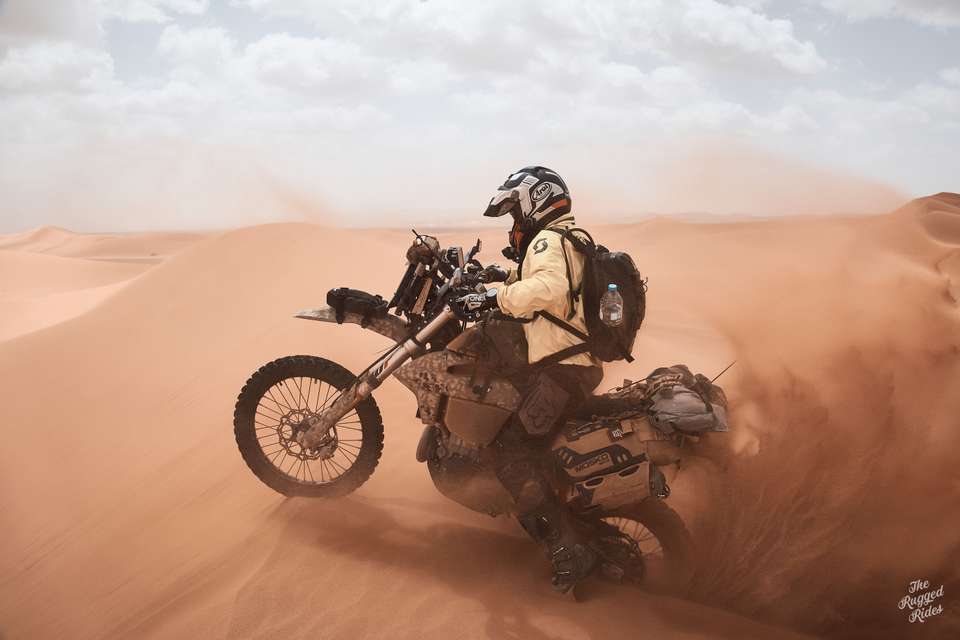
More and more frequently, I take little detours onto the fantastic dunes of Erg Issaouane. After about 120 kilometres, Kondzio and I head a few kilometres into them just to see what they're like. My word, what an adventure it would be to organize an expedition straight through dunes like these one day!
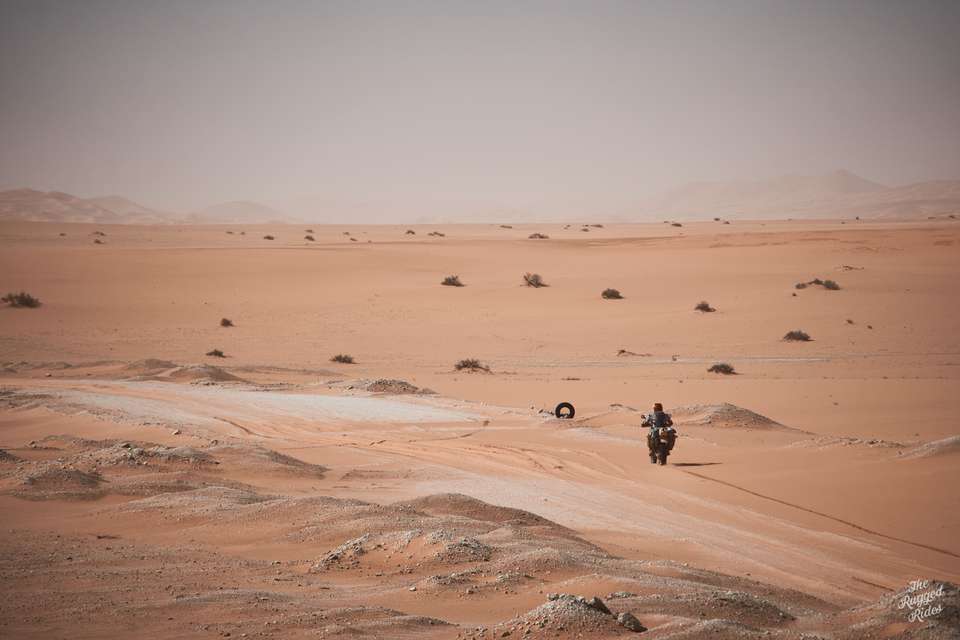
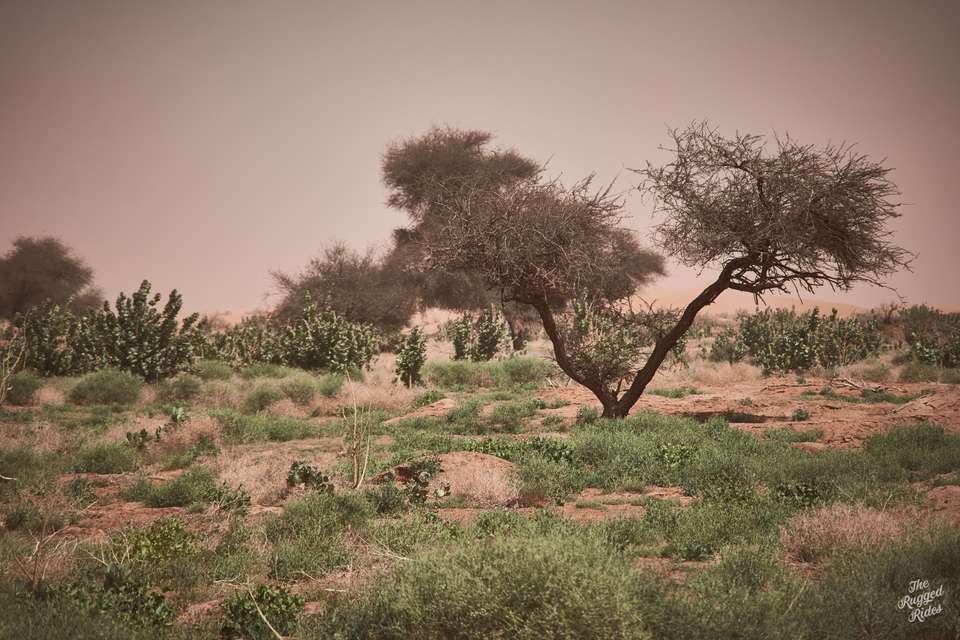
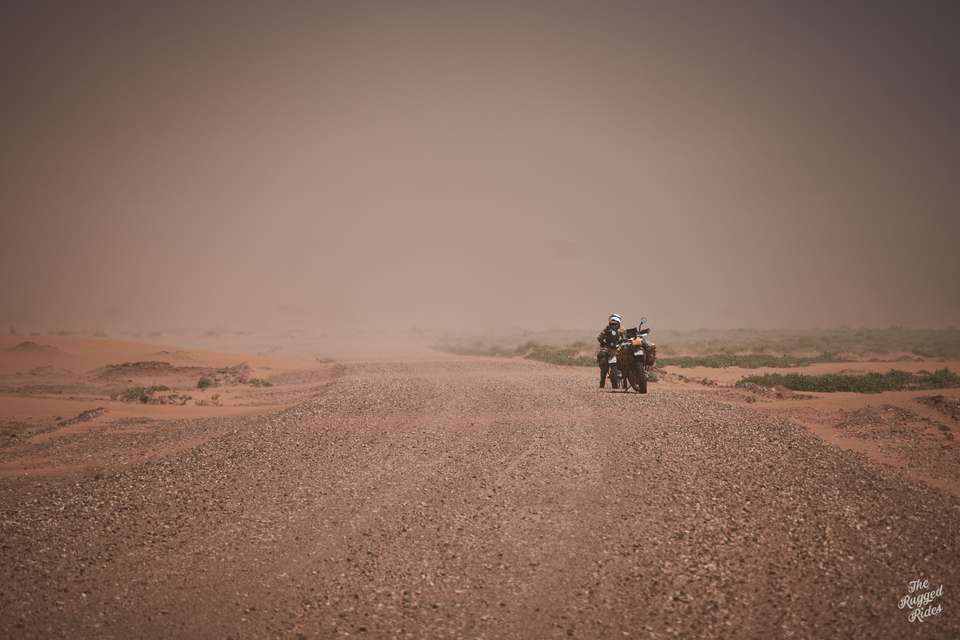
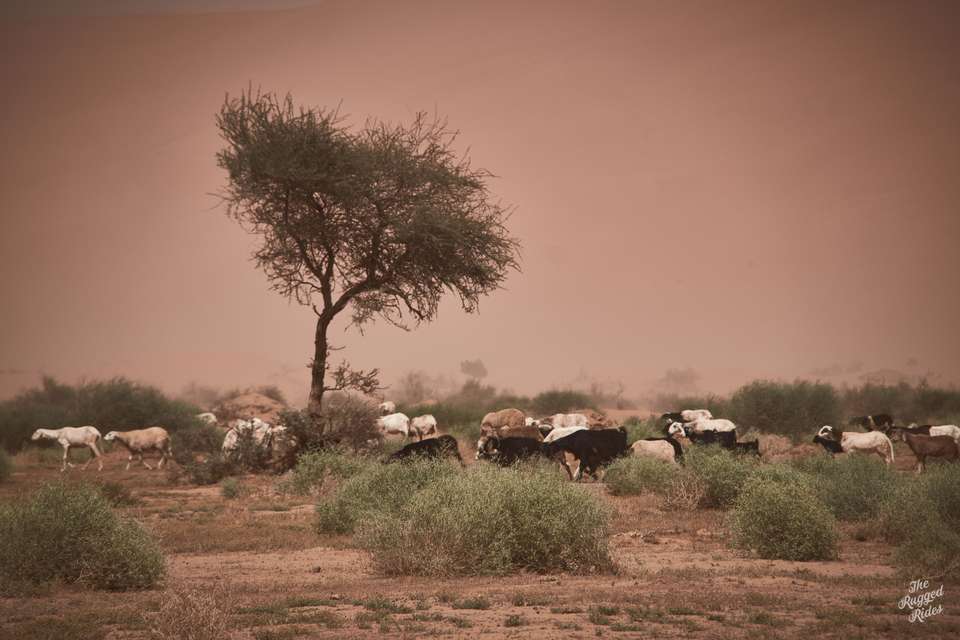
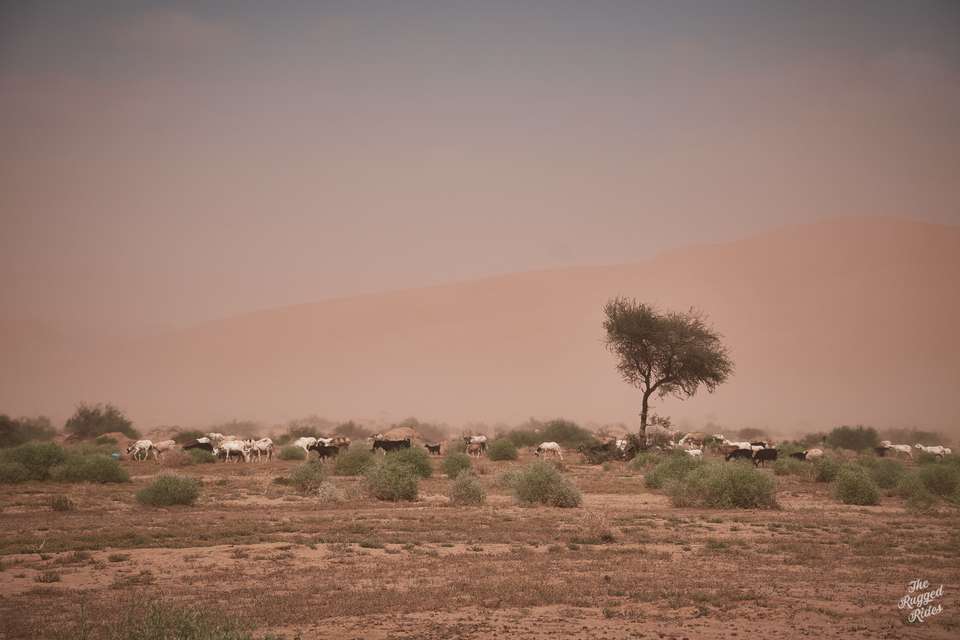
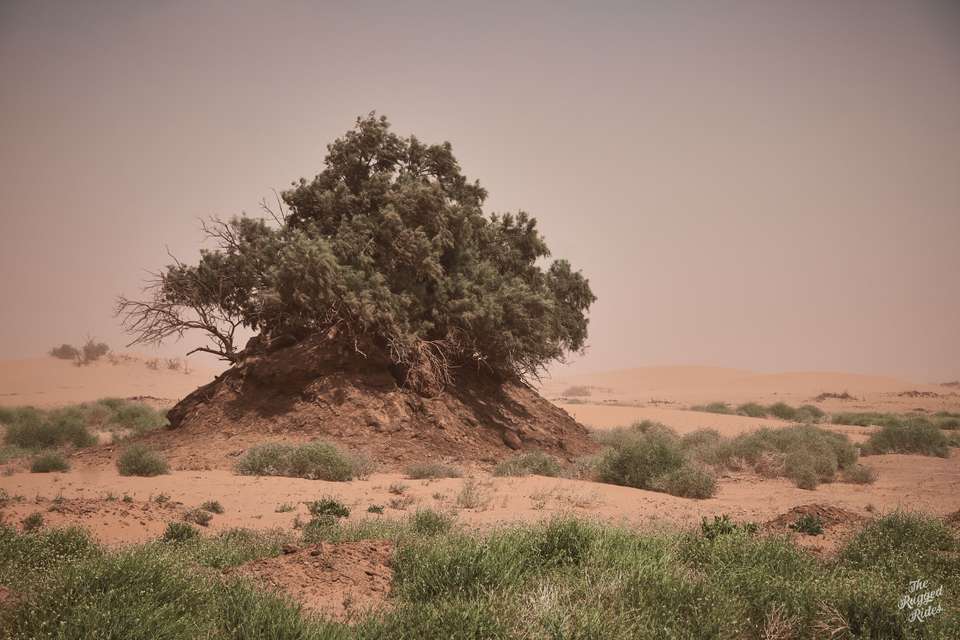
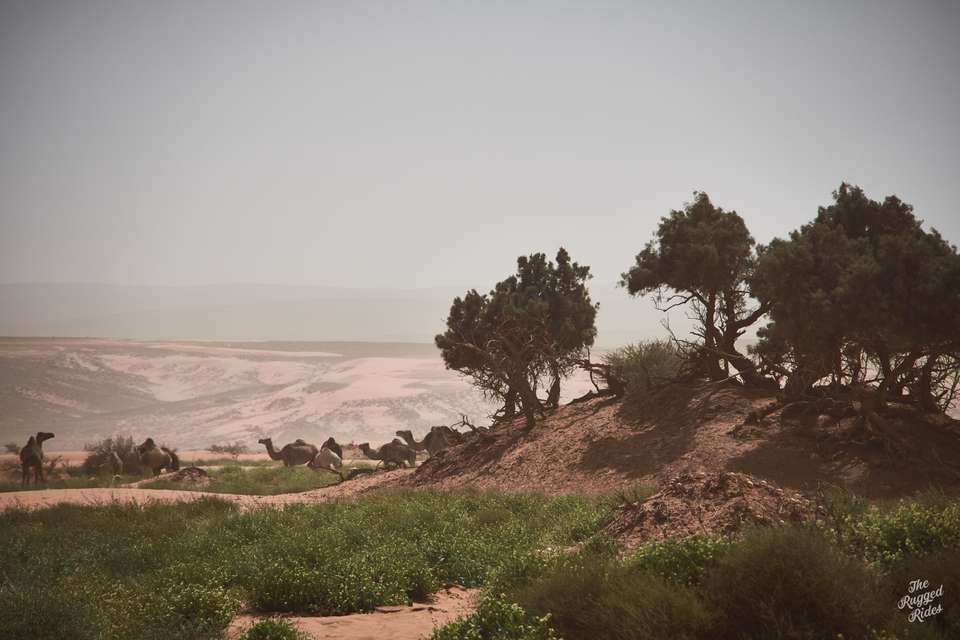
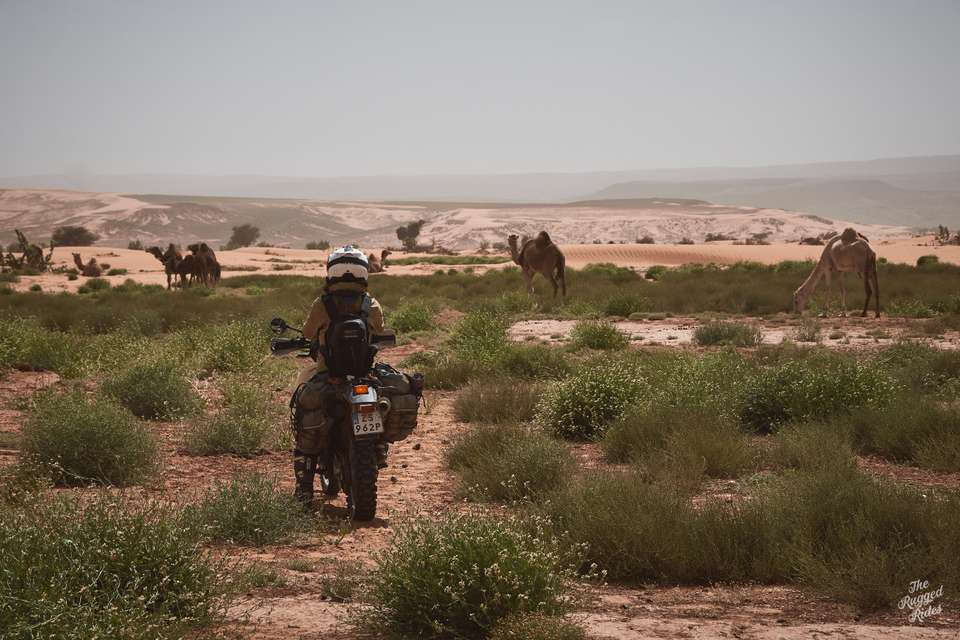
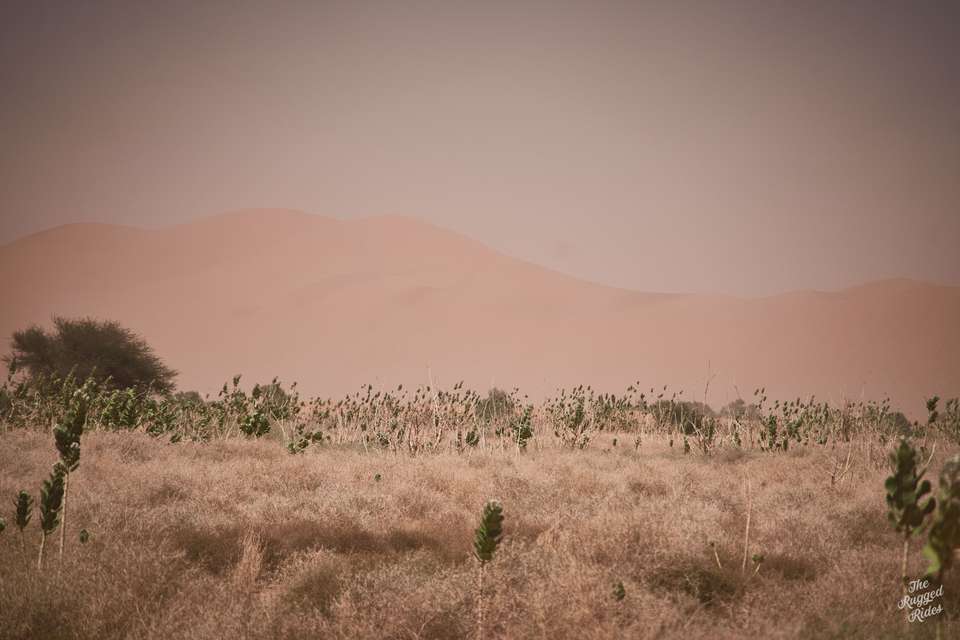
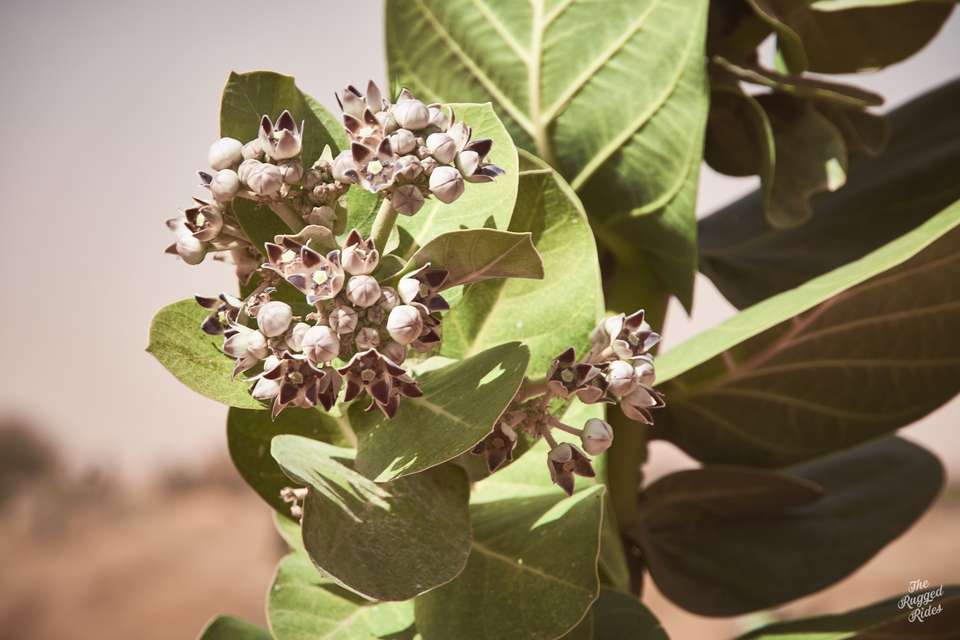
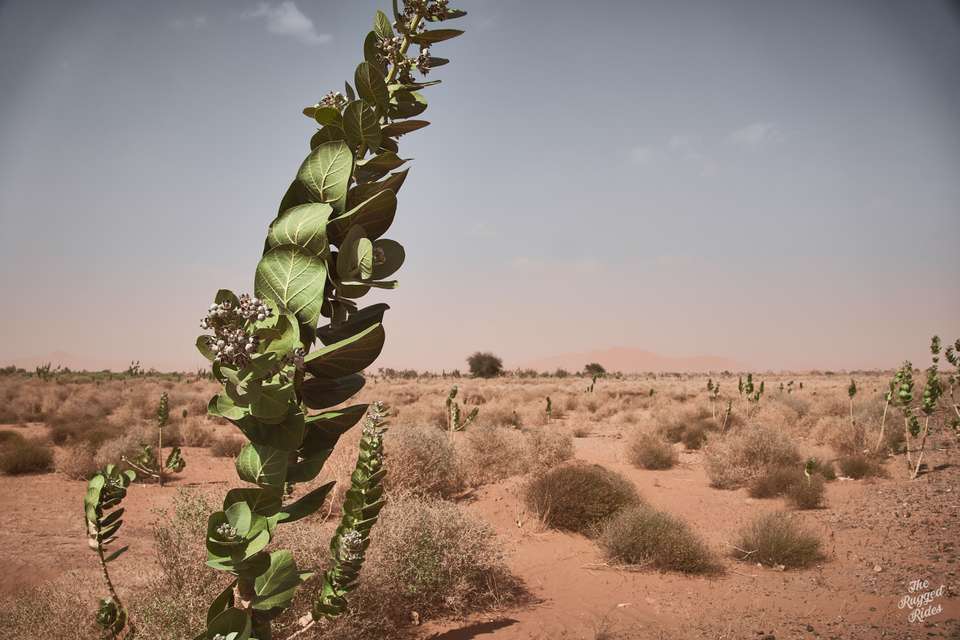
We reach Oued Irarraren, and the air is growing increasingly thick with dust. Once again I'm blown away by the scenery. The vivid green of the vegetation contrasts beautifully with the air full of windblown sand. Camels, followed a little later by herds of goats, termite mounds, and the fabulous backdrop of towering ergs, and to top it all off, storks. The whole scene creates an incredible, fairytale atmosphere, tinged with hues of pink and softly misted over.
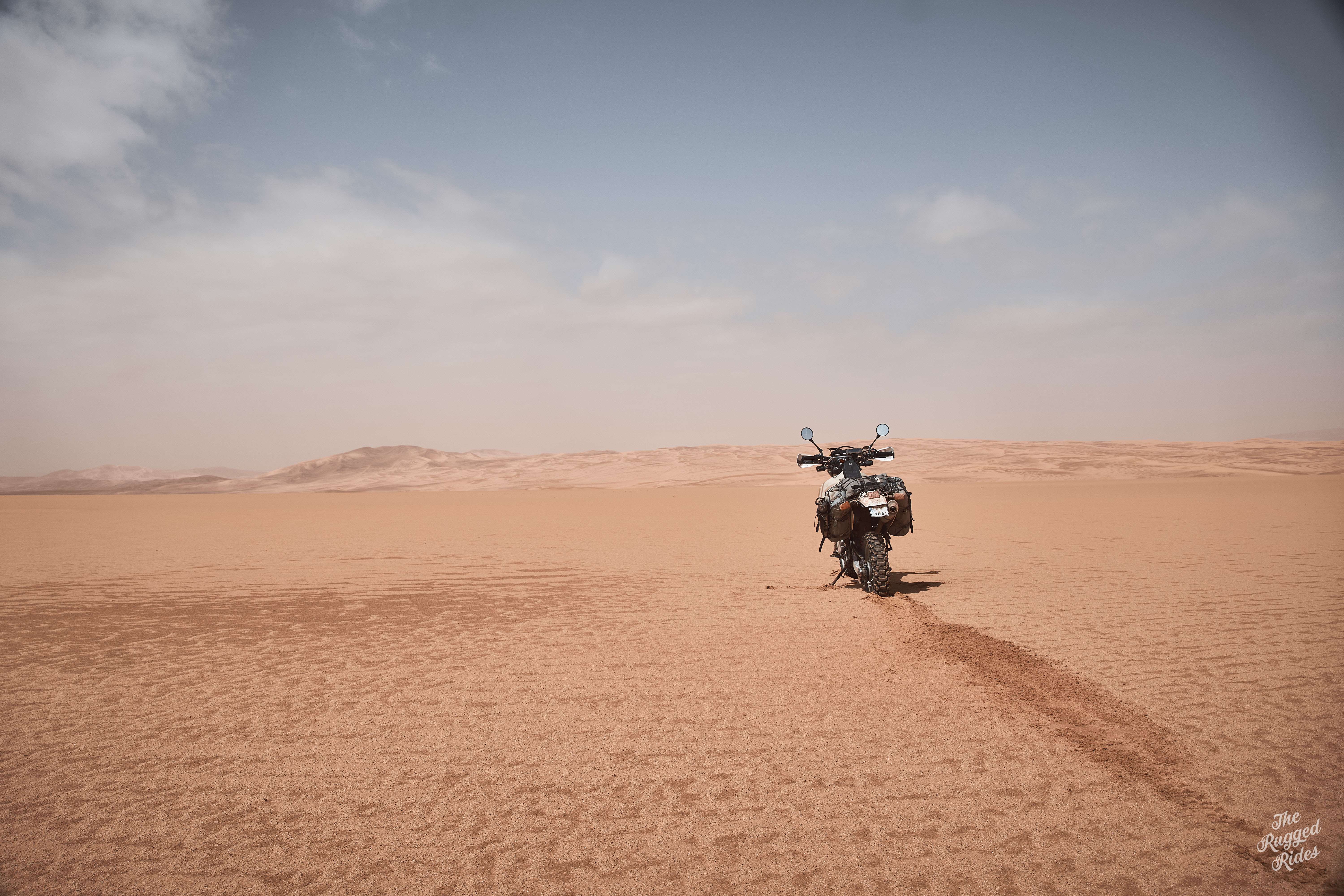
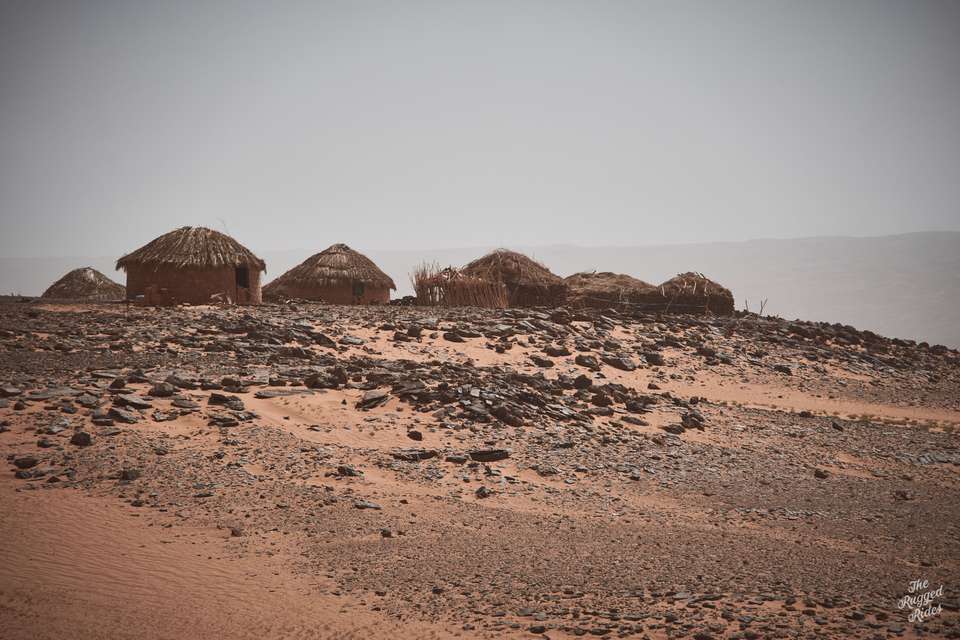
The presence of animals and people indicates we are nearing Illizi. The new road has allowed us to cover the distance to the town remarkably efficiently. Since things have gone swimmingly, we decide to raise the stakes, we'll head into Illizi today, stock up for the next leg, and set bivouac well past the town. Unfortunately, the price to pay for this is bypassing the detour towards Lac Menghough, an ephemeral lake first documented by the Flatters expedition in 1880. I always enjoy visiting places like that, particularly as the Flatters expedition became something of a symbol in the history of Saharan exploration.
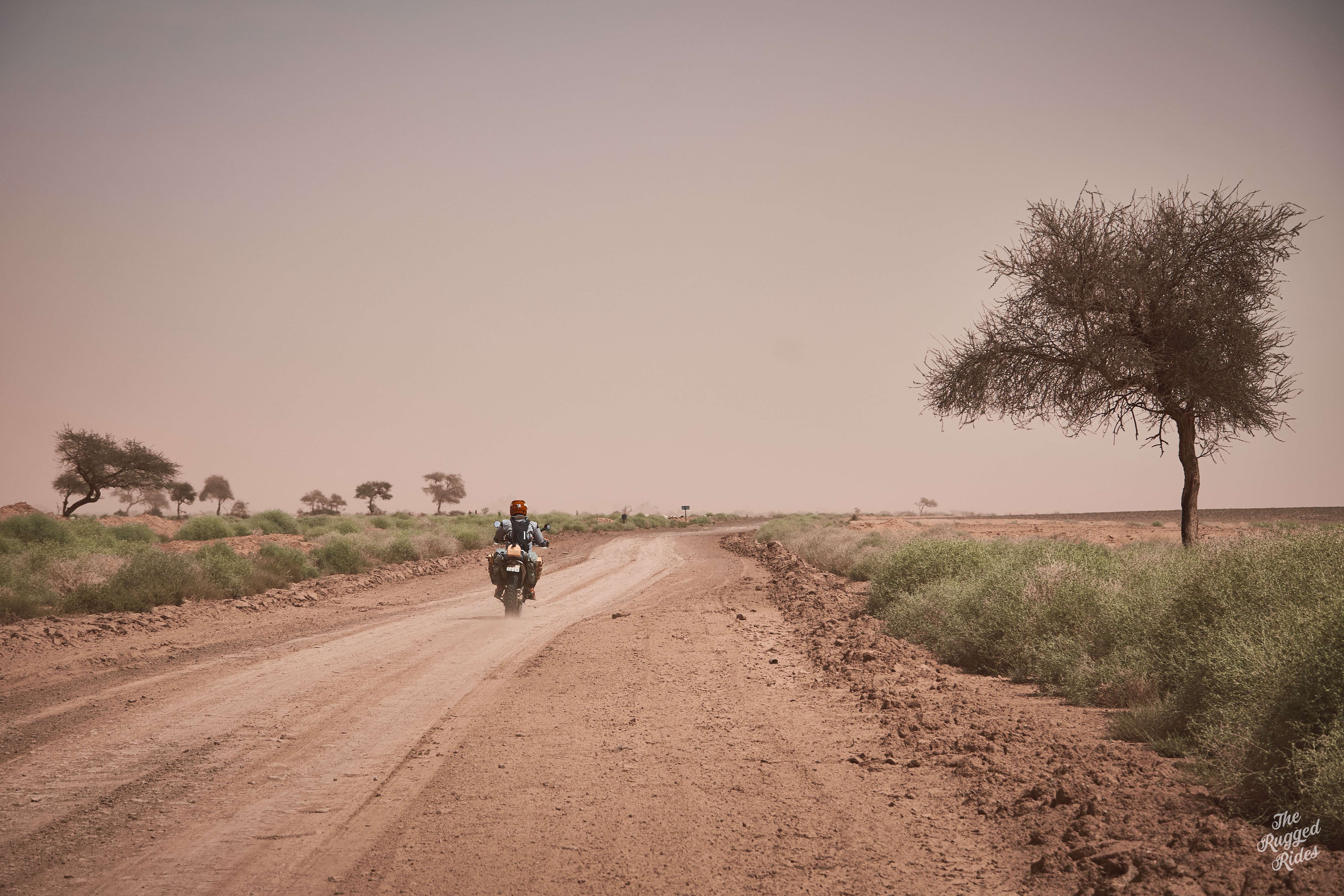
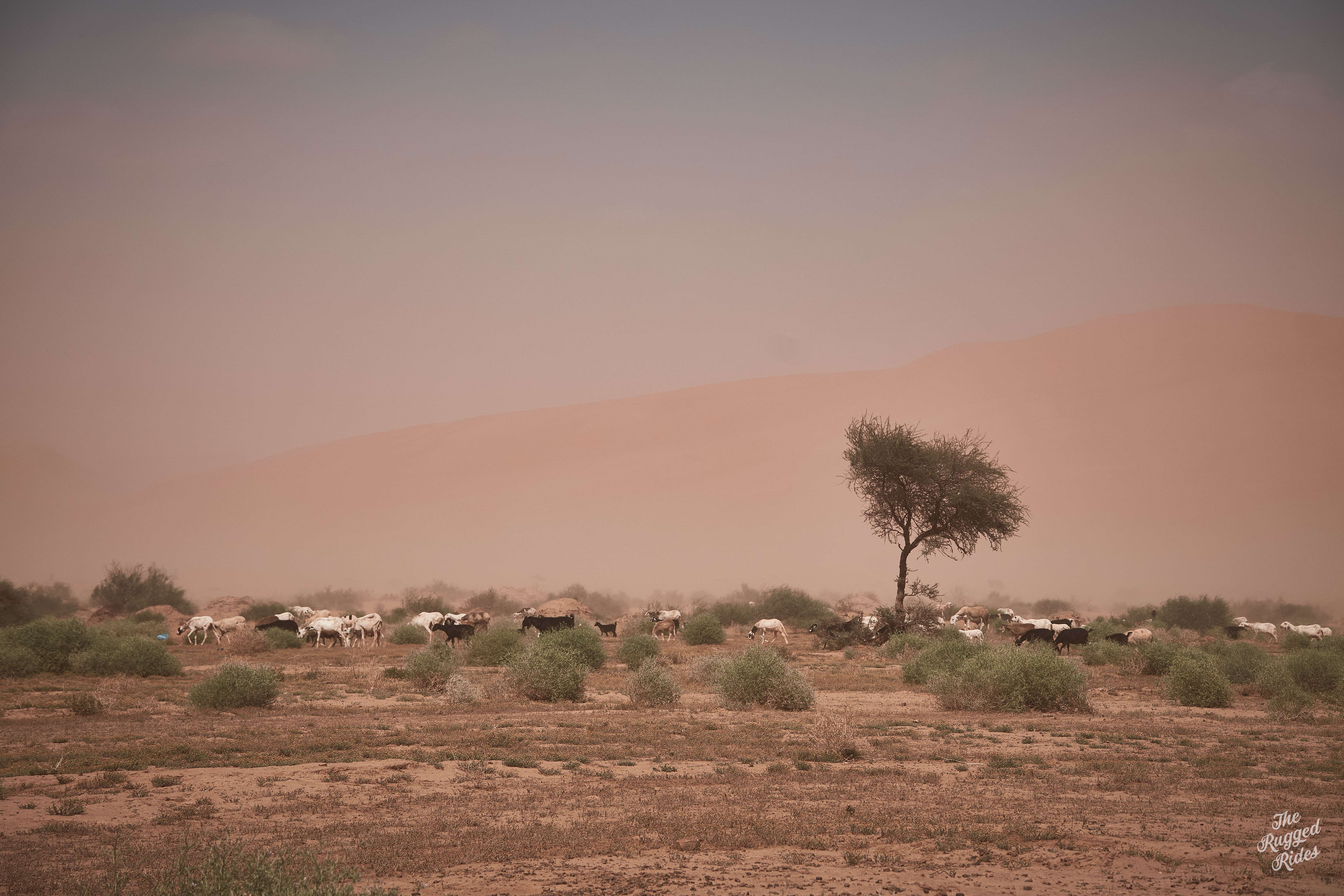
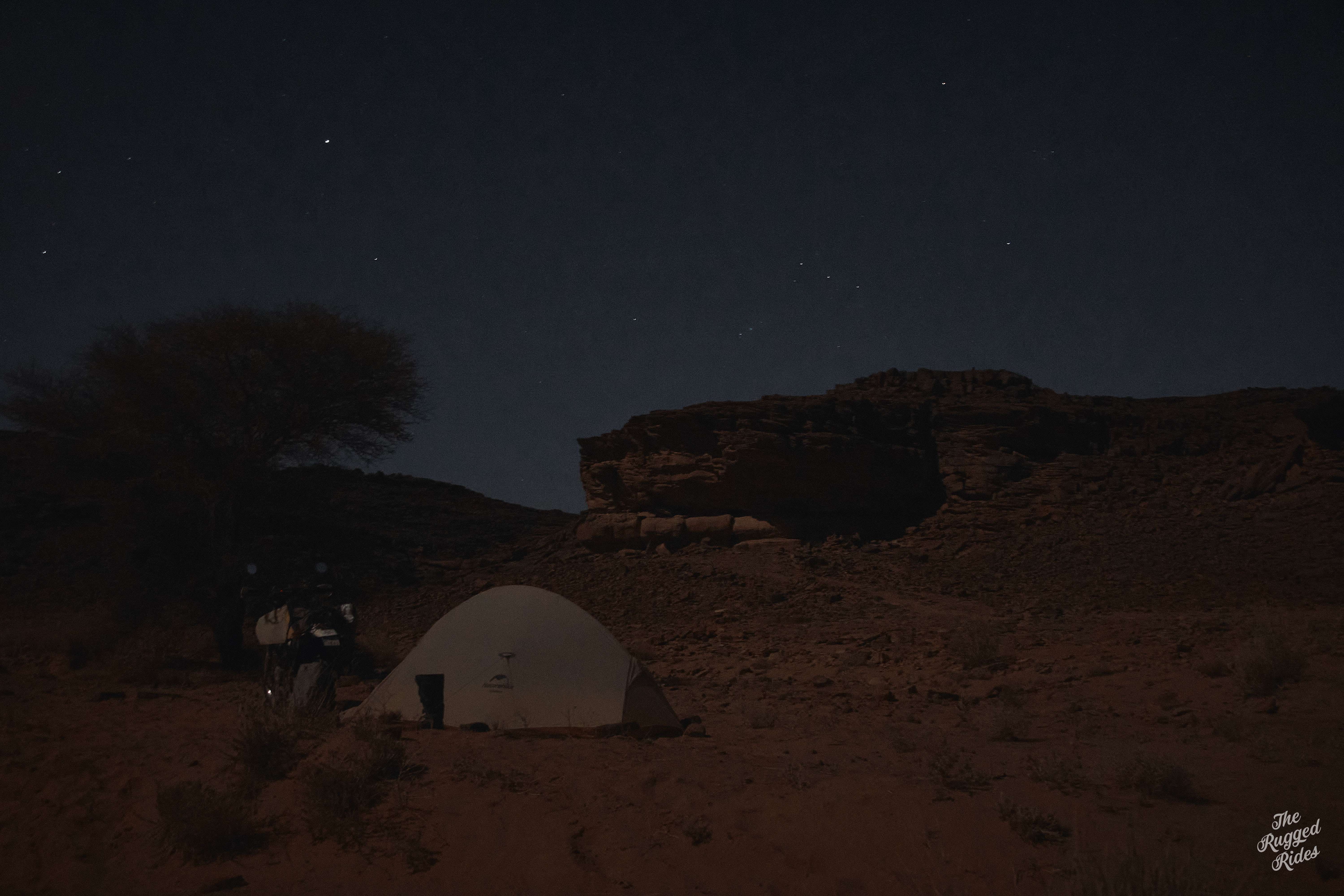
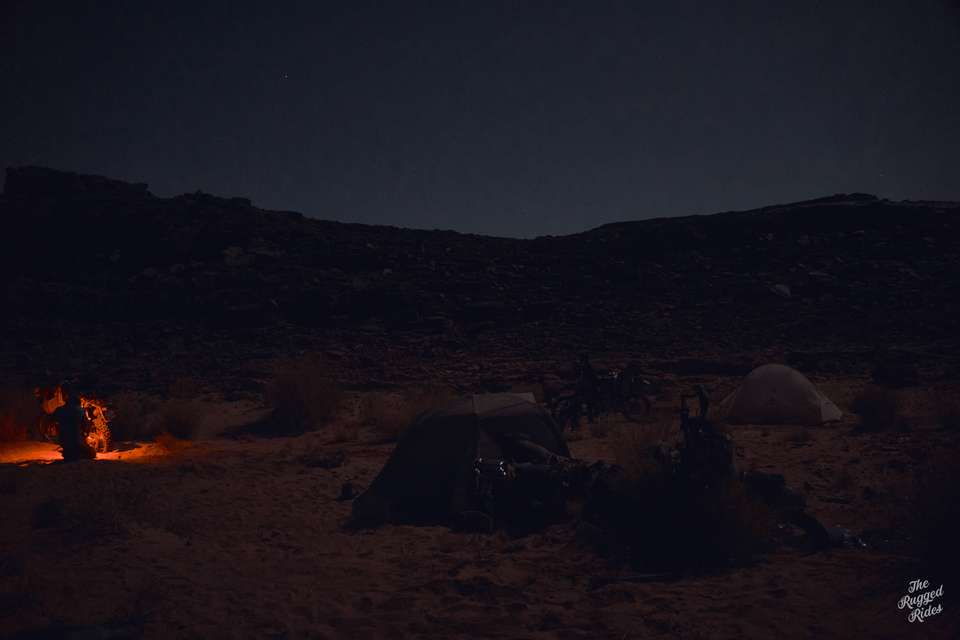
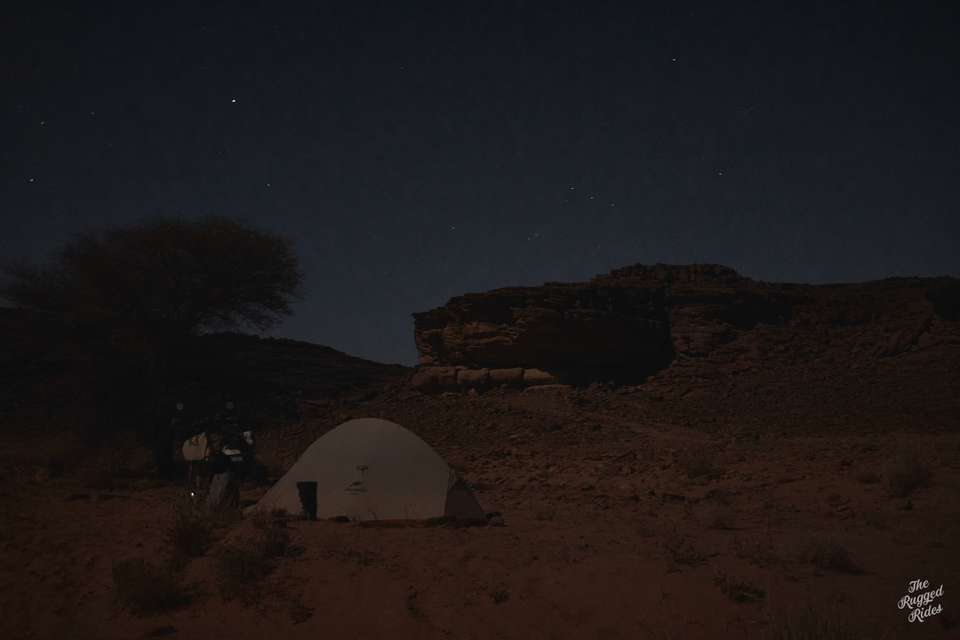
As usual, we roll straight into Illizi from the open desert and quietly blend into the crowds. Last stretch is asphalt now. We're so close now to Djanet and the Tassili that we don't want to tempt fate. The last thing we need is to attract enough attention for someone to decide we'd benefit from another escort. So, we try our best to keep a low profile. The fuel station is on the far side of the river, so we cross via the dry riverbed. We sort out our shopping and food well away from the main street. We head straight out of town towards a canyon we spotted earlier. That's where we set up bivouac for the night.
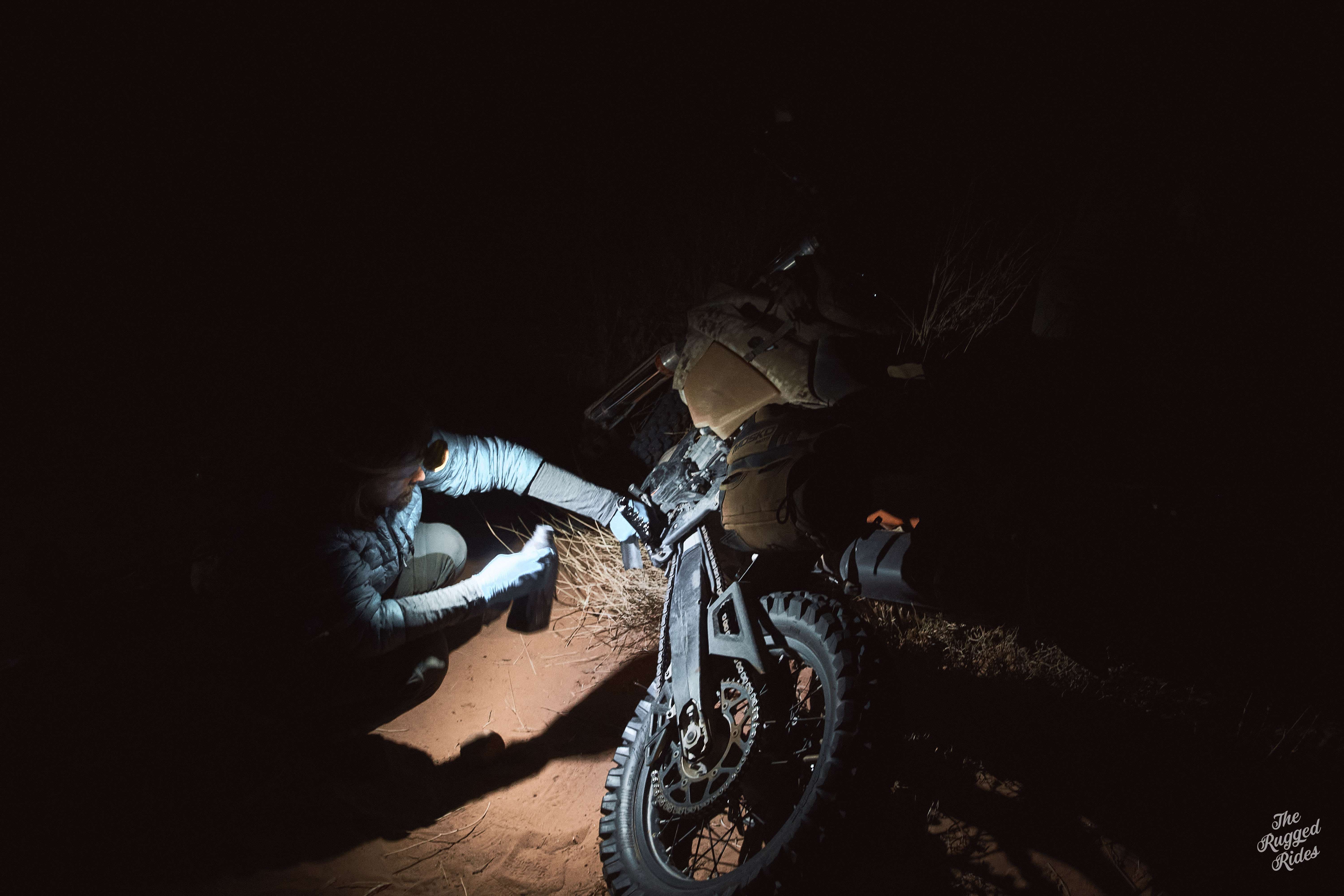
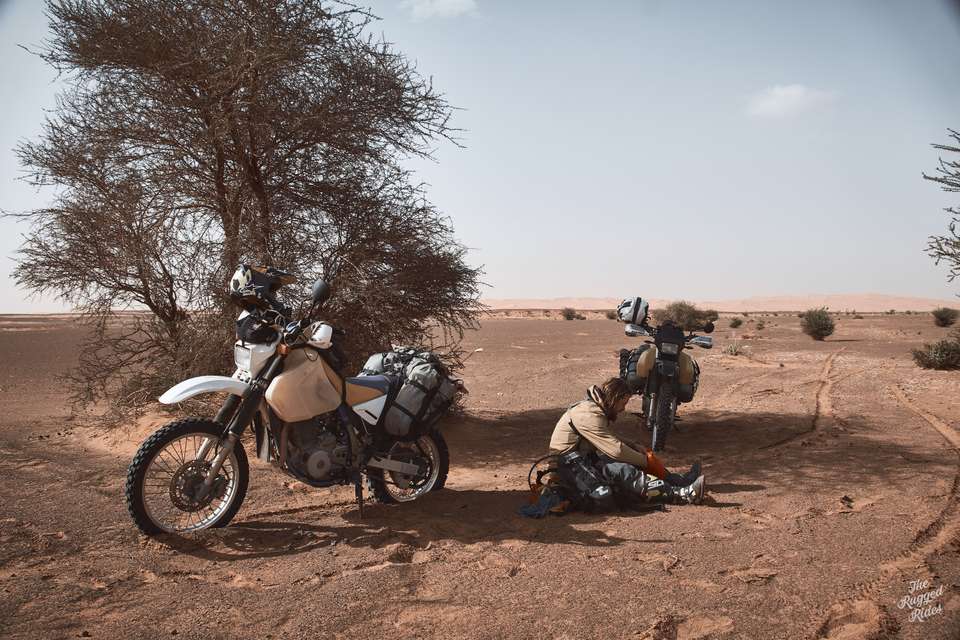
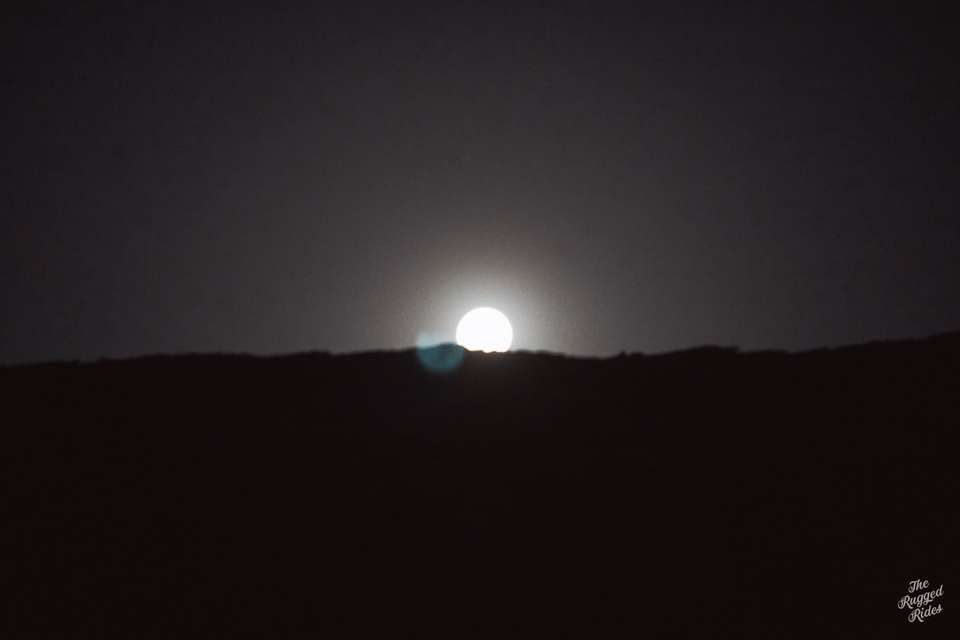
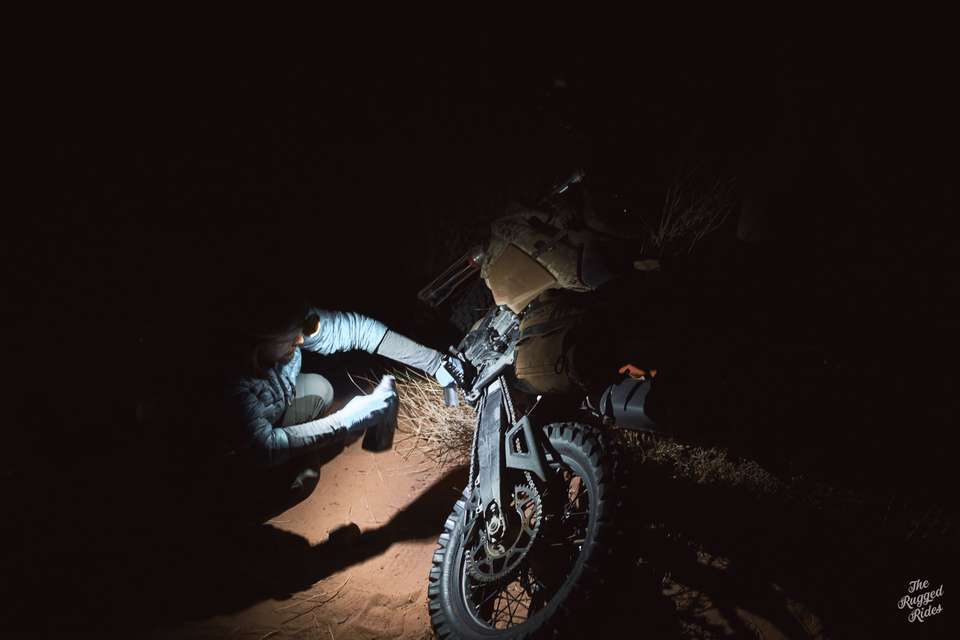
Tonight, the moon is full. Under its light, and with head torches firmly on, we get to work servicing the bikes. Mostly minor bits and pieces, plus an oil change on the EXC. For the next few days we're going all in. The full house: Djanet and Tassili N'Ajjer first, then a custom track west towards the Hoggar Mountains and, finally, Tamanrasset.
Track: https://loc.wiki/t/275531202?wa=sc
Leave a comment