Let me tell you about the amazing Sahara, a vast stretch of desert hiding unbelievable natural marvels. It's a place humans once circled on a map and simply named… Algeria.
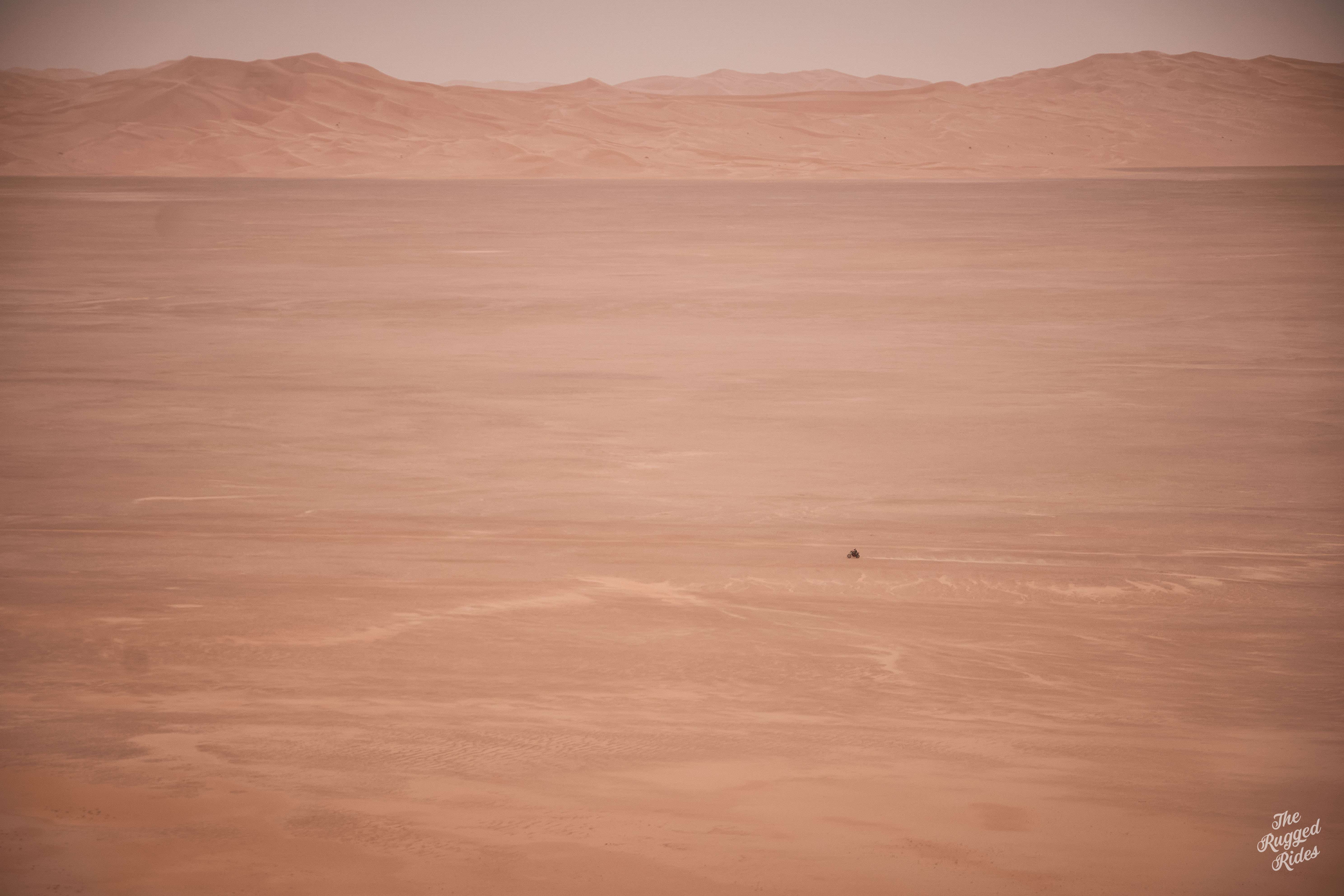
Algeria isn't as straightforward a travel destination as its neighbours Tunisia or Morocco. It used to be, mind you, a favourite among Sahara-loving travellers, but too much happened along the way for it to stay that way. Luckily, the darkest times seem to be behind it now, and today travelling through Algeria is once again, in a certain sense, possible. That doesn't mean you can just rock up unprepared, jump in a garage, and casually ride off. Neither the visa requirements (which are not exactly the easiest one), nor the sheer scale of the country will allow that. This is Sahara in its full, unapologetic size. Morocco or Tunisia look like a children's picnic compared to Algeria. The spaces you encounter in the desert are on a completely different order of magnitude. Towns can be hundreds of kilometres apart, with nothing in between except desert. In such conditions, you can only move on specially prepared motorcycles, mainly with enough fuel and water to cover the distances. If I had to compare southern Algeria to somewhere, I'd say Mauritania gives a similar impression. Both are similarly raw, remote, and demanding.
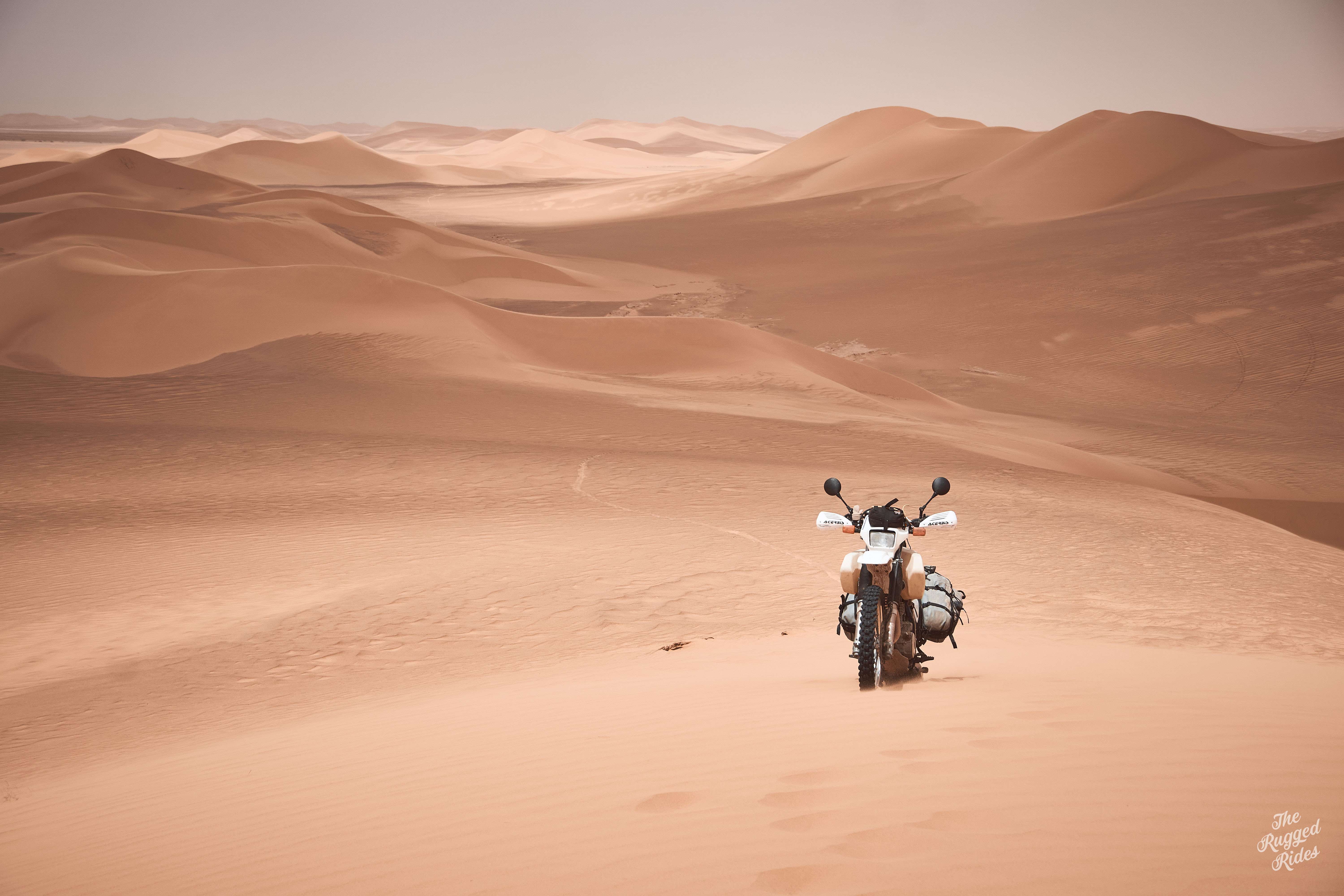
It's also important to remember Algeria has had a history of tourist kidnappings and violent raids on oil facilities. It's true that the hottest period of that has passed, but risk can't be fully ruled out. Because of this, travelling with gendarmerie escorts and certified local guides has become standard practice - if you want to head south. Of course, that's not really our style. We dream of, and only accept, solitary, unrestrained exploration of endless desert.
A lot of obstacles, but the reward is exquisite. So what did it look like in practice? We were lucky. We managed to cross almost the entire country on our own terms, no escort, no asphalt, an old-school style, pure piste riding through the desert. There's no any recipe for this, and I'd have to be unbelievably arrogant to pretend otherwise. You need luck, preparation, and a stubborn refusal to abandon your own way of travelling.
Route and Preparation
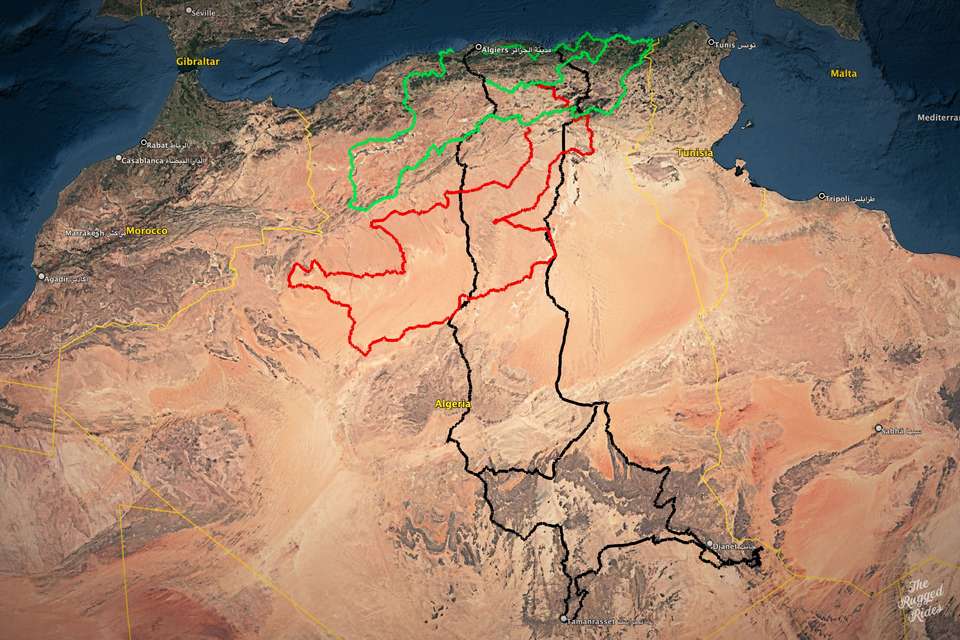
Since our plan involved crossing the desert, serious route preparation was essential. My best friend during long winter evenings was Google Earth. I marked over 700 points, sometimes barely visible pixels hinting tracks in the middle of nowhere. This became a network of gpx tracks over 15,000 km in total. That gave us flexibility to adapt the expedition depending on conditions. I planned several variants not found in guidebooks or travel reports. Of course, such preparation isn't necessary if you stick to mapped roads, but OSM coverage in Algeria is sparse, especially in the south where it's mostly main roads and major pistes. Everything else needs to be discovered by Your own. Yes, you can ride off-piste without knowing topography, but doing that on the edge of motorcycle range across such vast Sahara distances would be, frankly, wildly foolish.
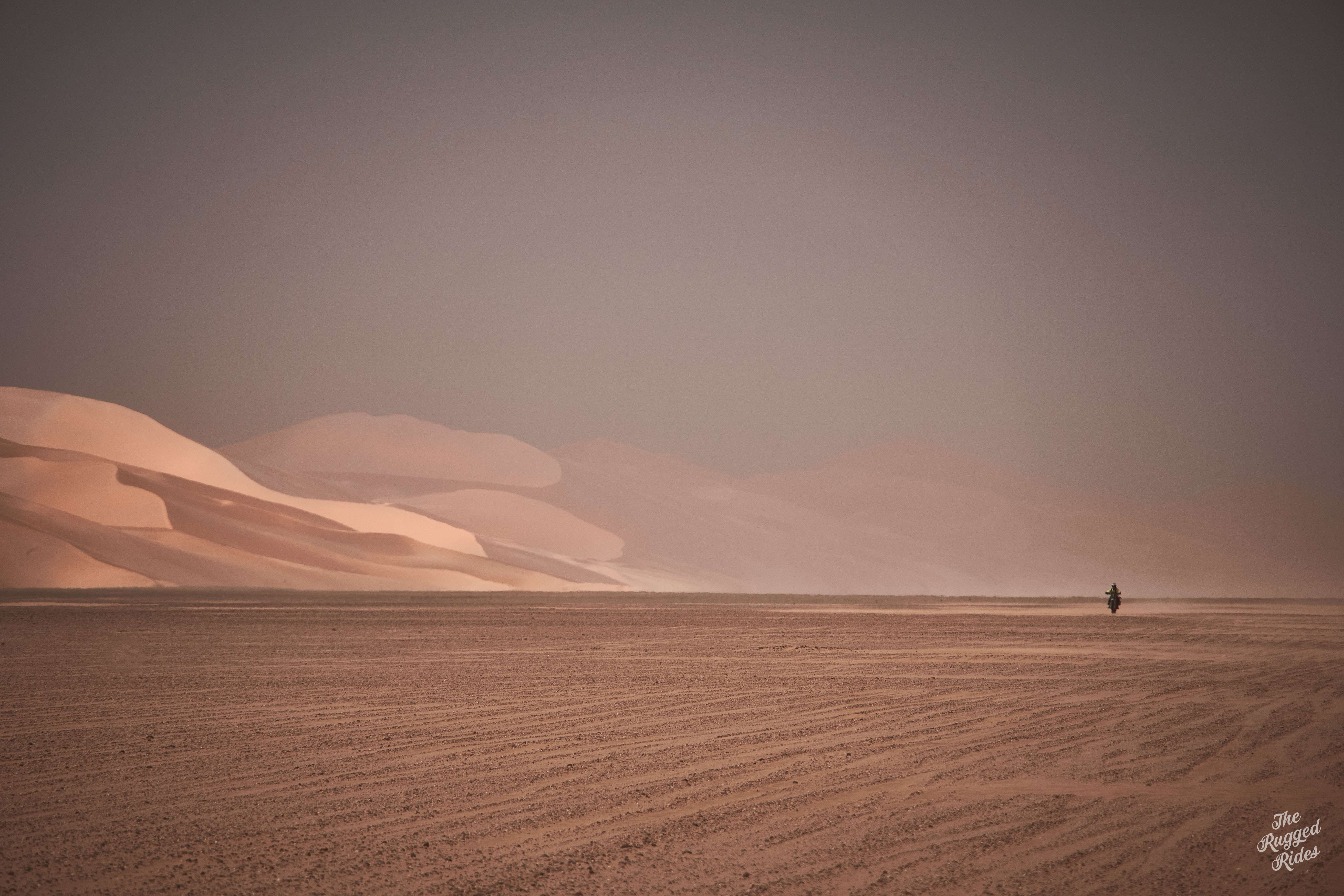
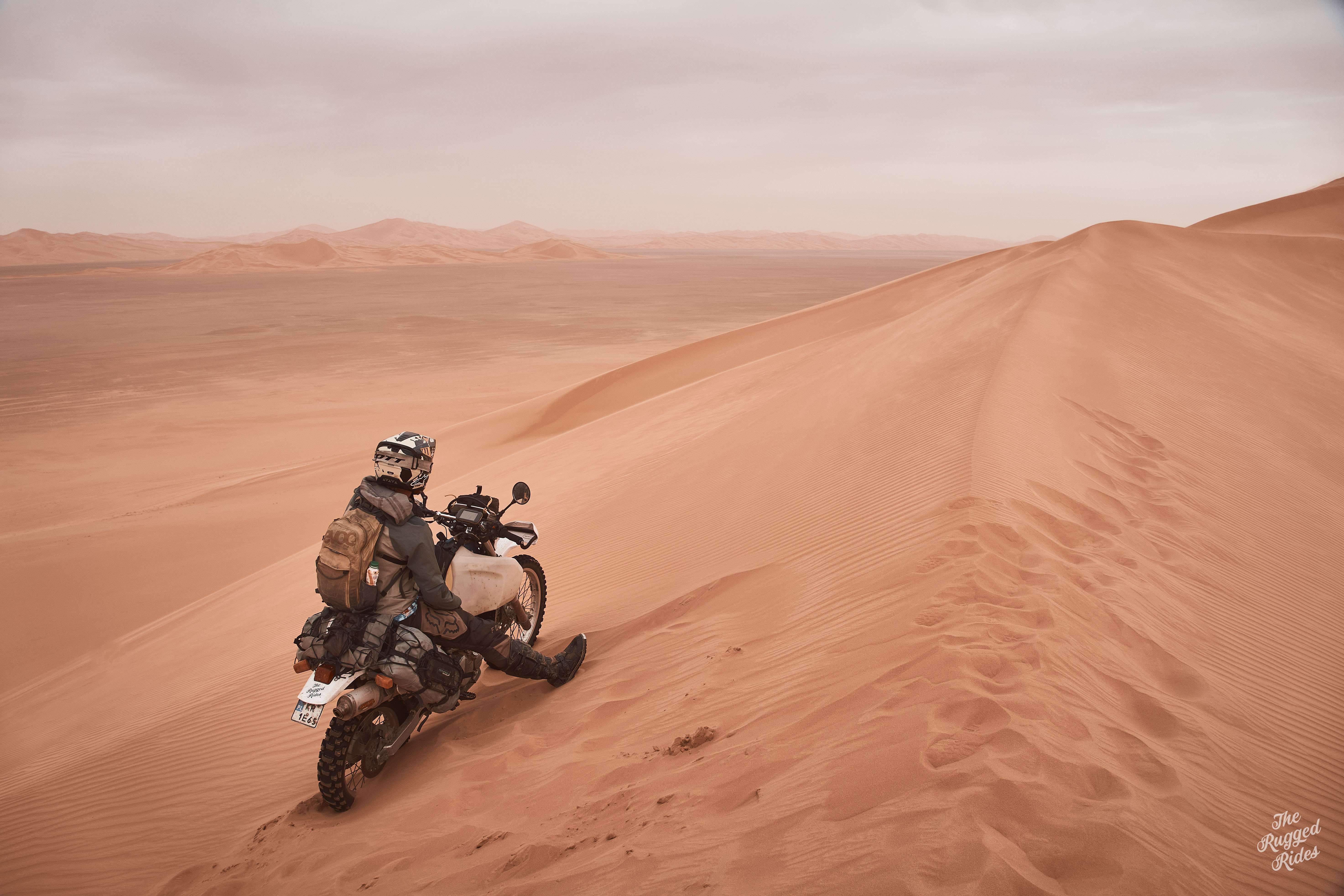
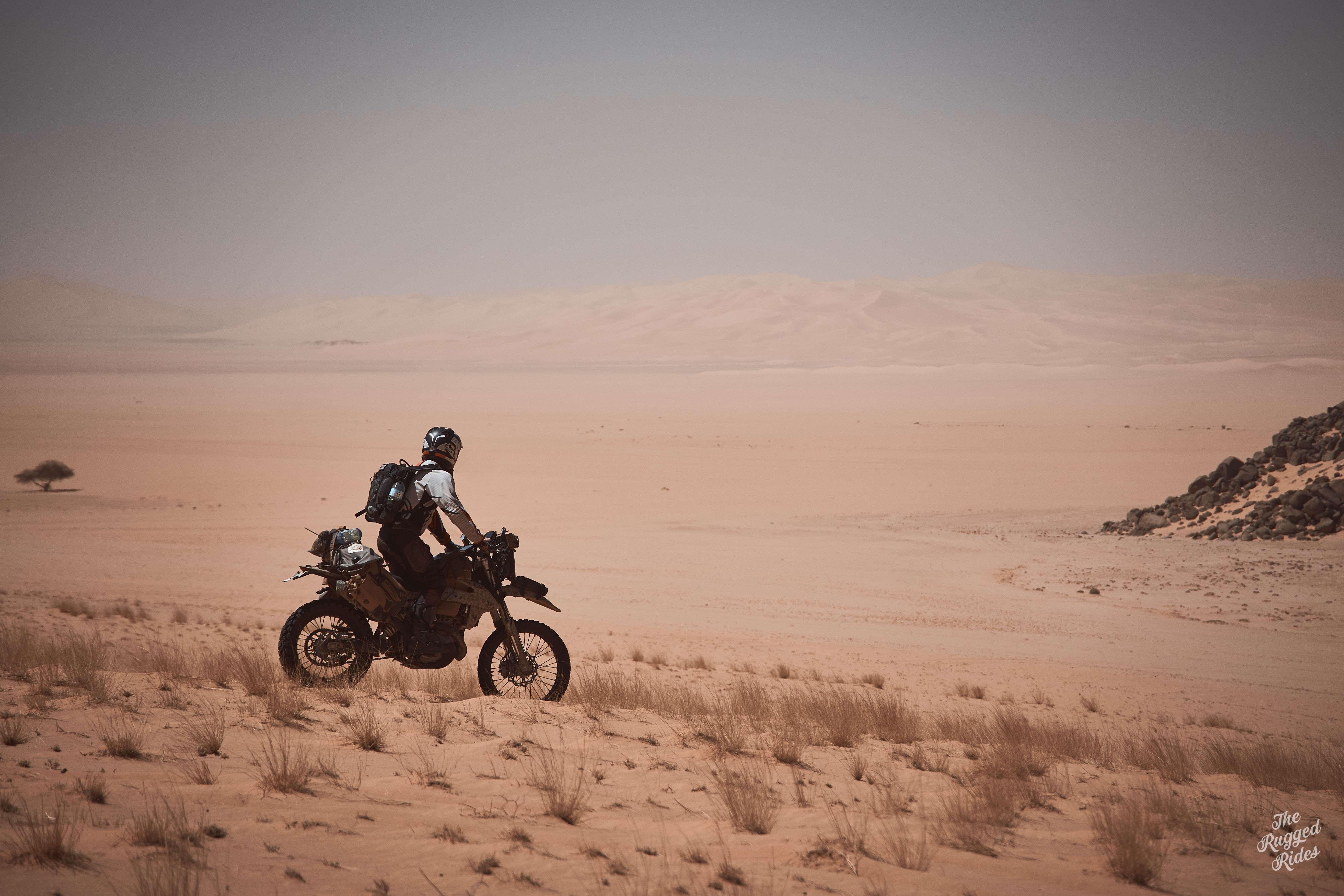
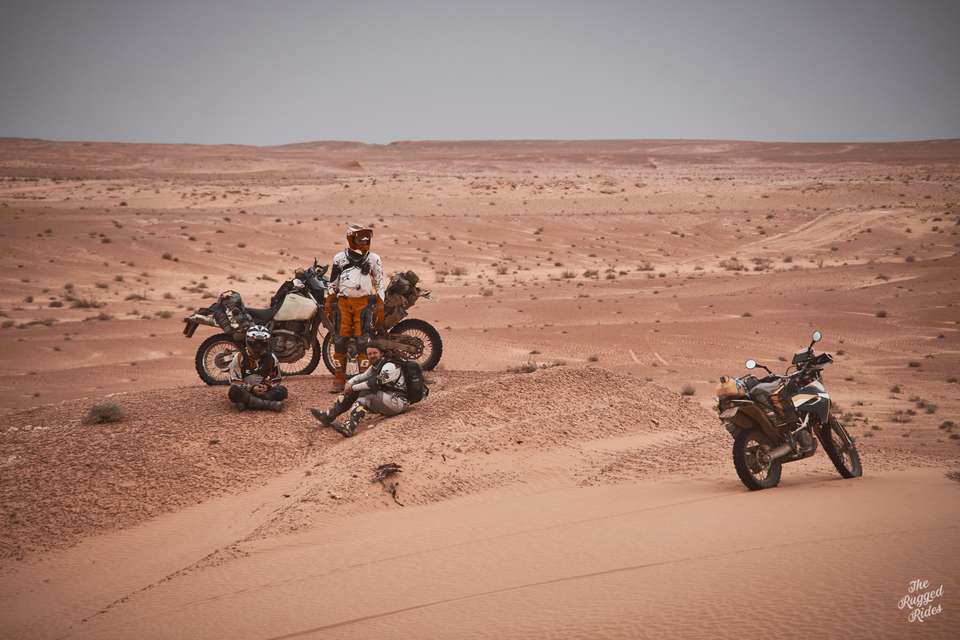
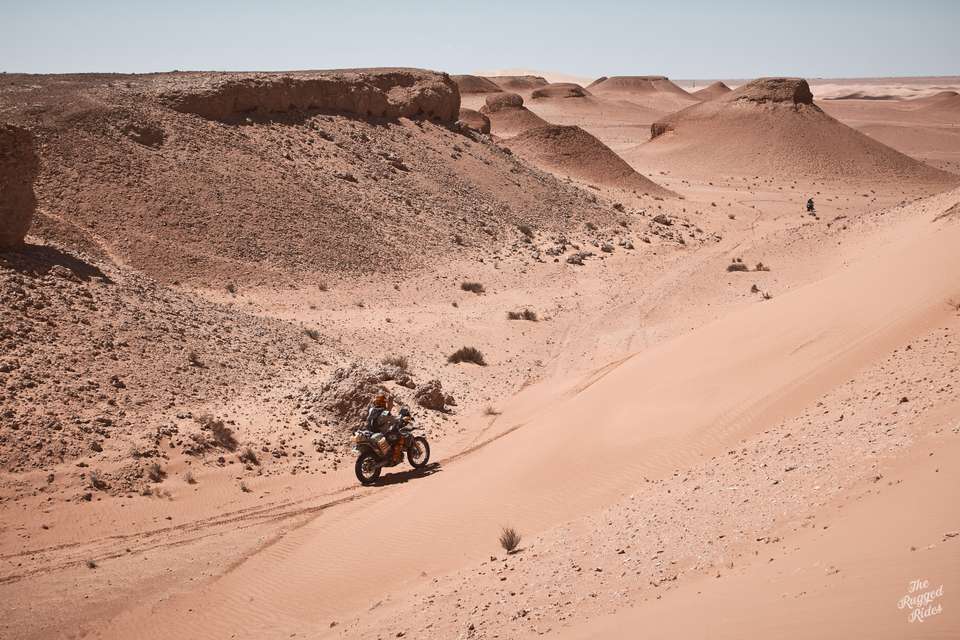
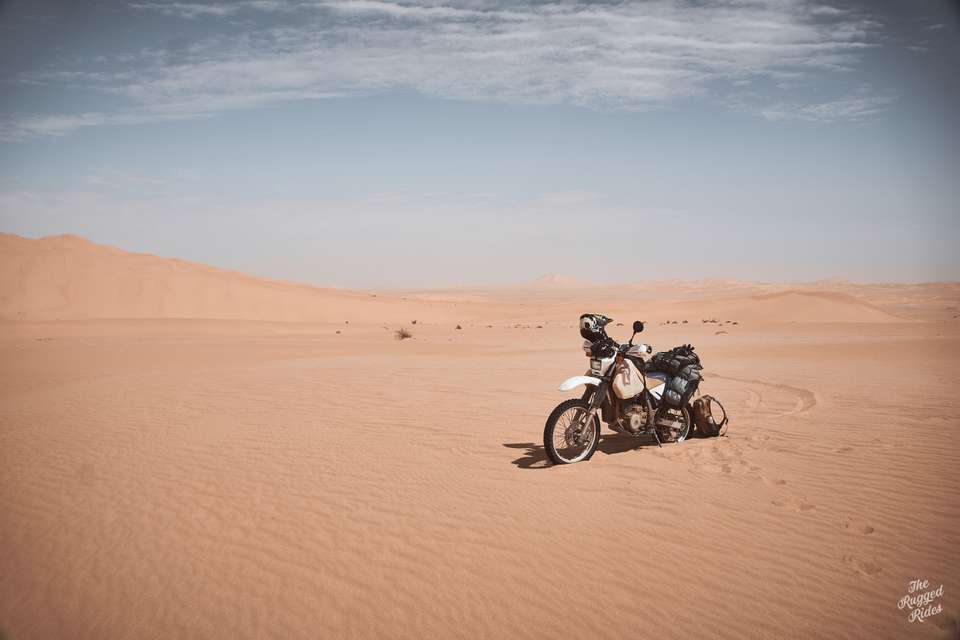
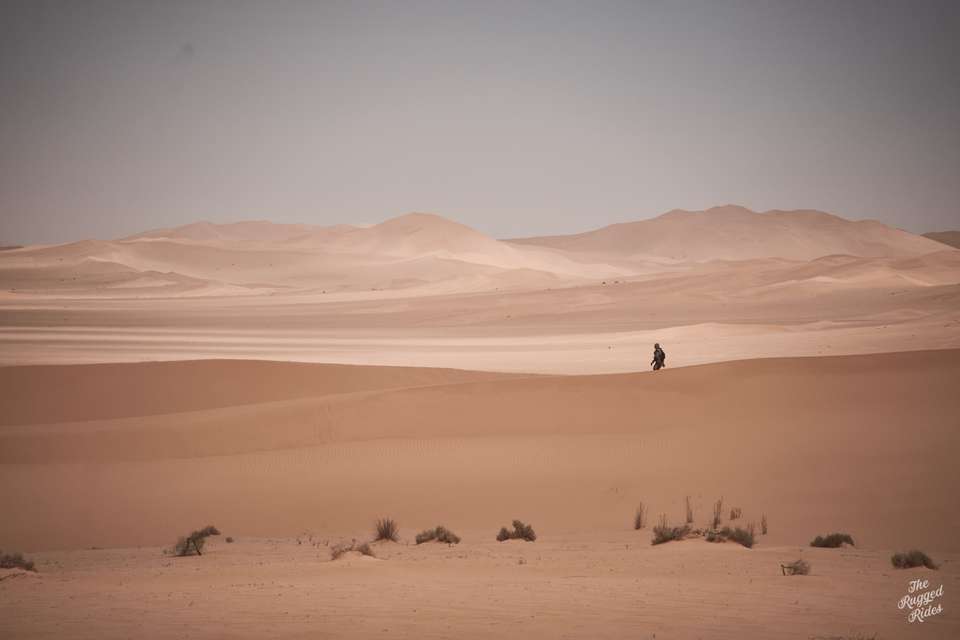
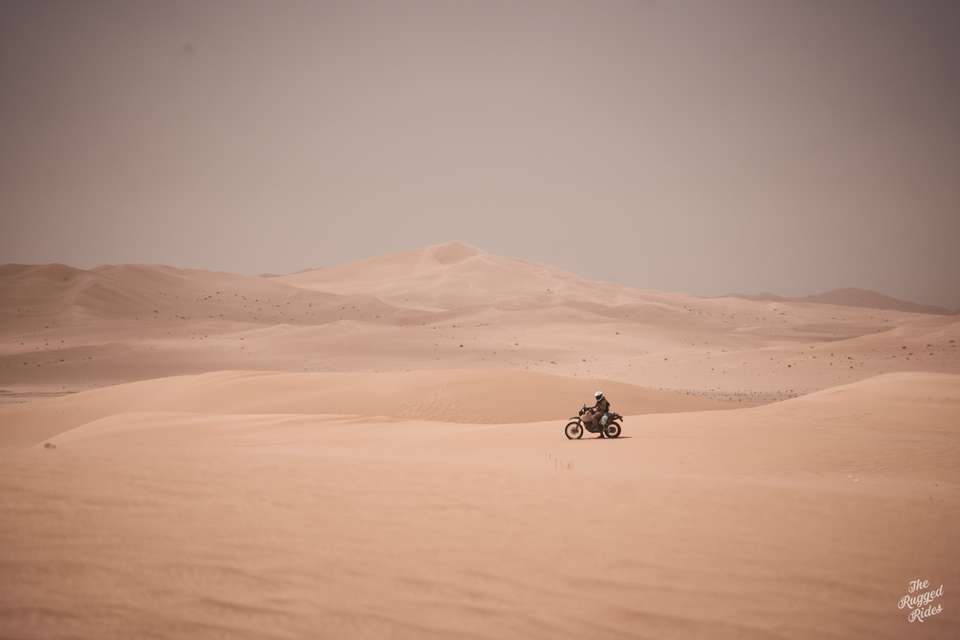
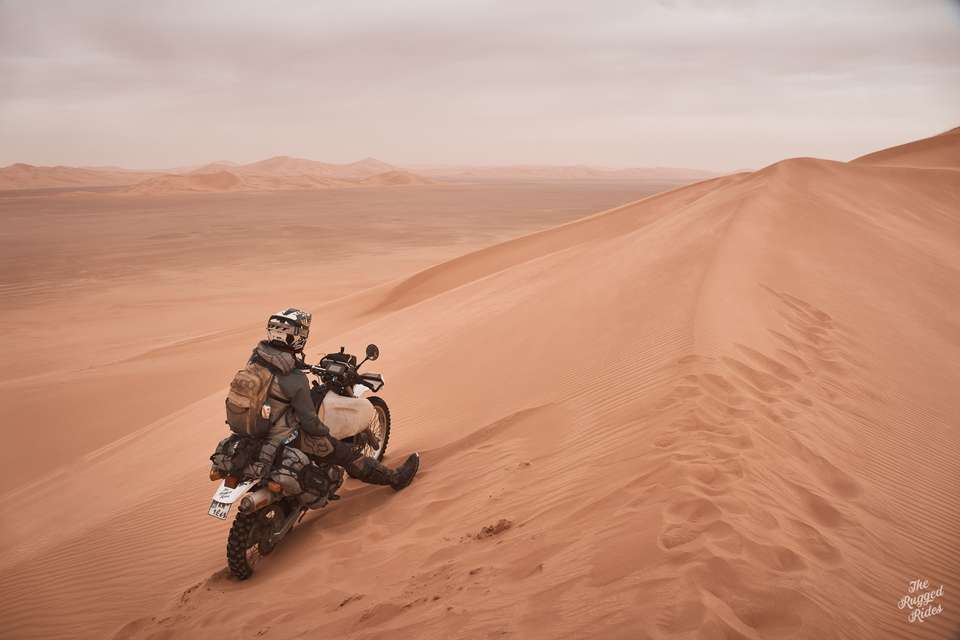
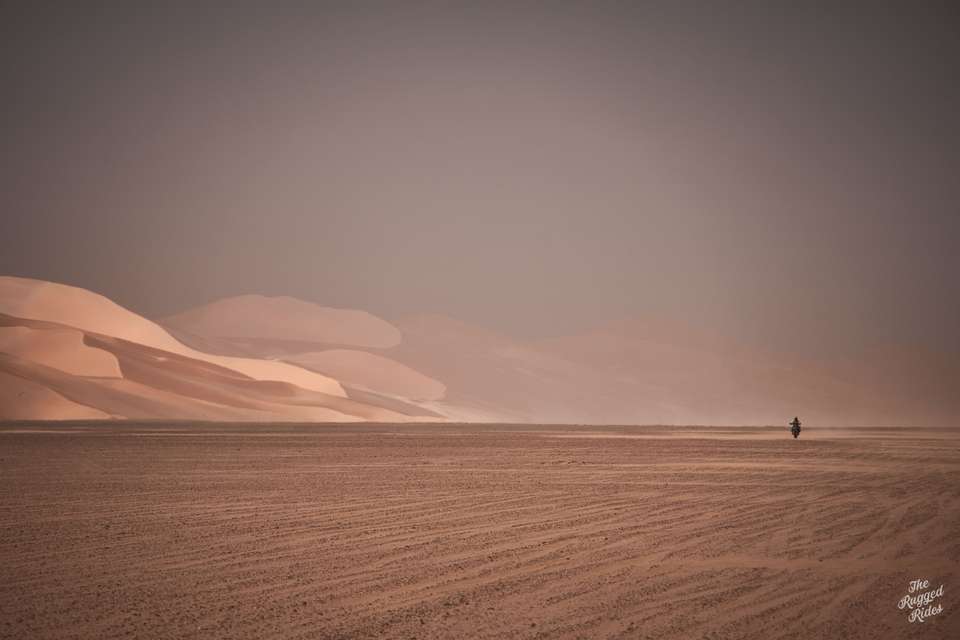
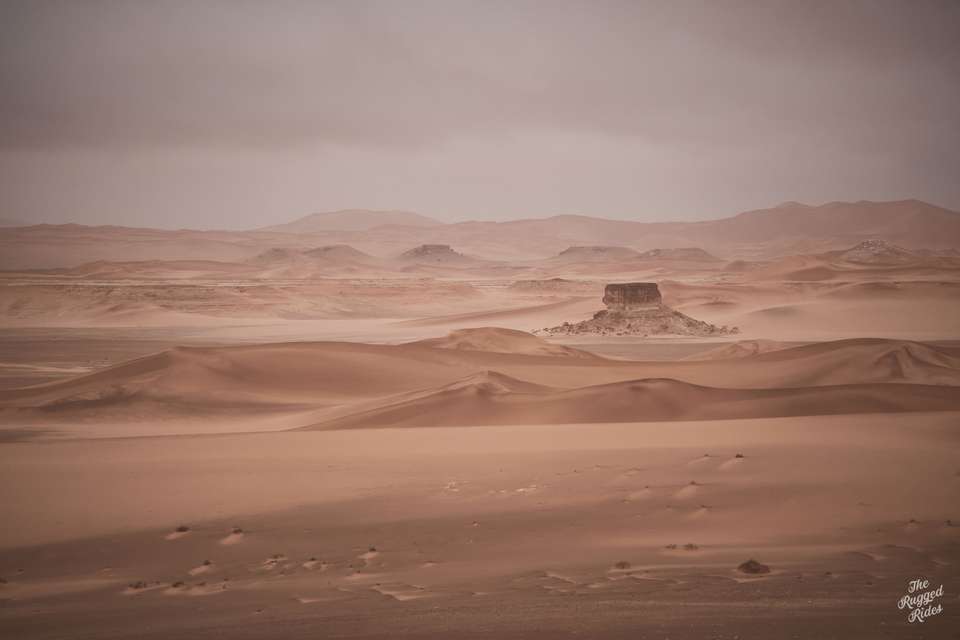
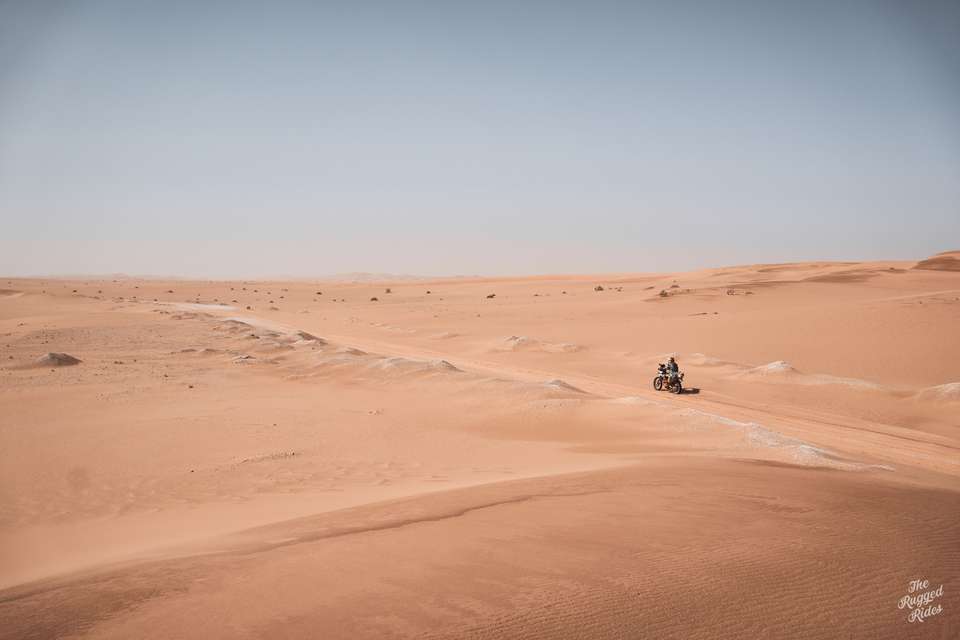
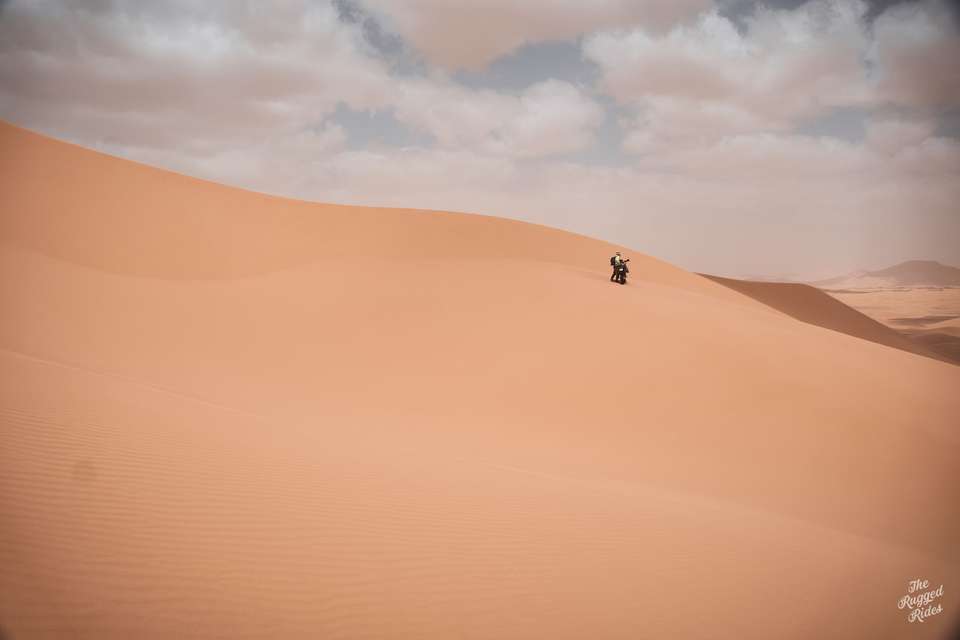
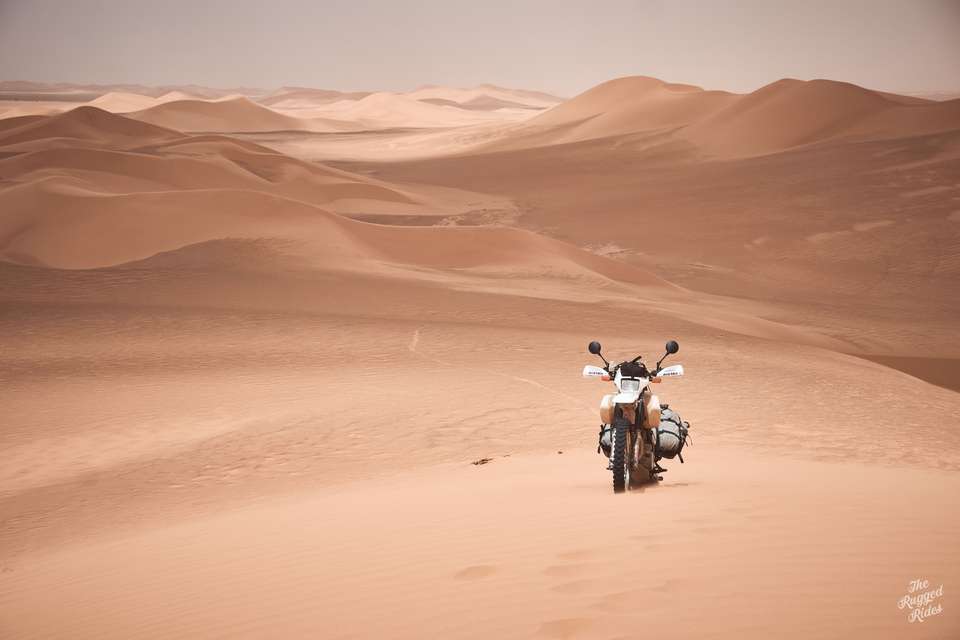
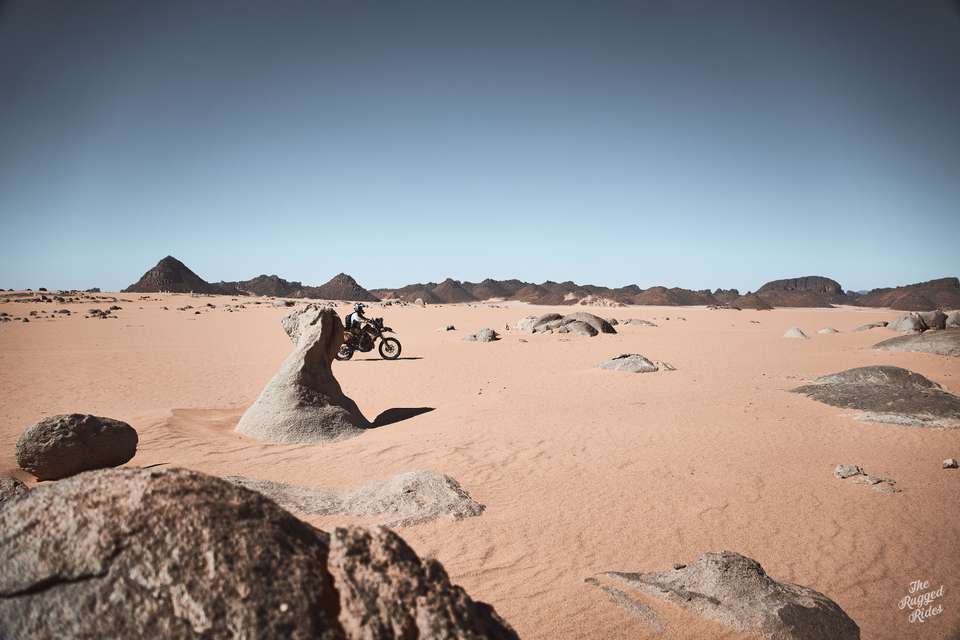
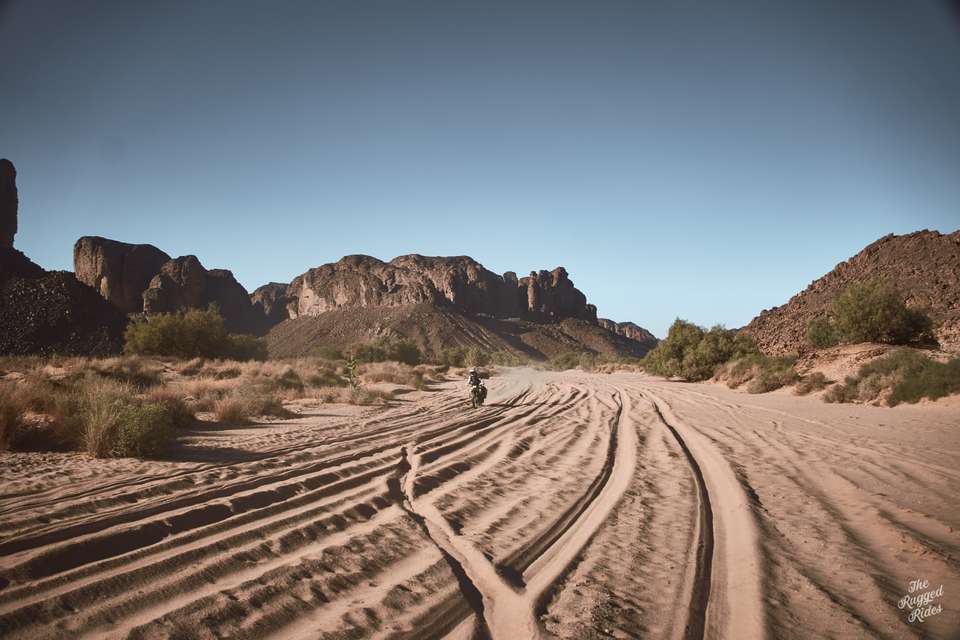
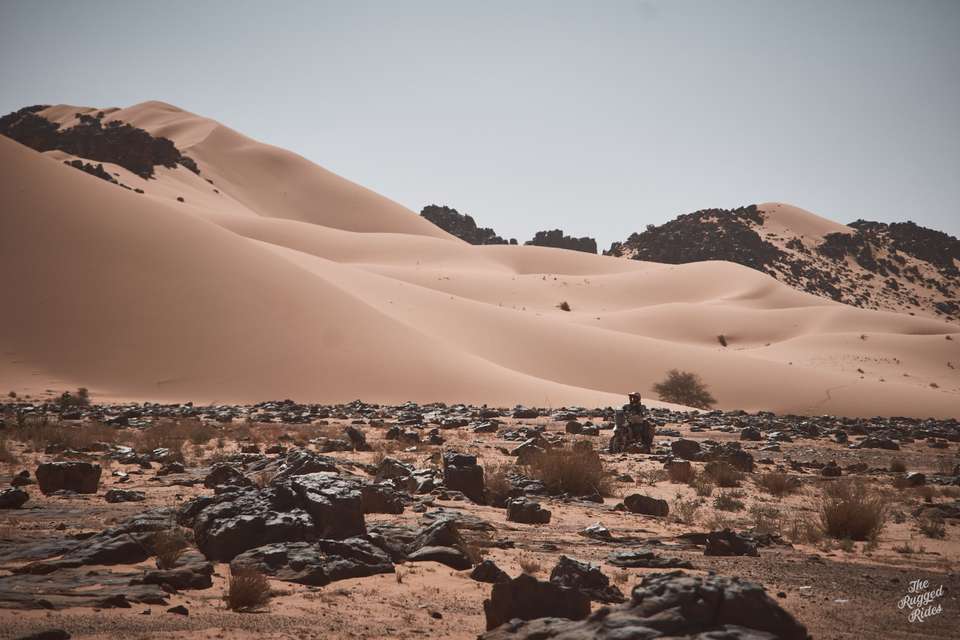
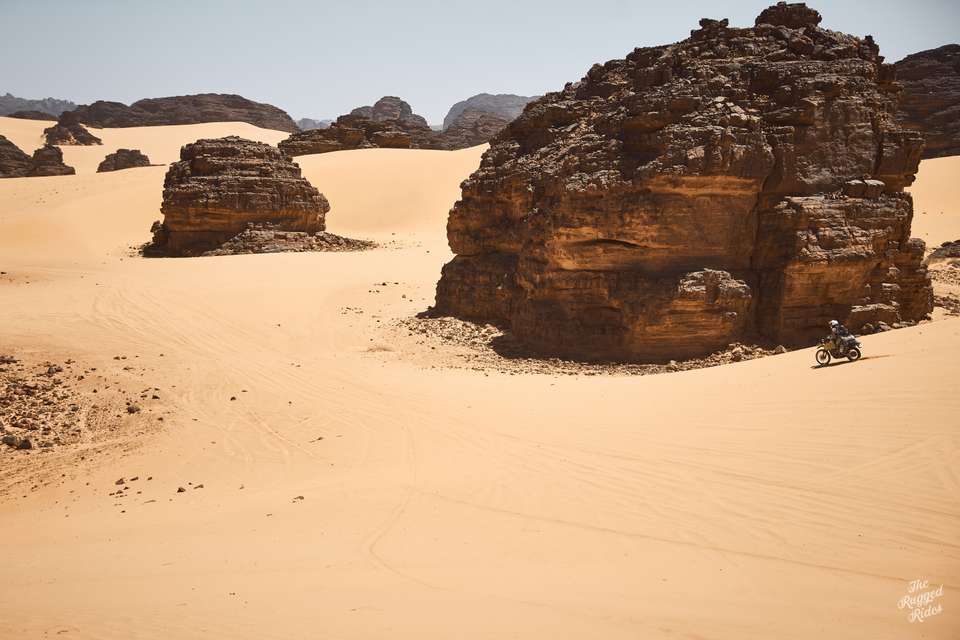
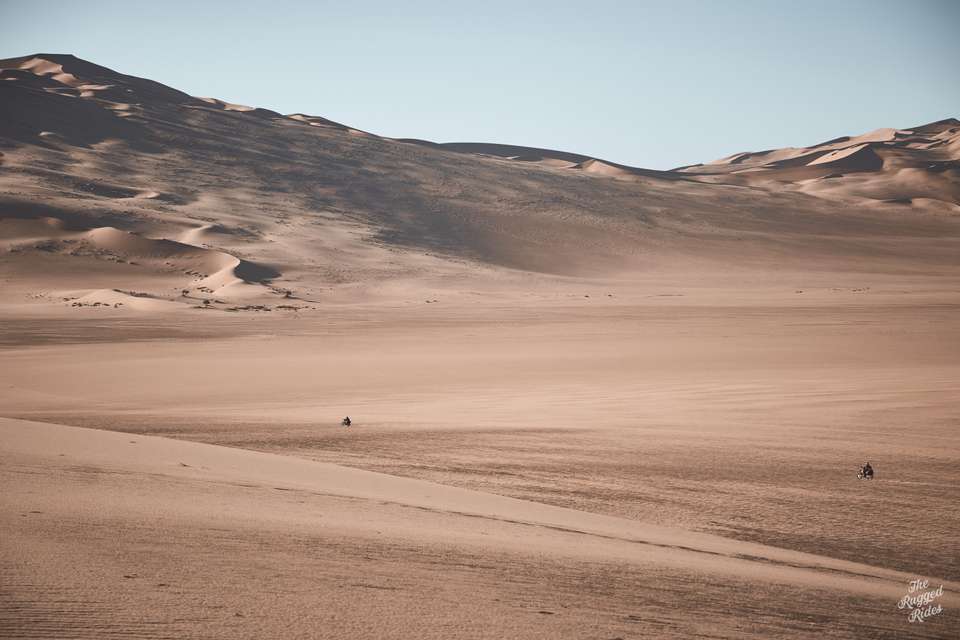
The Sahara in Algeria comes in many forms. Two giants dominate: the eastern and western ergs. The Grand Erg Oriental is largely unrideable, especially its central and eastern parts near Tunisia. It's not about size (around 400–500 km), but the sand itself, ultra-fine, flour-like, brutally soft dunes just a few metres high that constantly force direction changes. Riding there without serious experience leads to constant being stuck and exhaustion within minutes. The western part is different: higher dunes and long seif structures, with firmer sand and much easier riding conditions. The Grand Erg Occidental, meanwhile, features large dunes but also hard "floors" of hamada between them. Of course, they are not the only ergs in Algeria. We crossed parts of Erg Issaouane, Erg Admer, and even the whole section near the Toukmatine mountains. We were coming across sand very often, but usually in rideable form, similar to places like Merzouga.
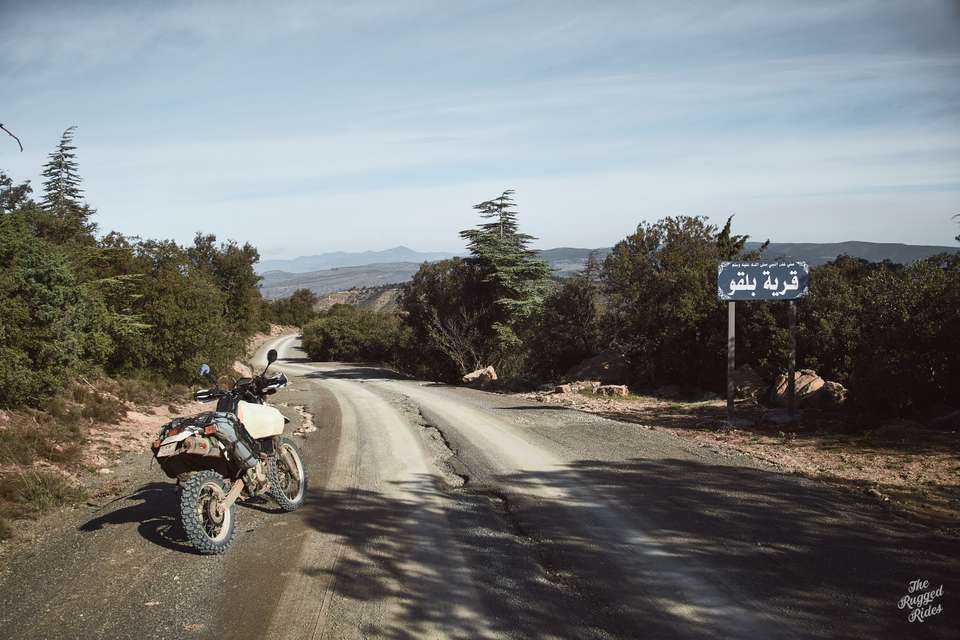
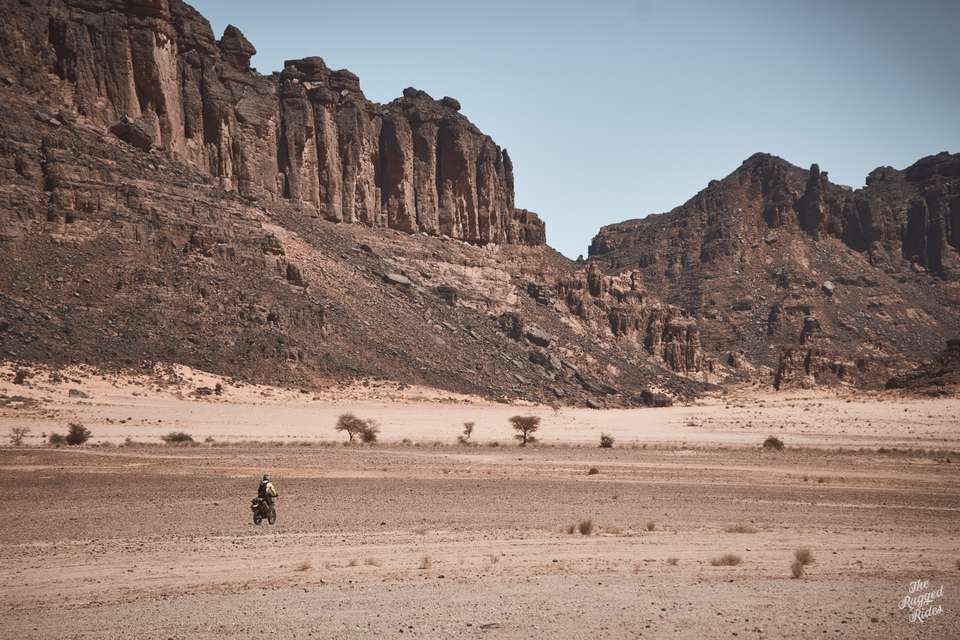
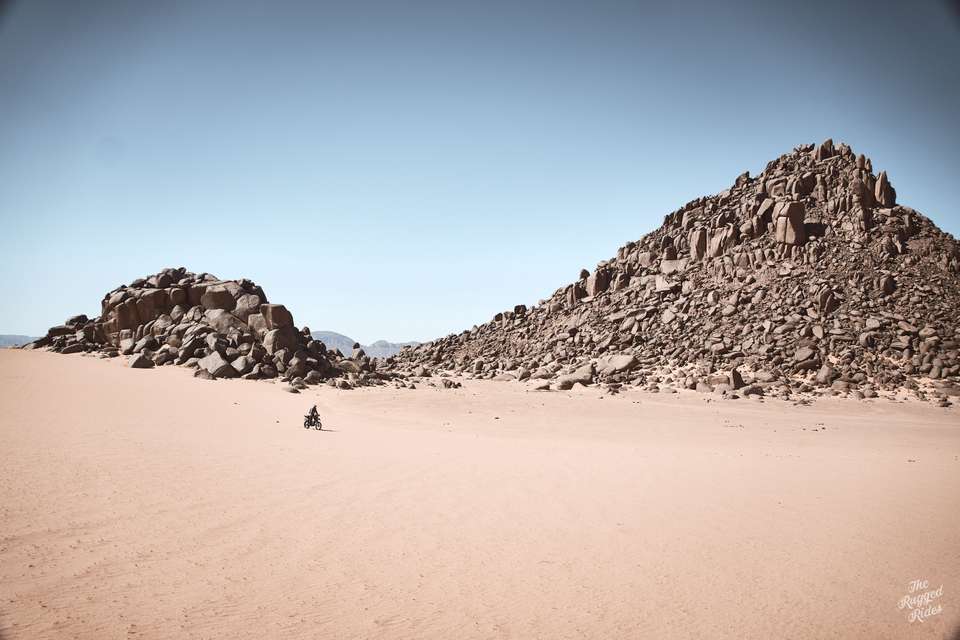
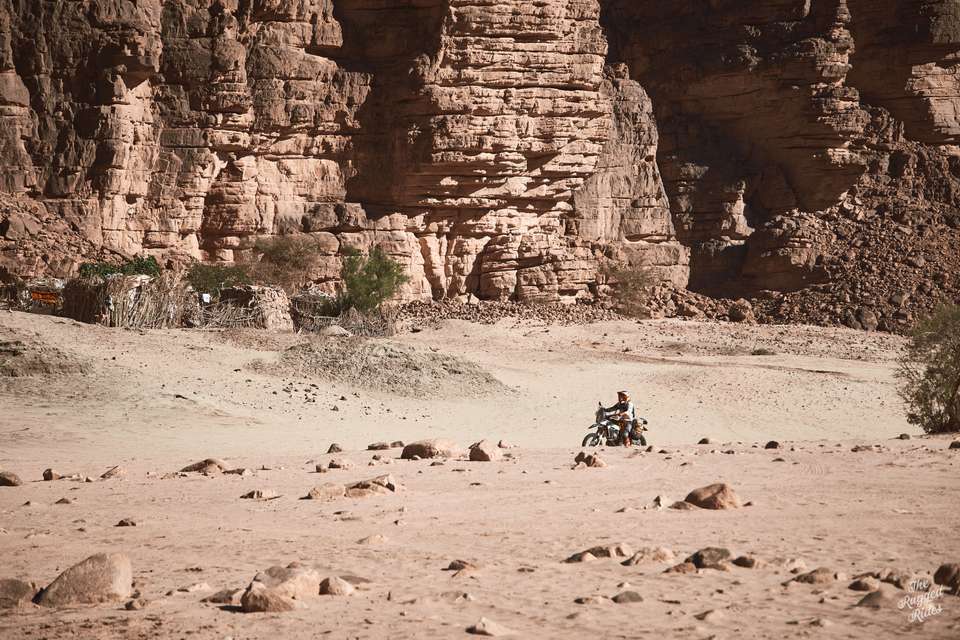
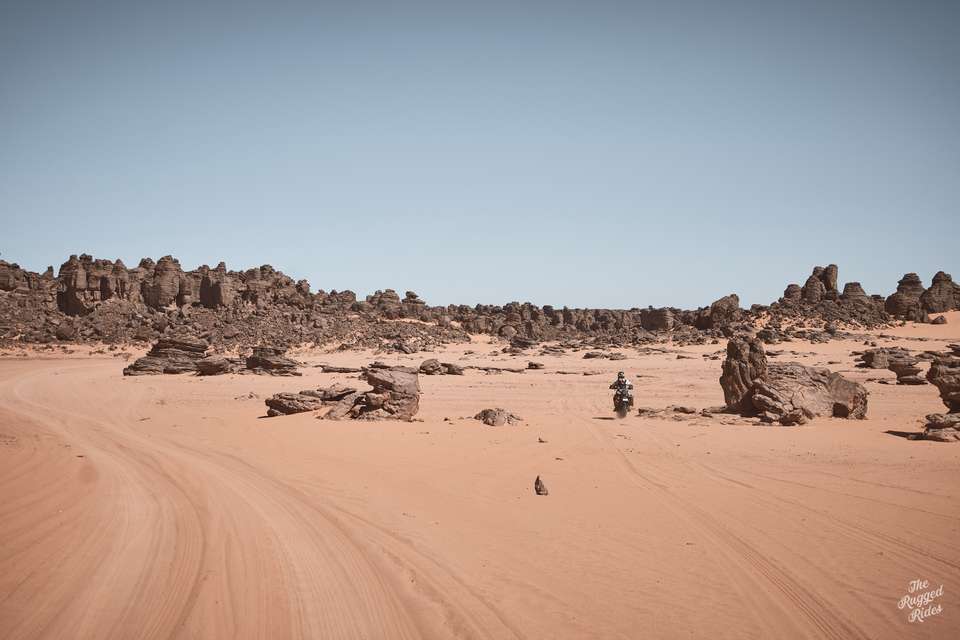
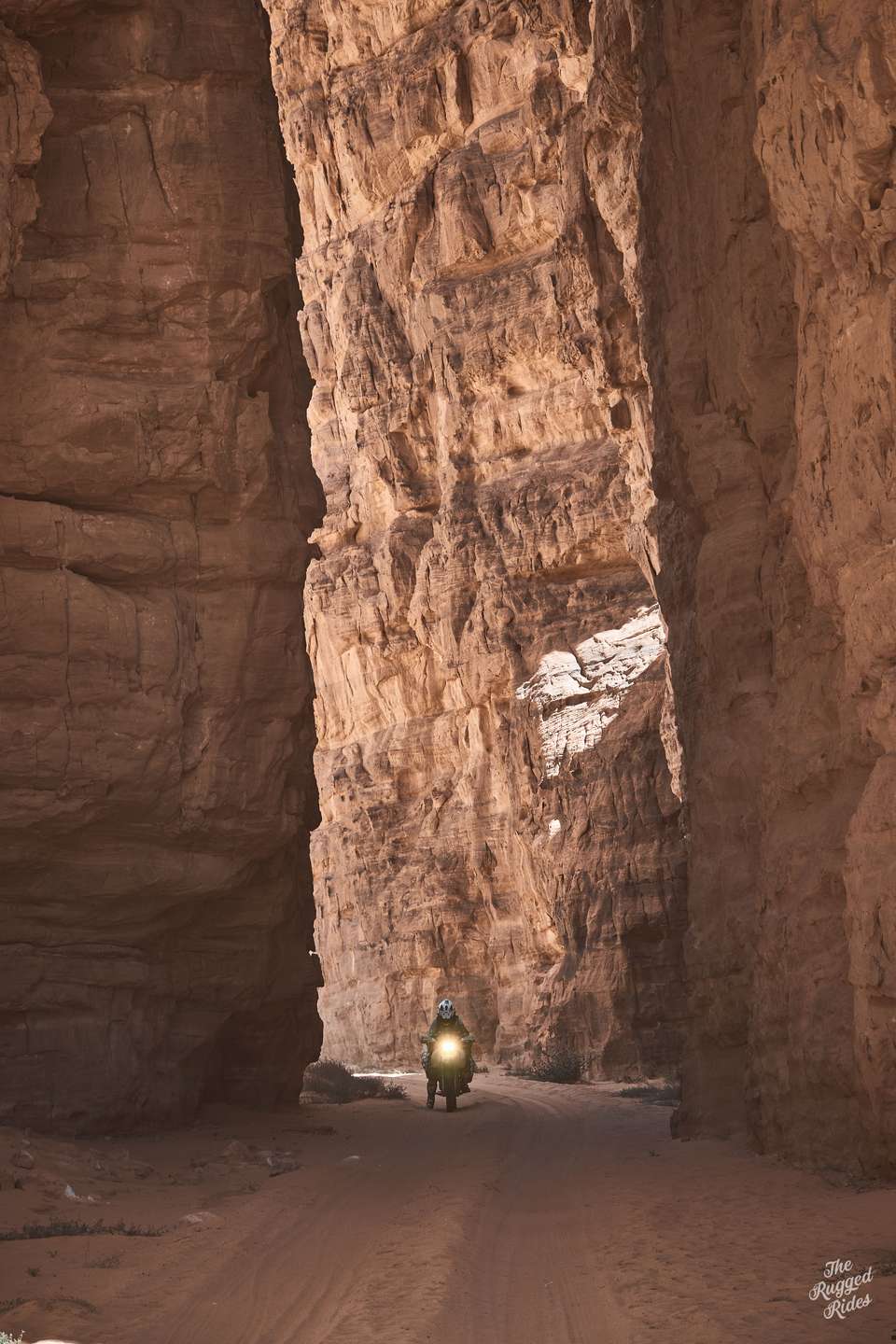
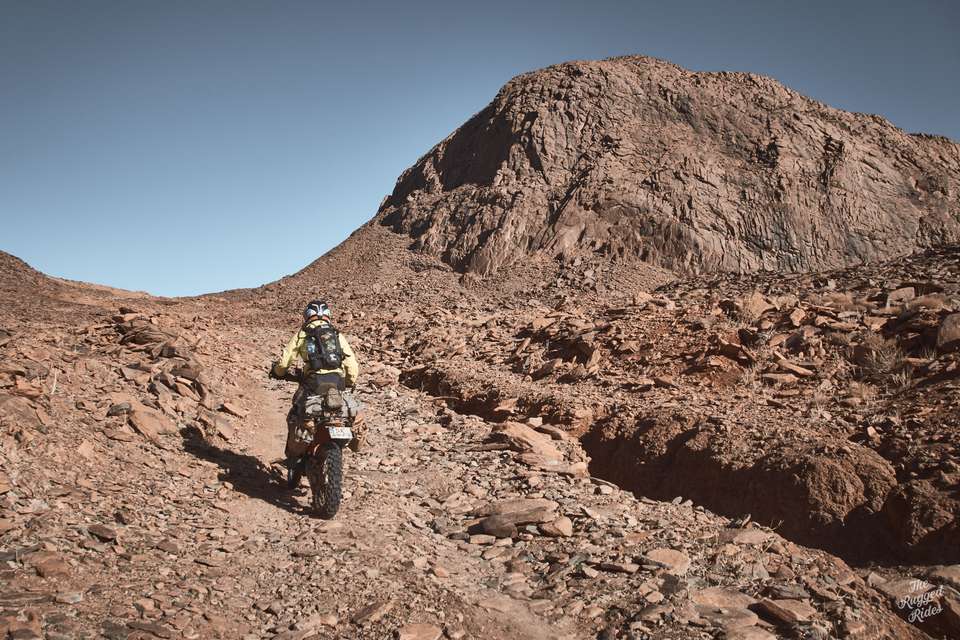
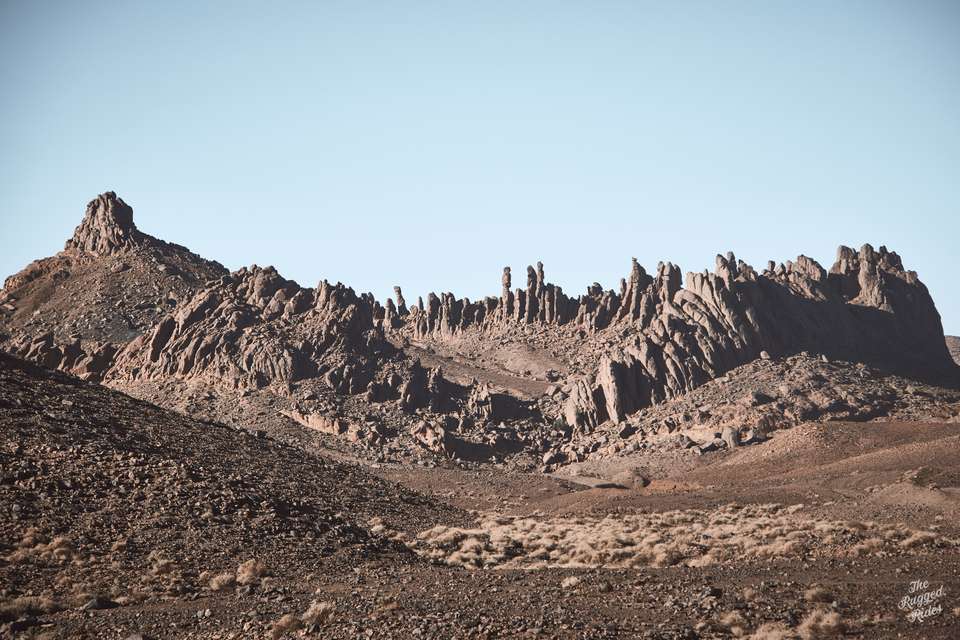
The rest of the desert is hamada, but that doesn't mean freedom in drawing tracks. . The first reason is the vast elevated plains, dropping away in long escarpments stretching for hundreds of kilometres. On our path we encountered the most famous one, the Fadnoun Plateau. Riding across it off-road is impossible, it's a huge rubble of massive rock formations. Even reaching its edge wouldn't solve anything, because there is a several-hundred-metre cliff. Another thing is the mountain ranges, apart from the famous Hoggar, there are also the Toukmatine and Tefedest mountains. These are large ranges that you either have to bypass or find passages through. Then there is the oil and natural gas industry. All refineries and extraction fields are connected by wide gravel service roads, and numerous tracks converge on them from all directions, something that is clearly visible on satellite images. However, we do not want to approach them for many reasons, which is precisely why avoiding these roads is a true challange. As you can see, navigation in the desert is not as simple as it may seem at first, and the romantic idea of blasting along on a compass bearing can work, but only with proper preparation beforehand. Everywhere else, the desert is varied and will simply not allow itself to be crossed in a straight line simply.
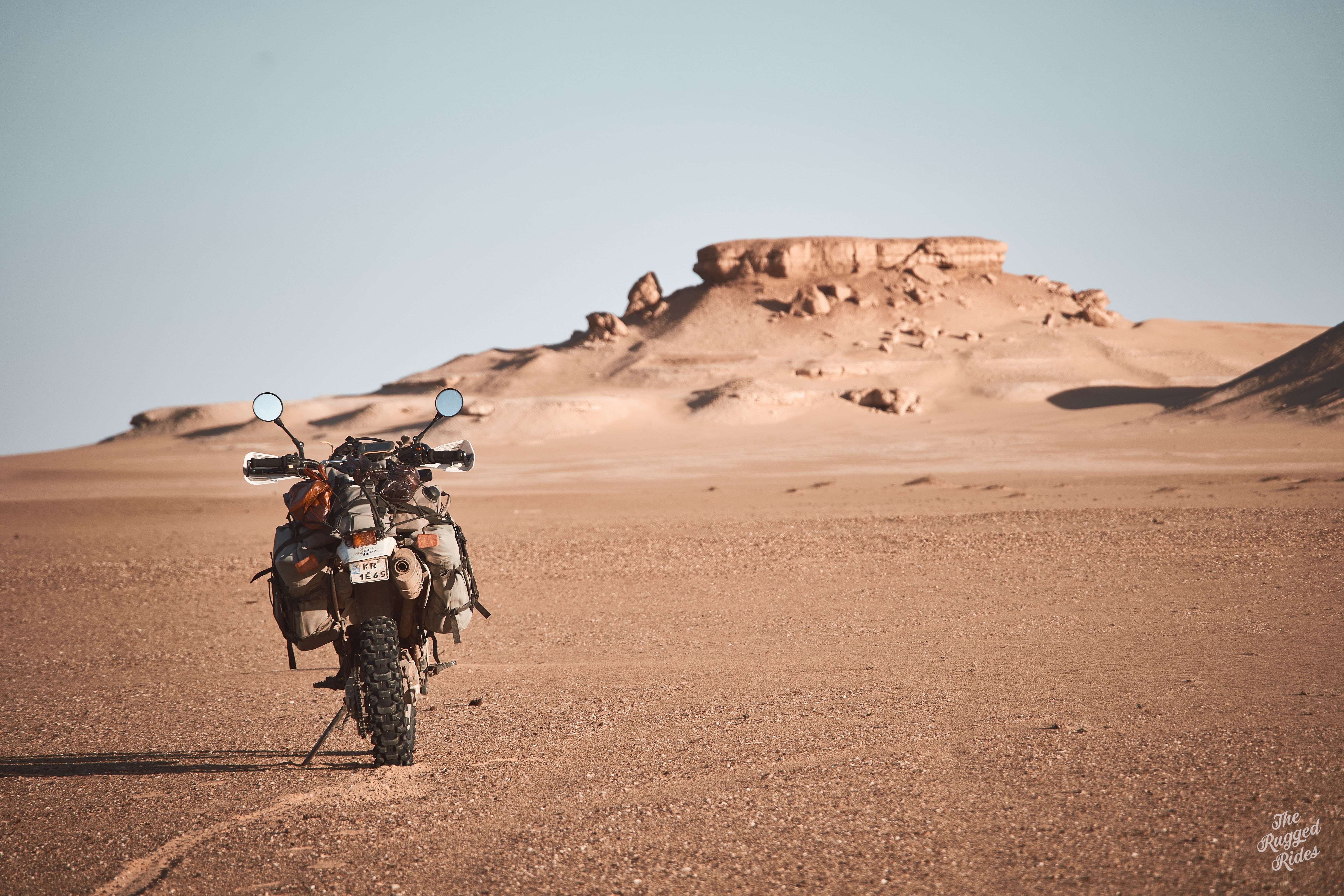
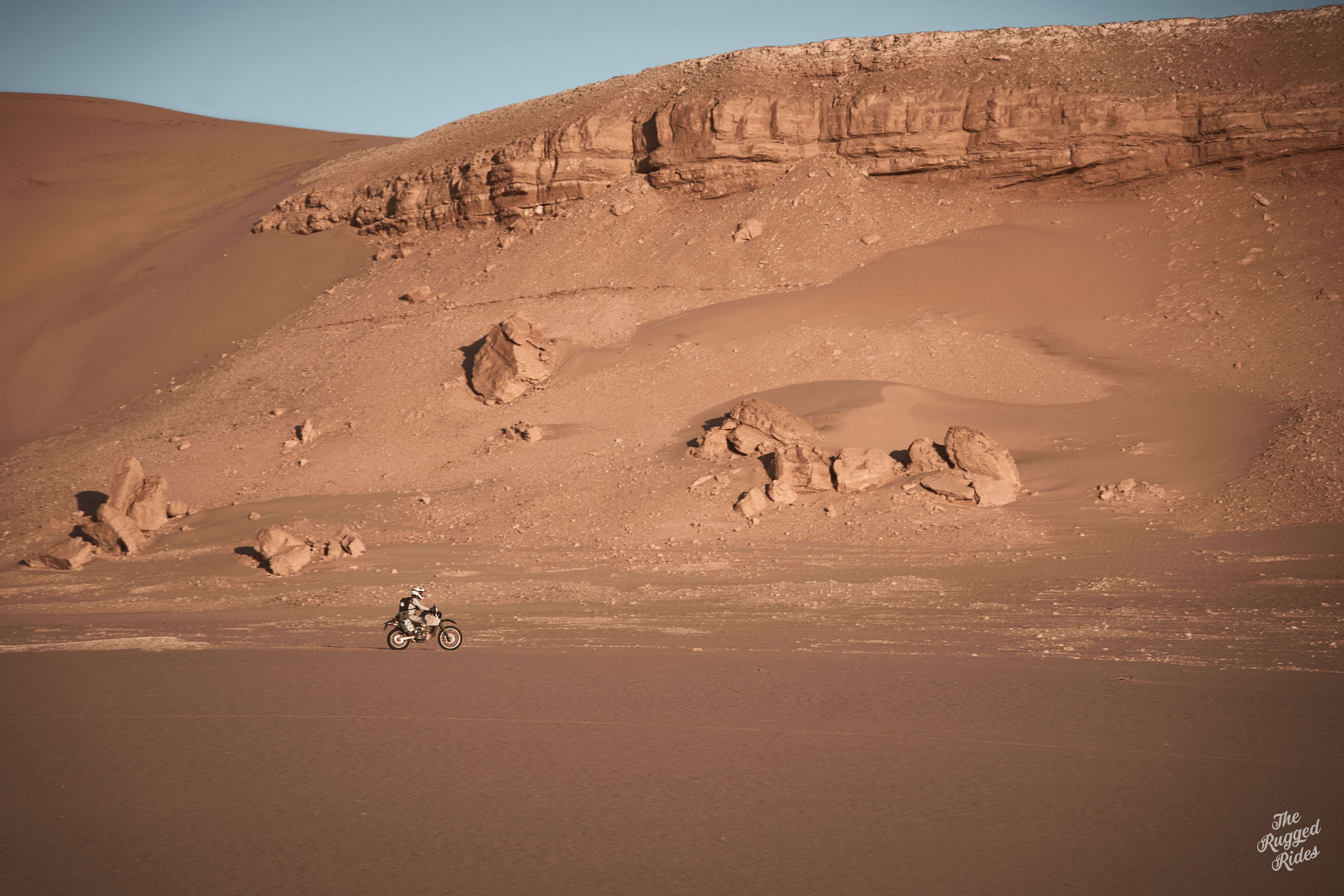
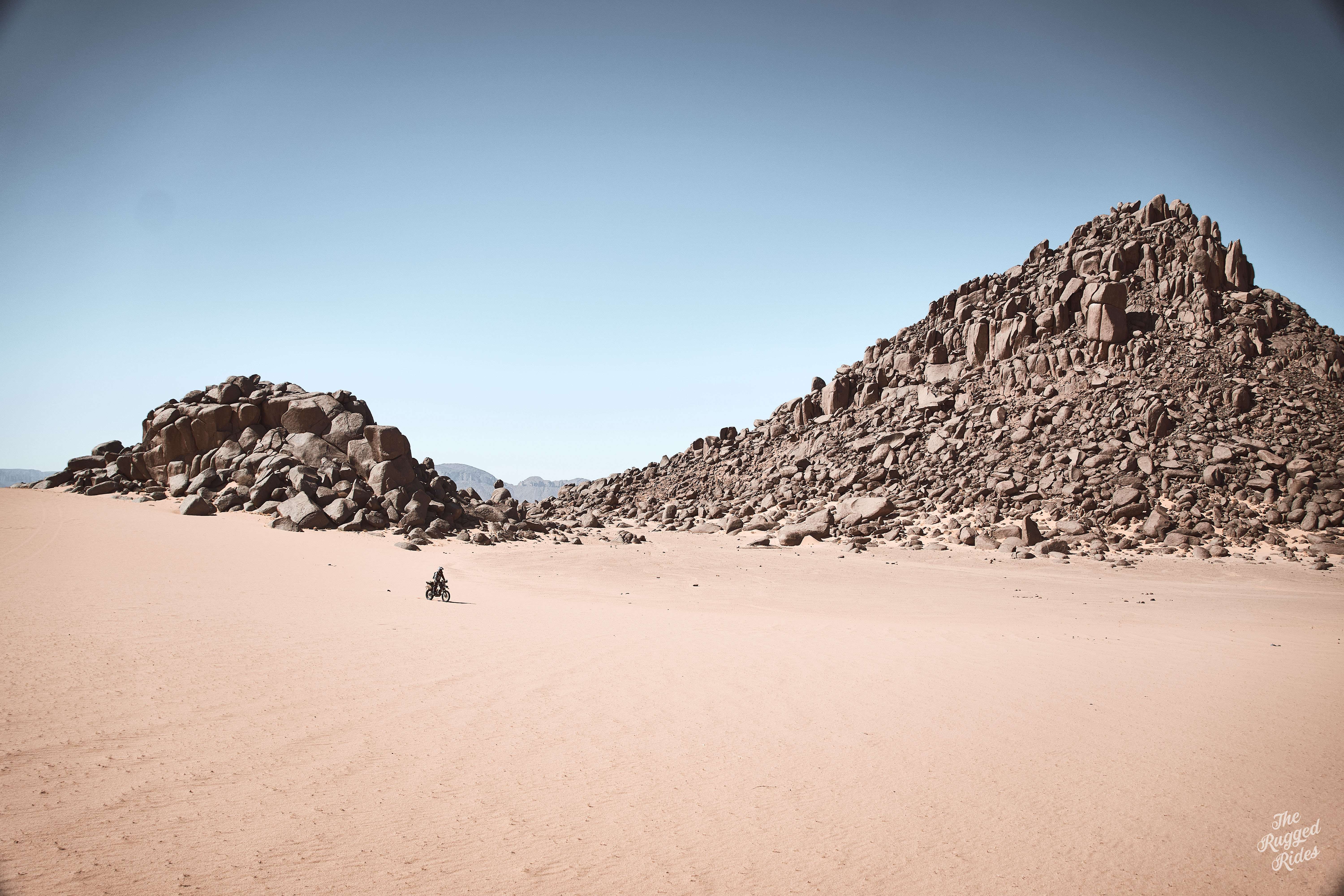
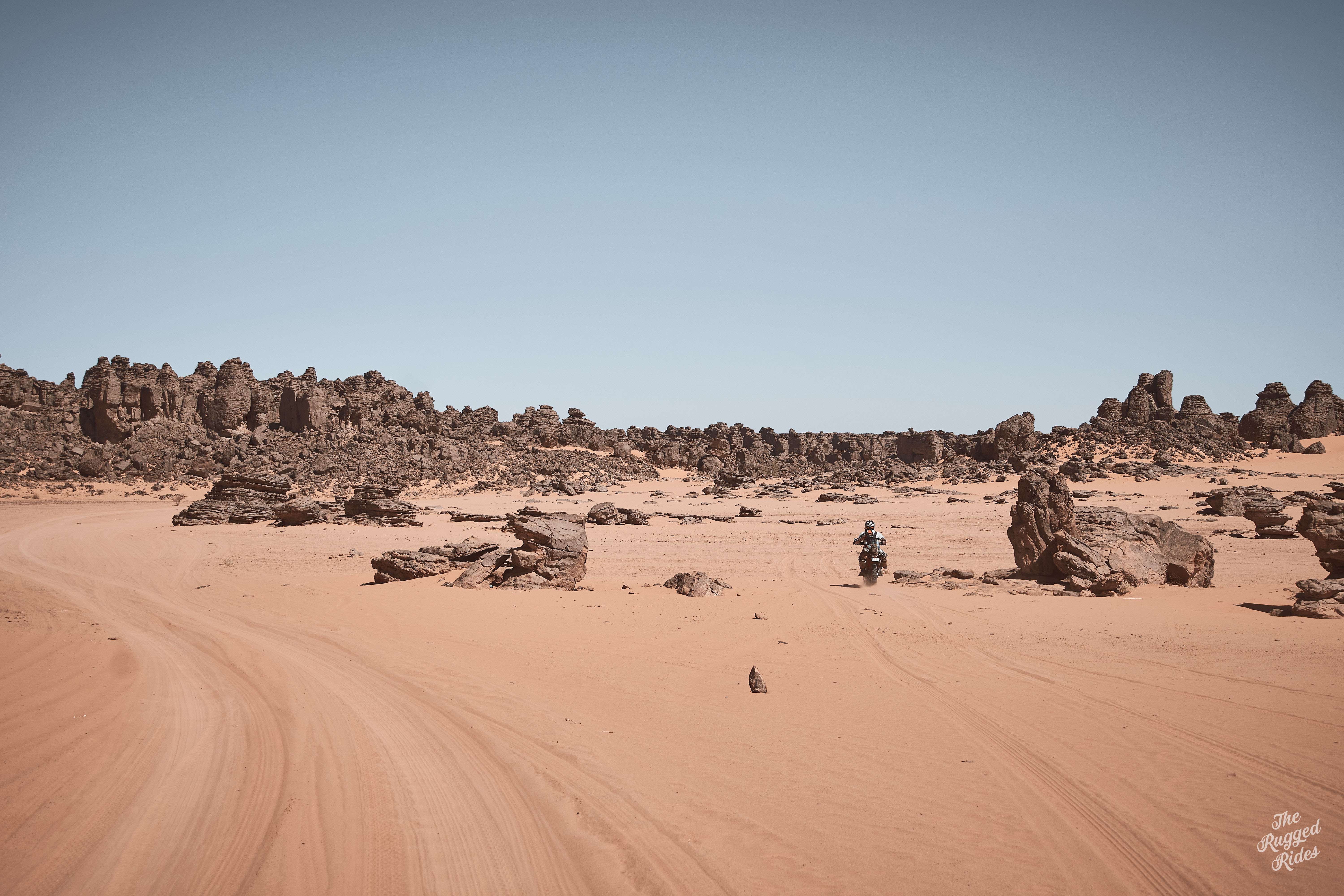
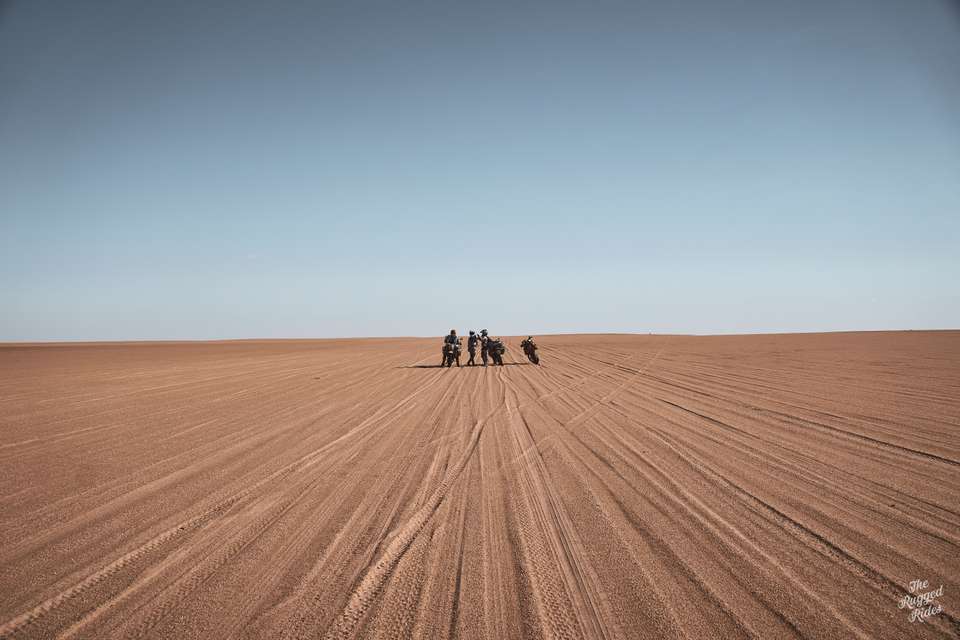
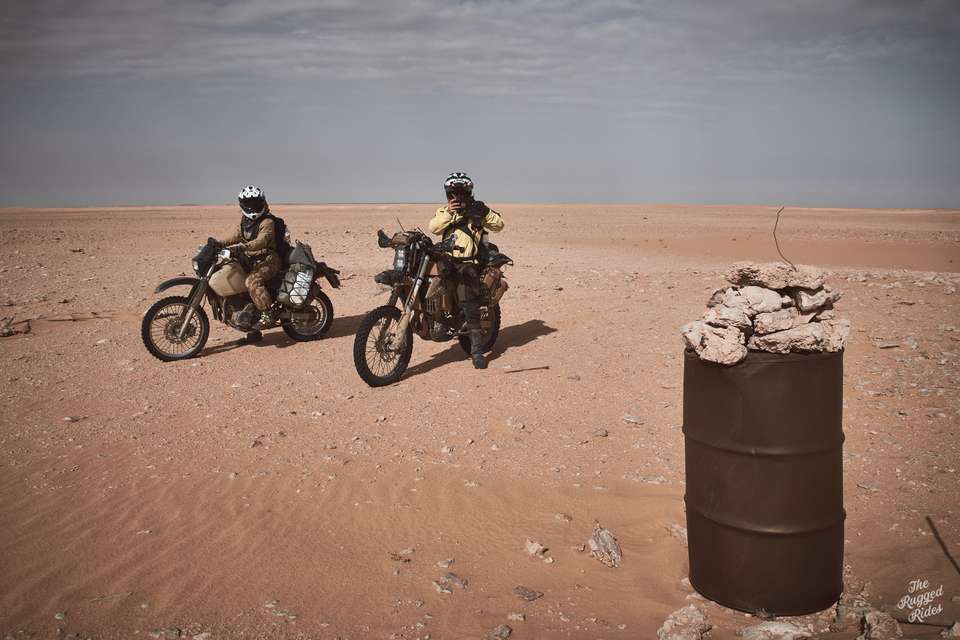
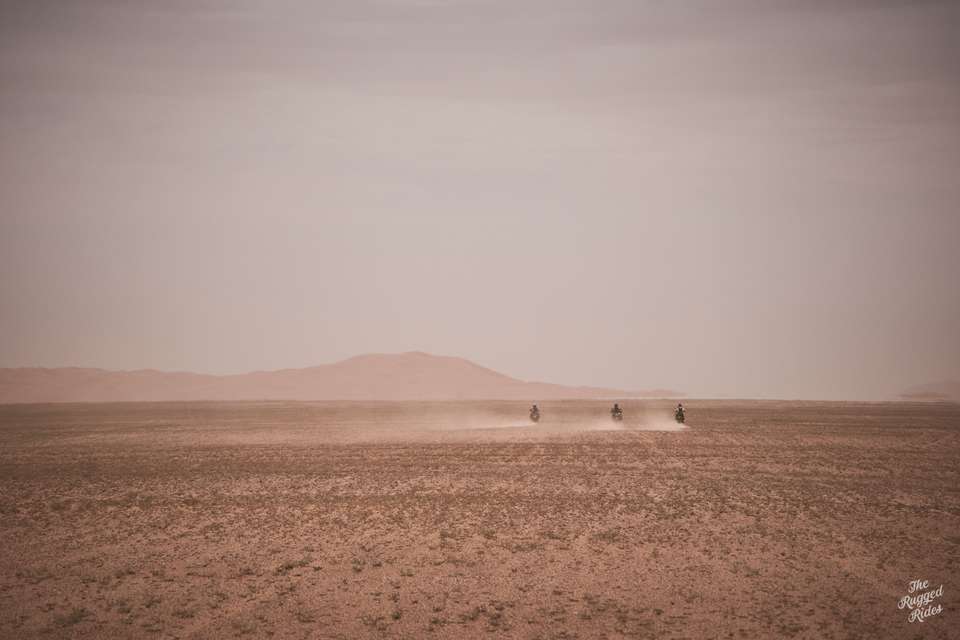
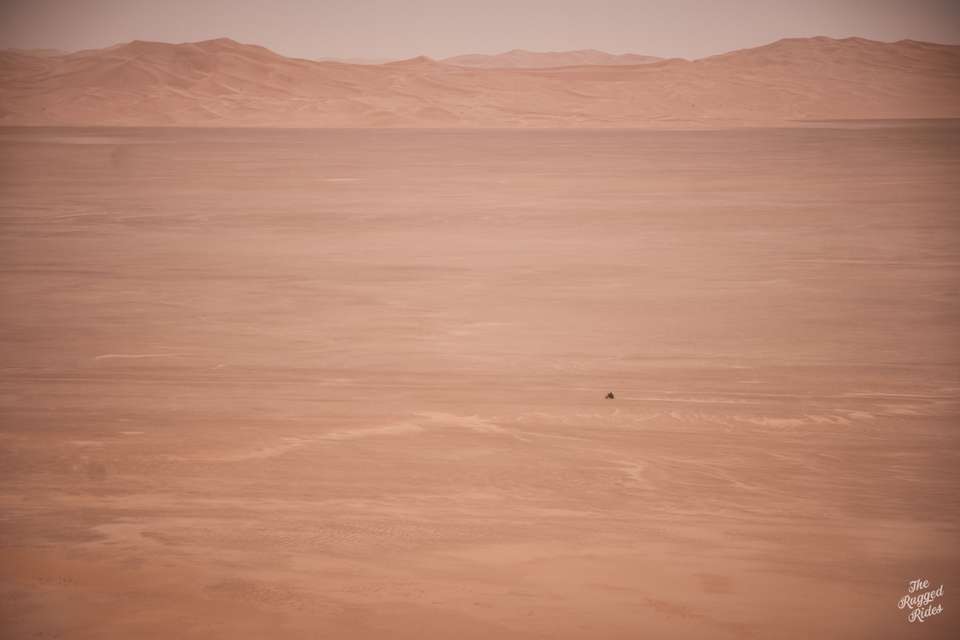
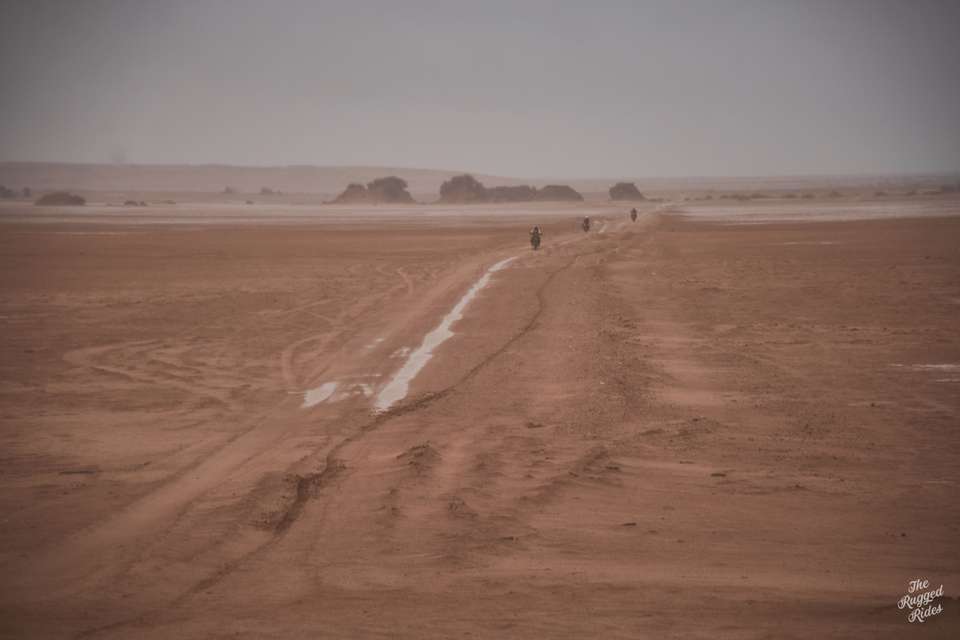
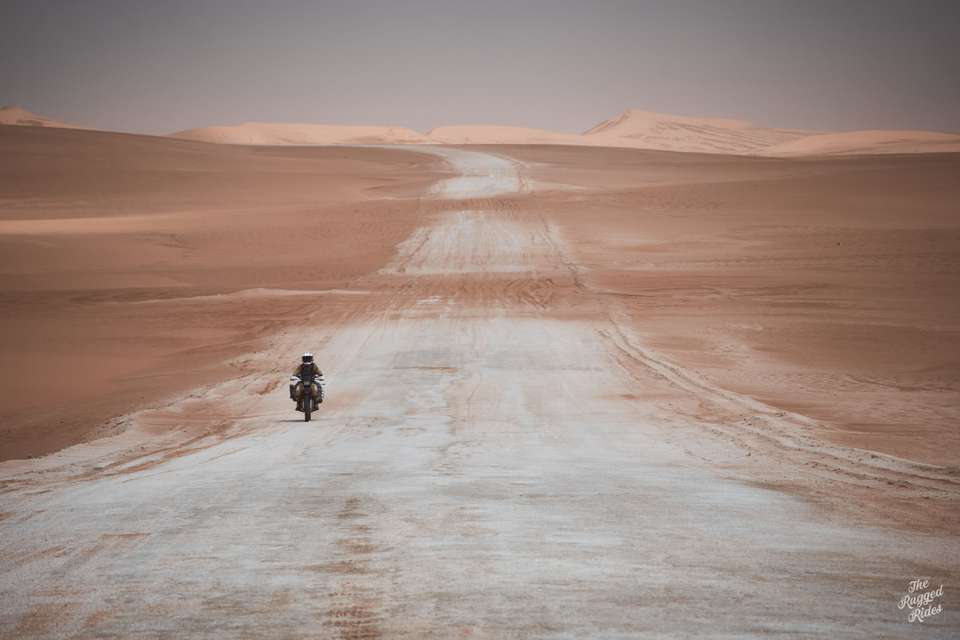
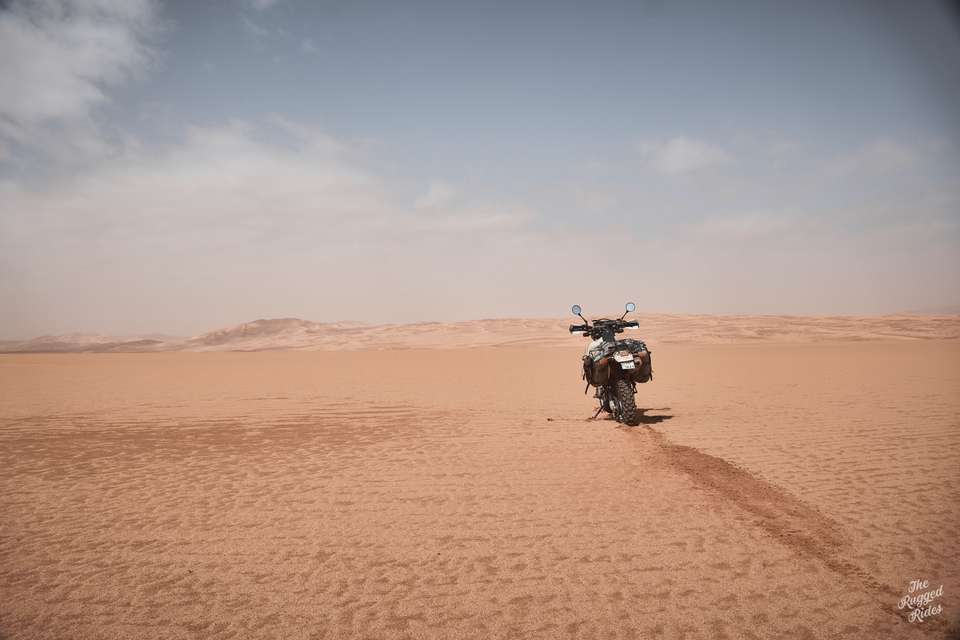
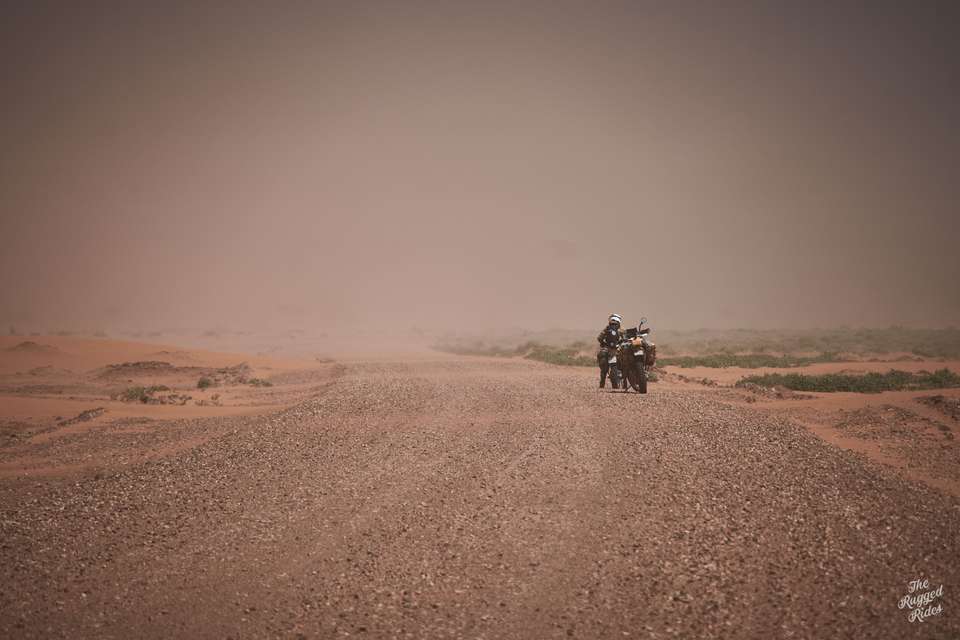
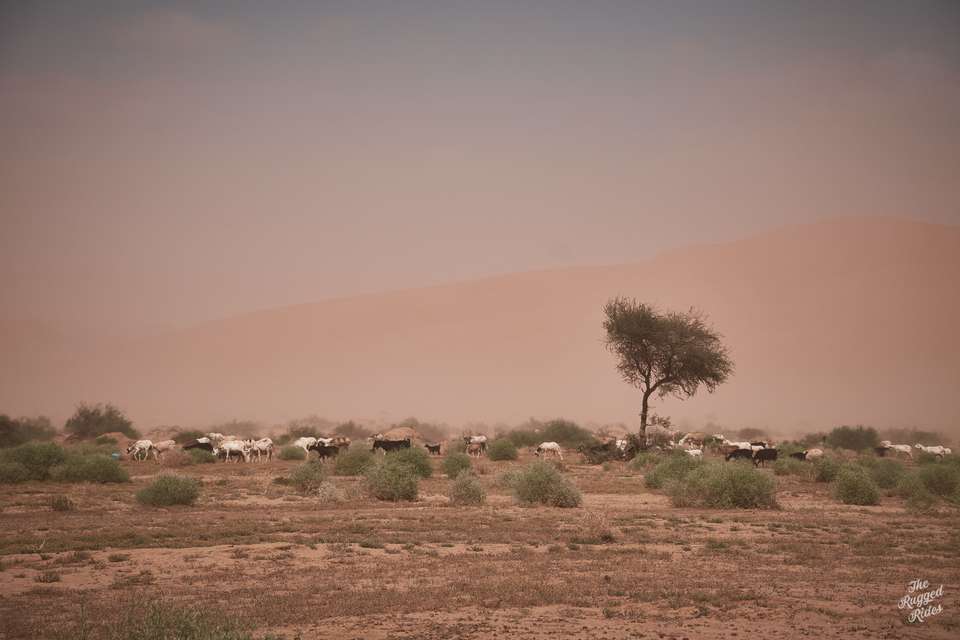
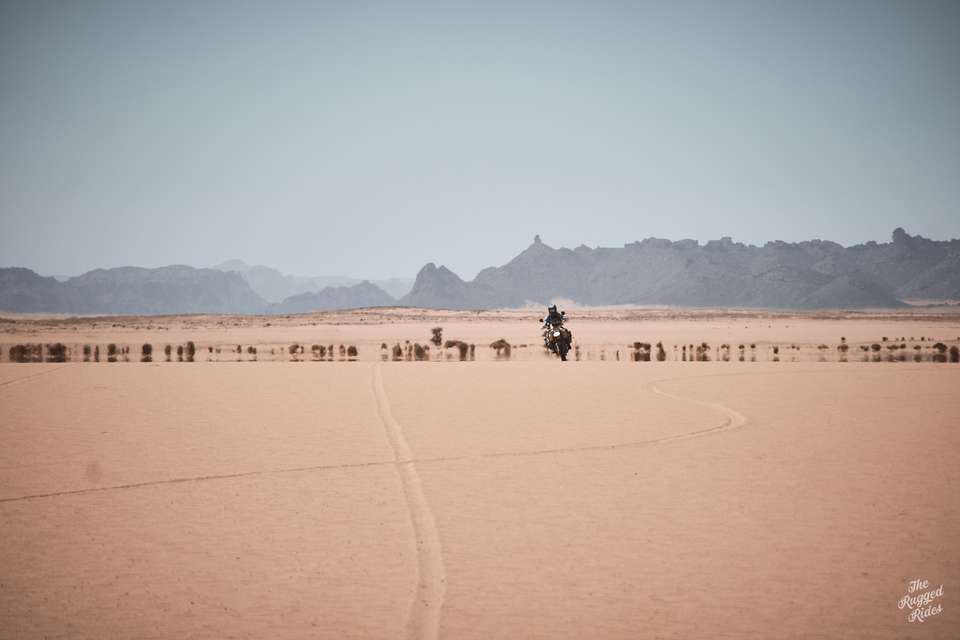
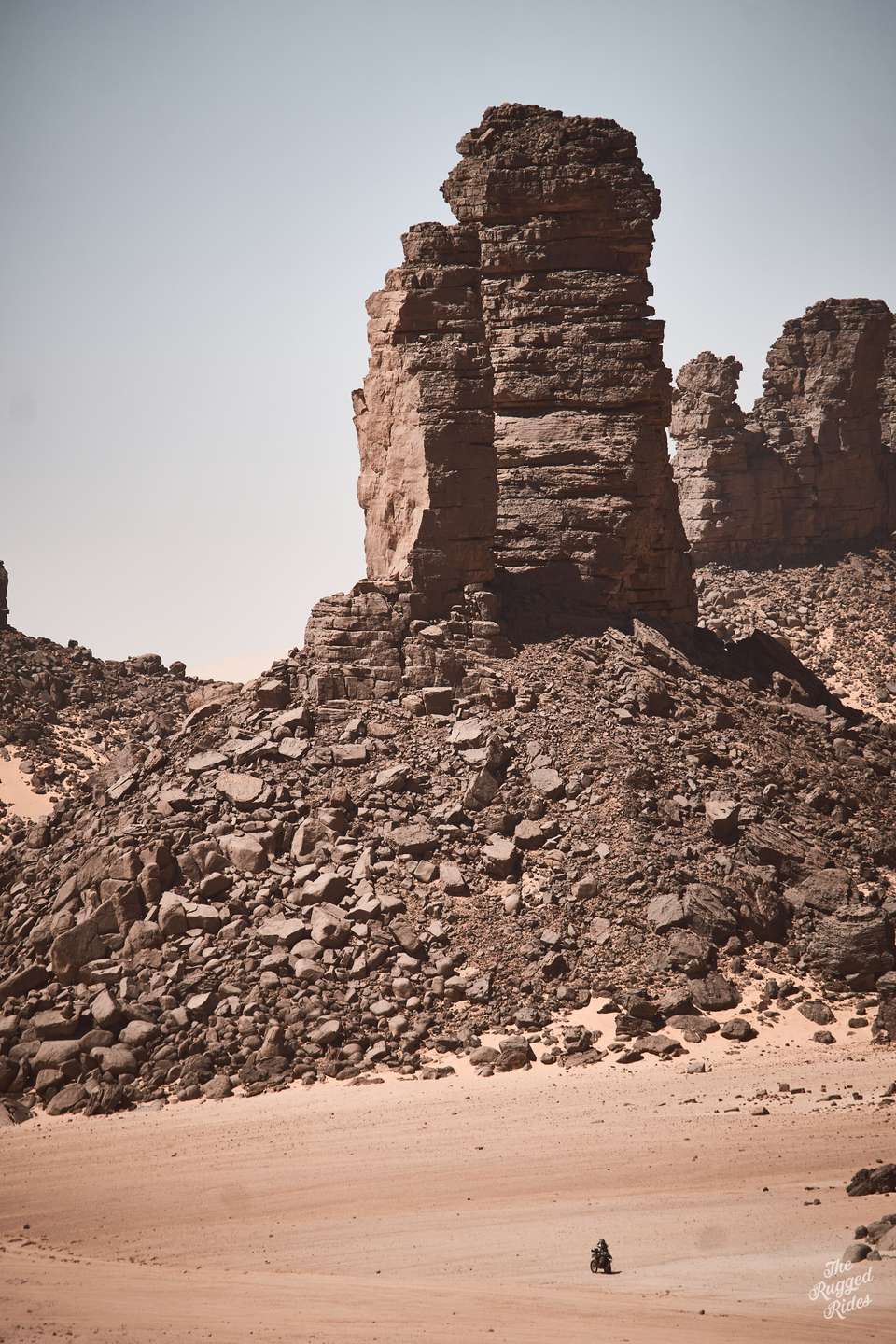
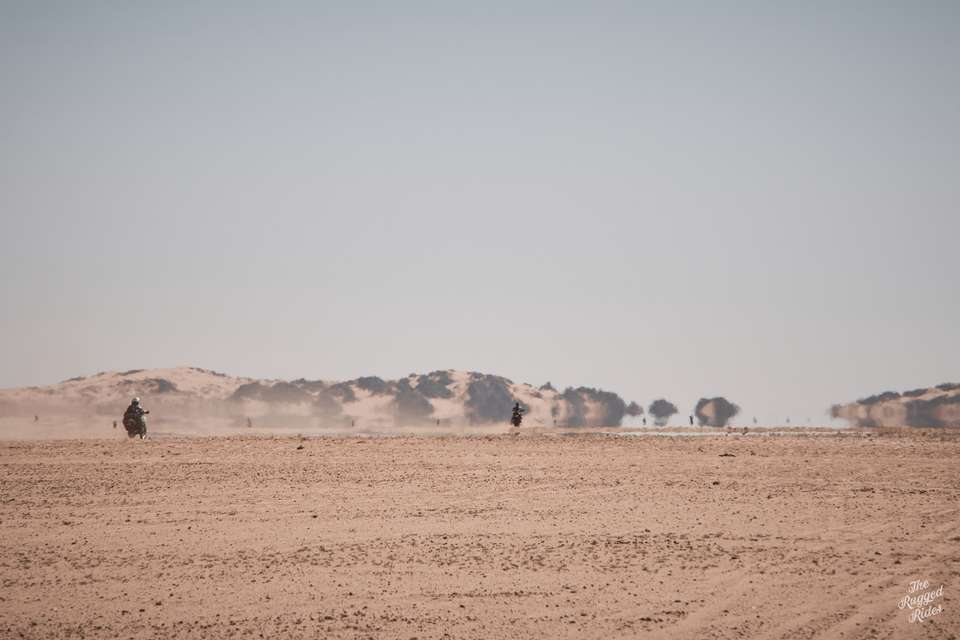
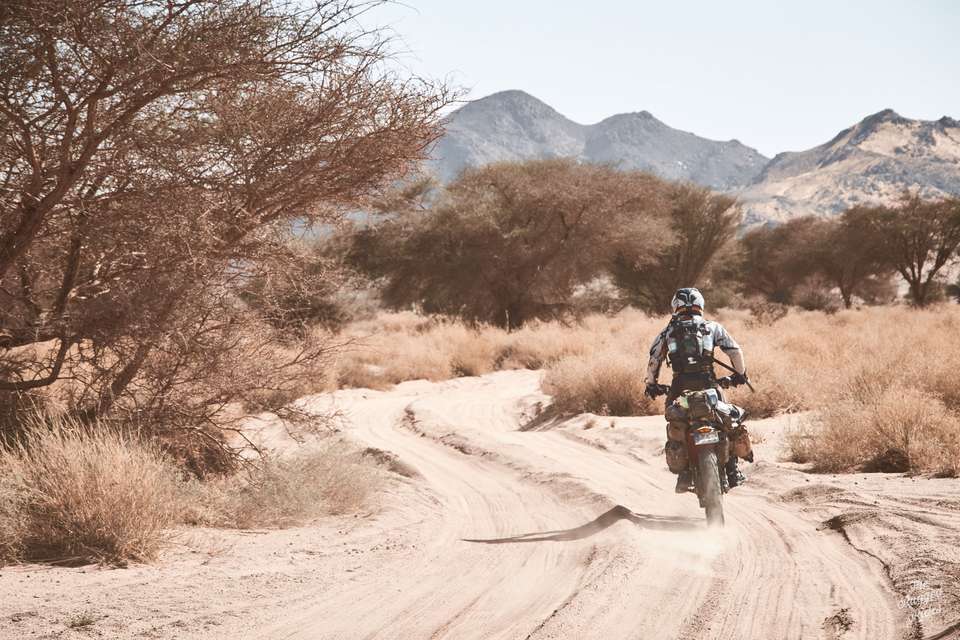
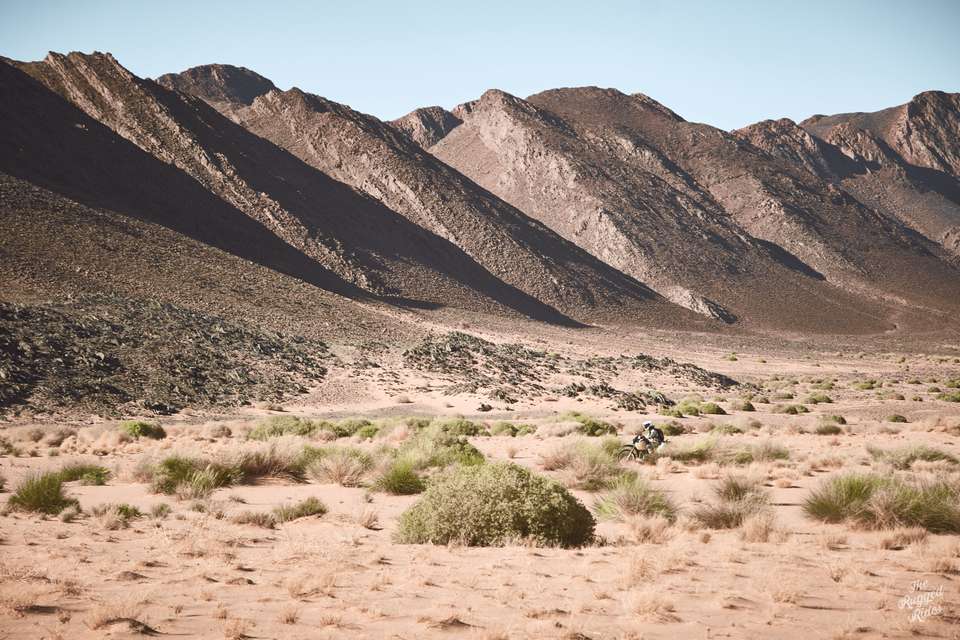
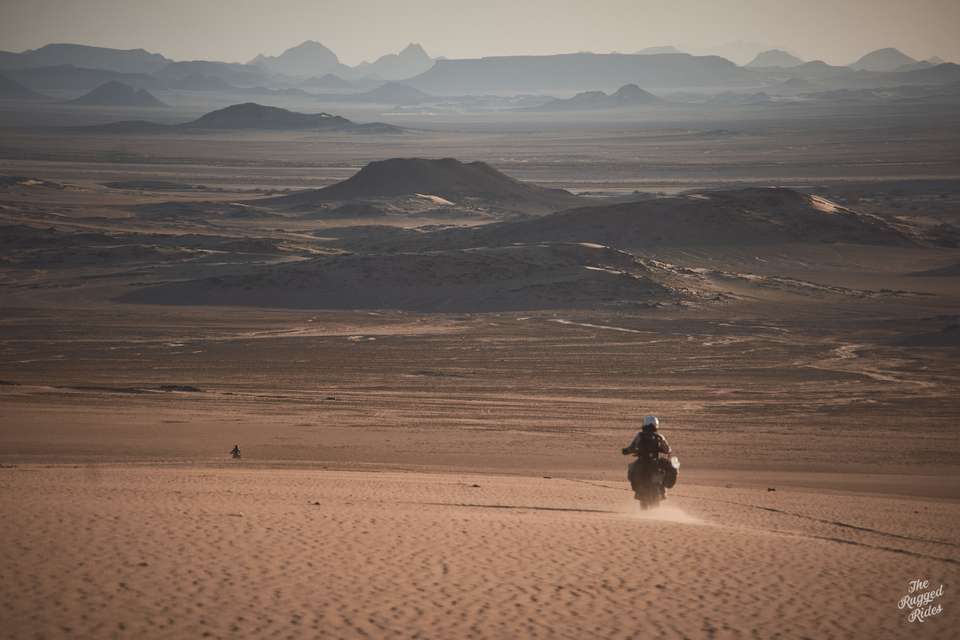
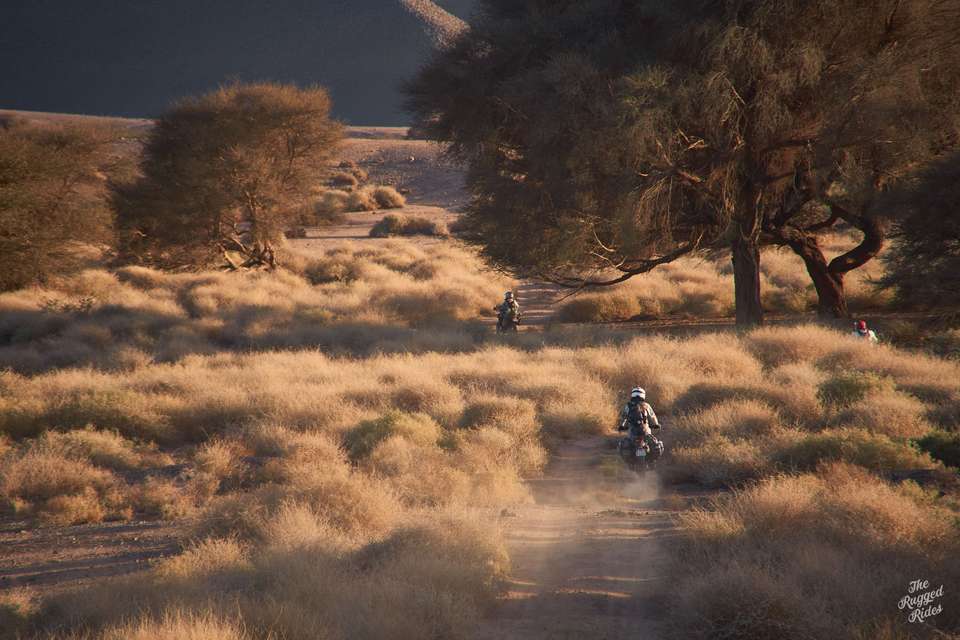
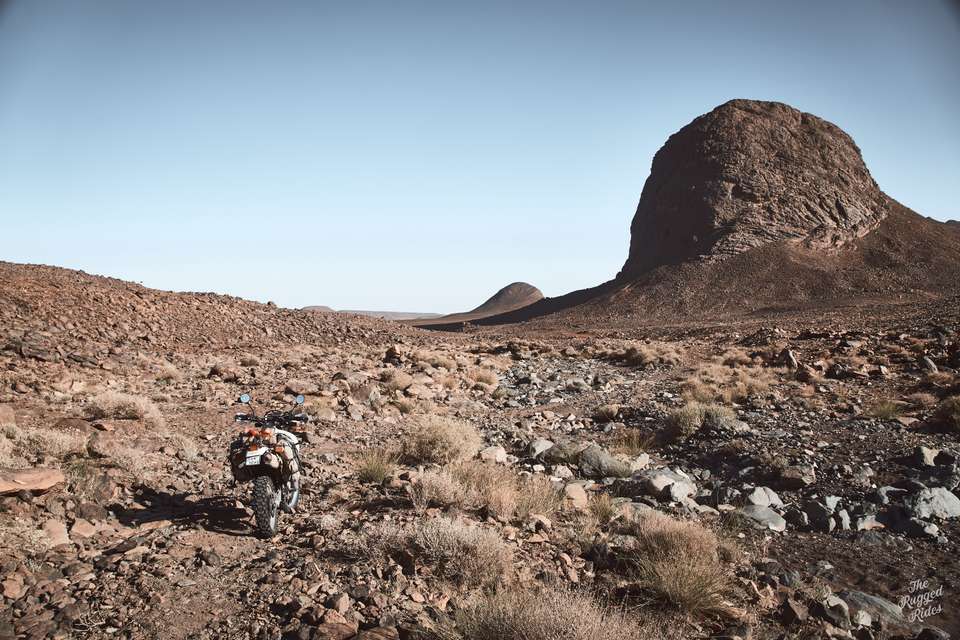
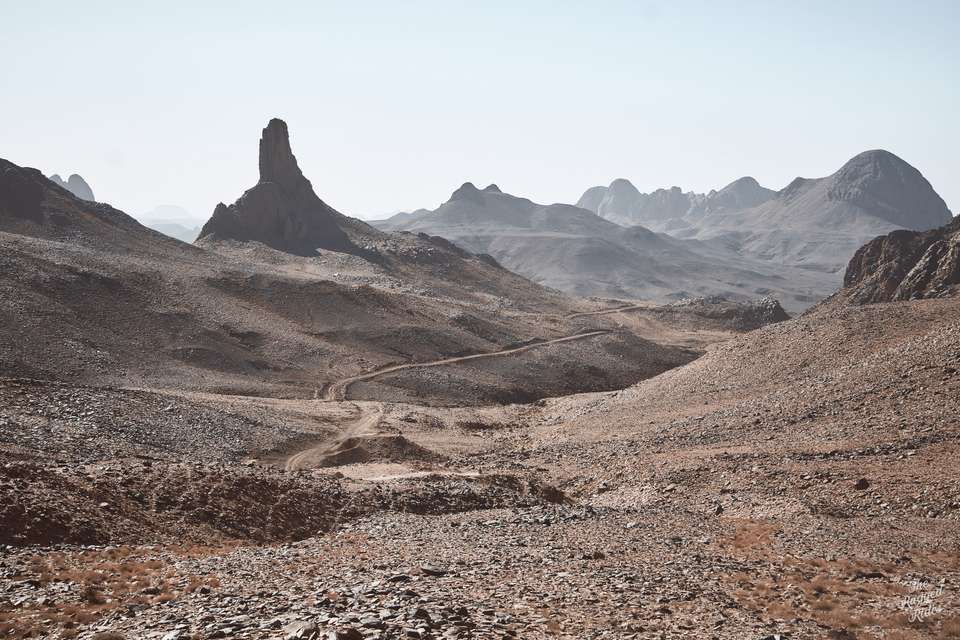
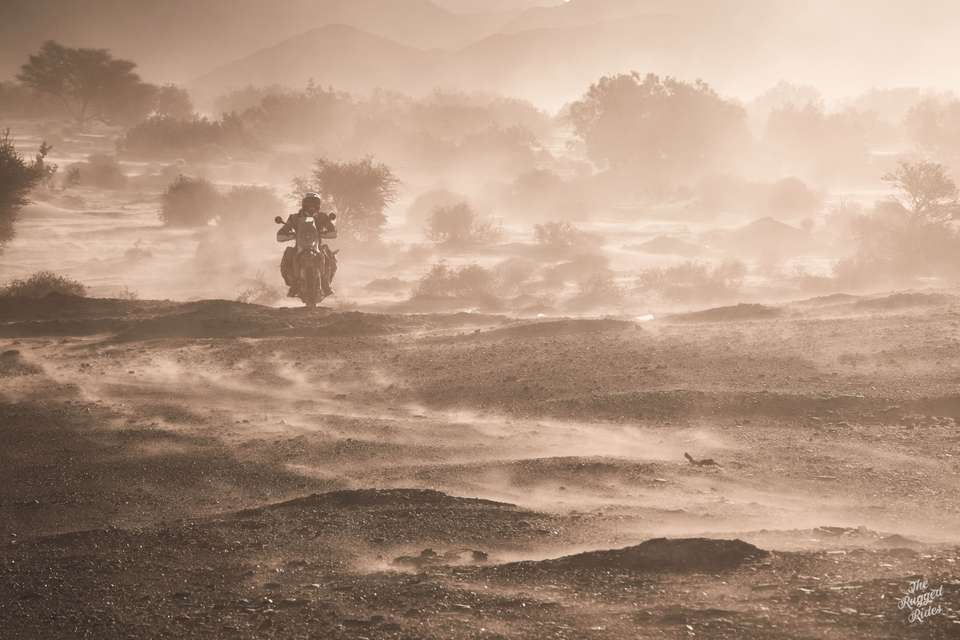
Well then, the desert. Just imagine that in Morocco, and especially in Tunisia, managing to draw a track in such a way that for 300–400 km you don't encounter a single soul or settlement is already something of an art form. Algeria is on a completely different scale. Literally. Here, letting your imagination run wild while plotting a track can instantly turn it into something well over 600 km long. Along the way there is nothing. Literally nothing. A vast emptiness filled only with ever-changing forms of incredible desert landscapes. For example, on the route from Ouargla to Bordj Omar Driss, after the first 50 km we didn't meet a single living soul, no shepherds, no duars, no camels, absolutely nothing whatsoever.
In such conditions you cannot rely on luck. You need certainty about your equipment, proper supplies, and a solid backup plan. I also think that the Sahara we were about to experience in Algeria requires experience.
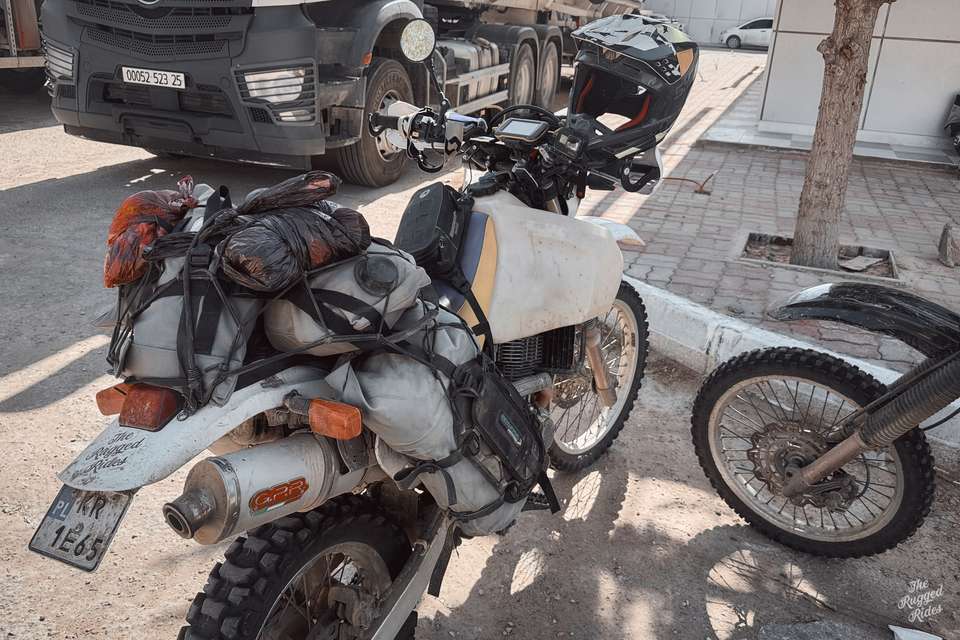
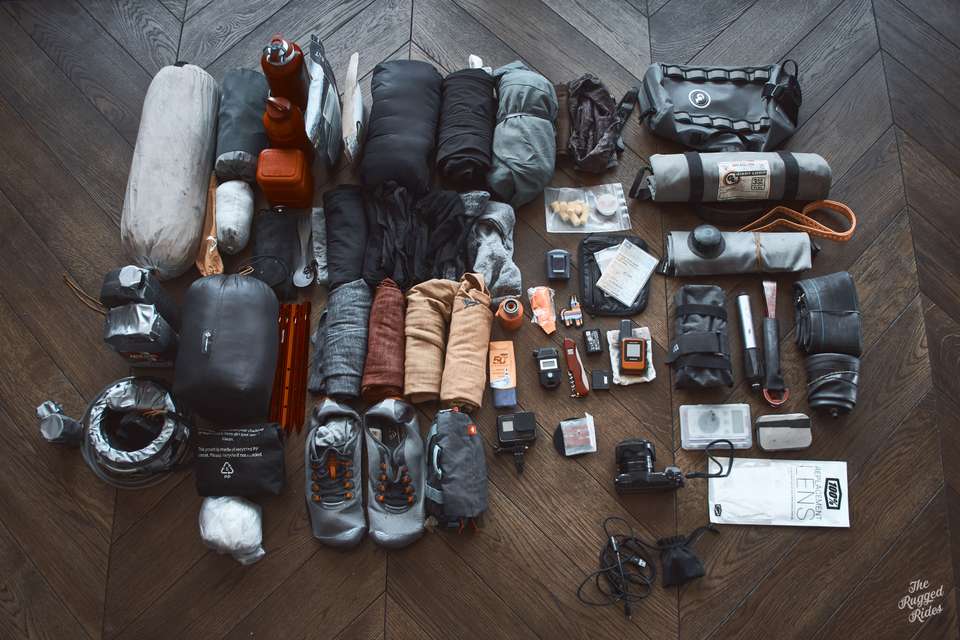
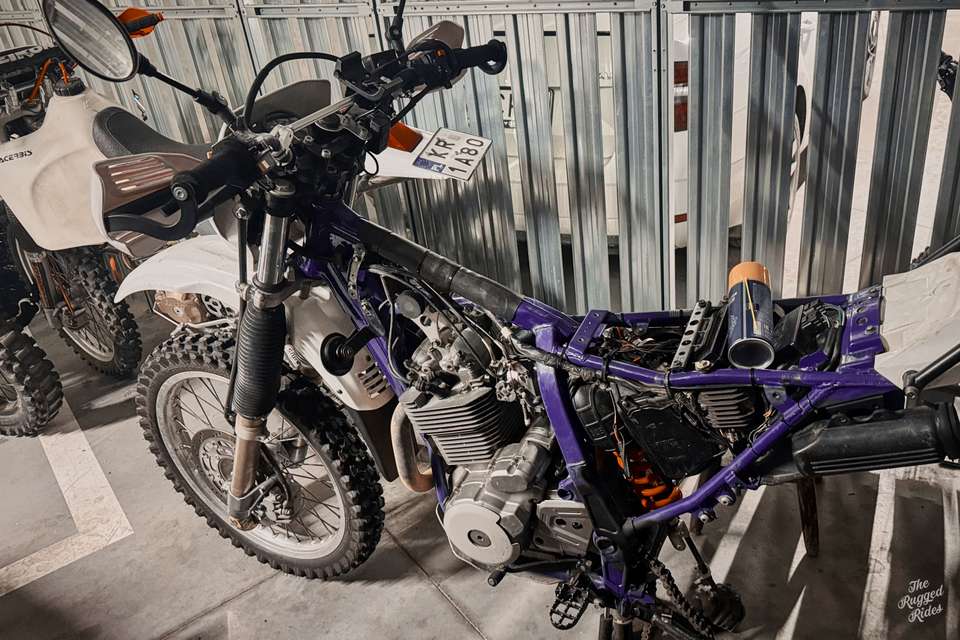
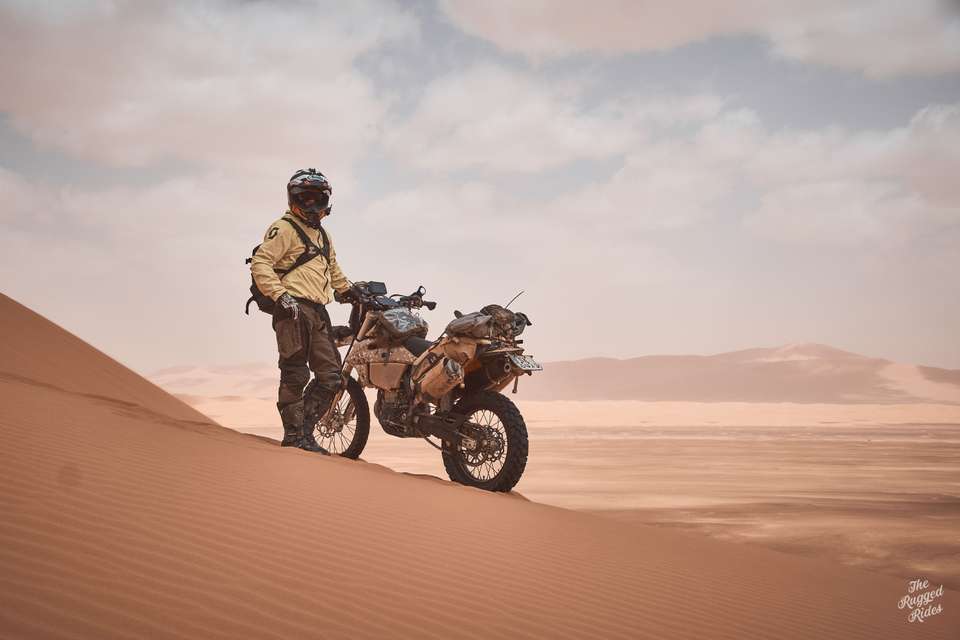
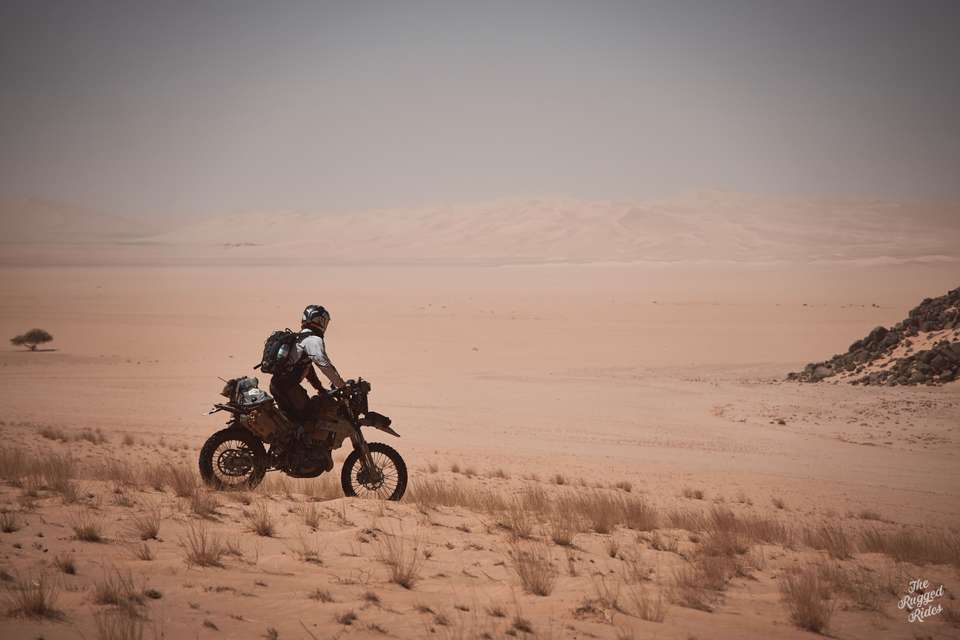
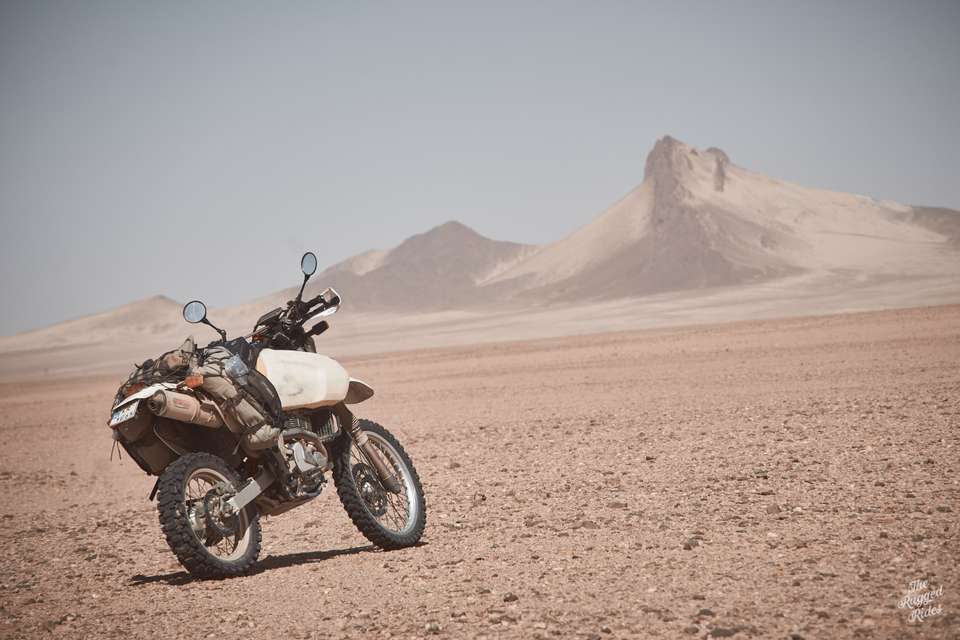
And what exactly does that mean? Proper preparation means 40–50 litres of fuel per motorcycle, in some sections supplemented with extra PET bottles. On top of that, several litres of water and purification tablets, in case we needed to use wells. Beyond the obvious tools, a solid stash of spare parts is essential to fix anything that could immobilise you. In the sand you don't use the clutch, but you still need spare plates because the clutch is the weakest link in the drivetrain. We had a very well-stocked first aid kit, including adrenaline. And finally, we also had satellite communicators, and to be completely honest, I would not go there without them.
Knowledge
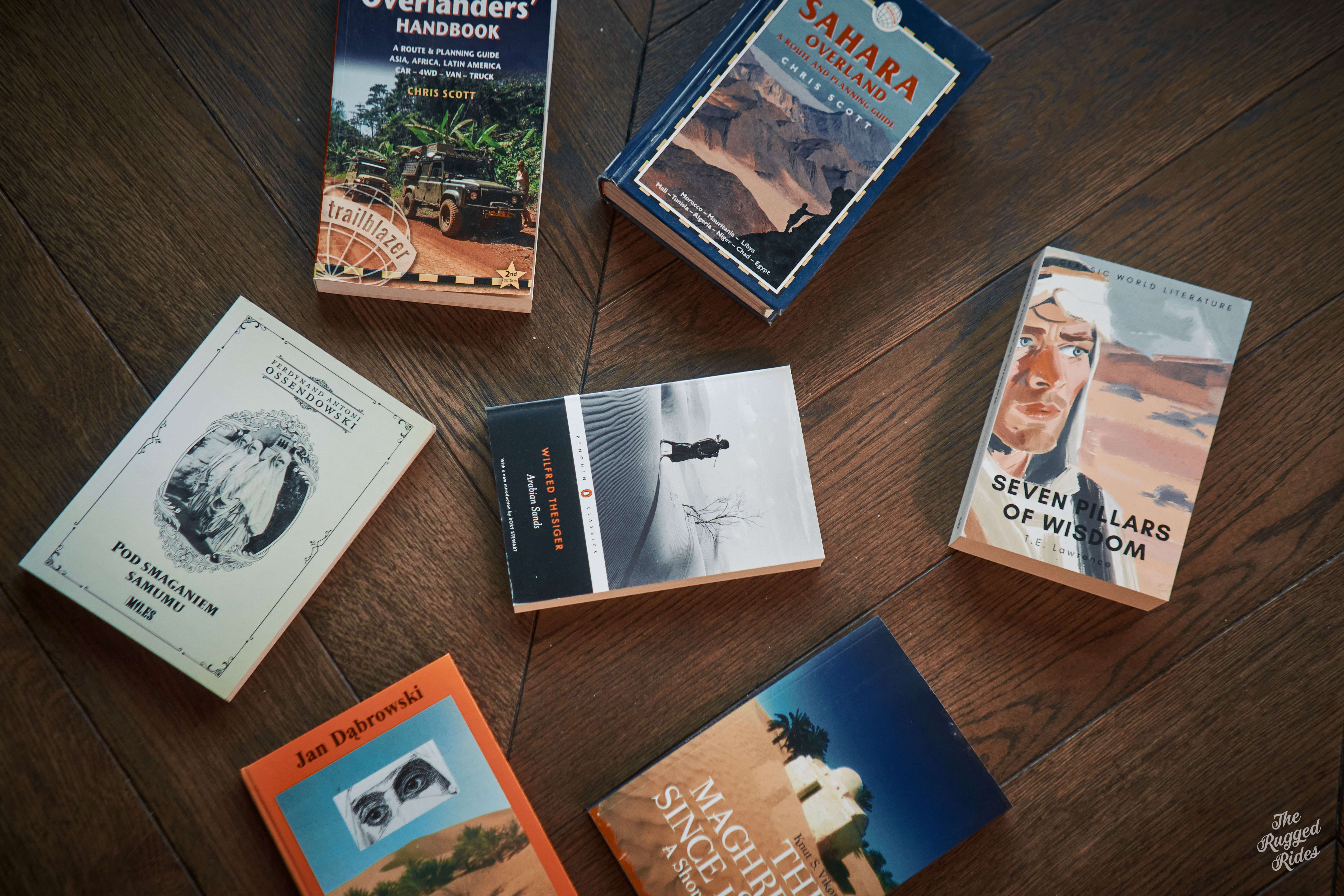
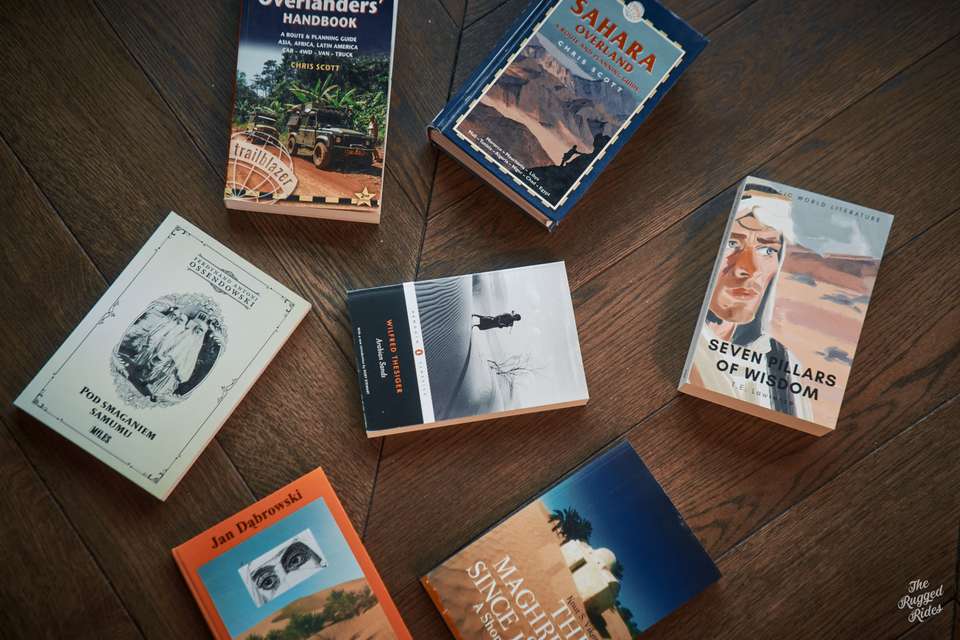
I was preparing for this trip for over a year. Books, a handful of ride reports, phone calls with people who had been there, HUBB, and of course reading Chris Scott. Don't expect too much from Facebook groups or other popular sources. Simply put, there isn't much about Algeria there, and what there is tends to be basic cliches repeated over and over again.
As for literature, I especially recommend:
- Chris Scott - Sahara Overland - the bible of overlanders crossing the Sahara, full of tracks, advices, and knowledge backed by the author's immense experience,
- Chris Scott - Desert Travels - a brilliant collection of the author's Sahara expedition accounts, including fascinating stories such as the Paul Flatters expedition,
- Antoni Ferdynand Ossendowski - Pod Smaganiem Samumu - an incredible journey through time with many curiosities about places and towns we also passed, written over 100 years ago, and the author's two main tools were a Kodak and a Winchester,
- Jan Dąbrowski - Szeherezada - memoirs of a Polish engineer travelling through Algeria in the 1980s, full of observations, legends and descriptions of local customs,
- Knut S. Bikor - The Maghreb Since 1800: A Short History - a concise introduction to the region's history
Visa
To enter Algeria you need a visa, and it is quite a difficult one to get. Although there is VoA (visa on arrival, arranged through the ministry via certified travel companies who then organise your passage through the country), what we were interested in is the standard visa, because we want to cross the border on our own bikes and continue riding independently. Getting such a visa is not easy.
As always, a bit of luck is a need, but it's best to grab this luck firmly and help it along. There are two ways. You can apply for a visa with an invitation from a resident who invites you to a specific place on specific dates, all signed and certified at the office by an official. Interestingly, in Algerian custom the signature takes the form of a fingerprint stamped in red ink, classy stuff. In this case you need contact with someone locally. The second option is hotel bookings, which act as a kind of travel plan.
It's hard to say which method is better. I've heard of applications being rejected in both cases. For example, our application last year wasn't even processed, despite having an invitation and solid documentation. What went wrong? Bad luck, wrong mood, a few too many words about motorcycles… A lot also depends on the specific embassy or consulate - for example, those in France seem easier, while the one in Poland has a reputation for being tougher.
We managed to get the visa on the second attempt, without an invitation, relying only on hotel bookings. One of us submitted the application for all four people. I think the best approach is to follow the embassy checklist precisely (proper insurance, completed forms with photos, etc.), and choose well-known, reputable hotels for bookings. This little trick significantly increases your chances. And as always, a smile, it helps! During the application they ask whether you are going to the desert, south, but nobody asks about your means of transport. The visa is issued for exact dates you apply for.
Borders, escort, where you can ride?
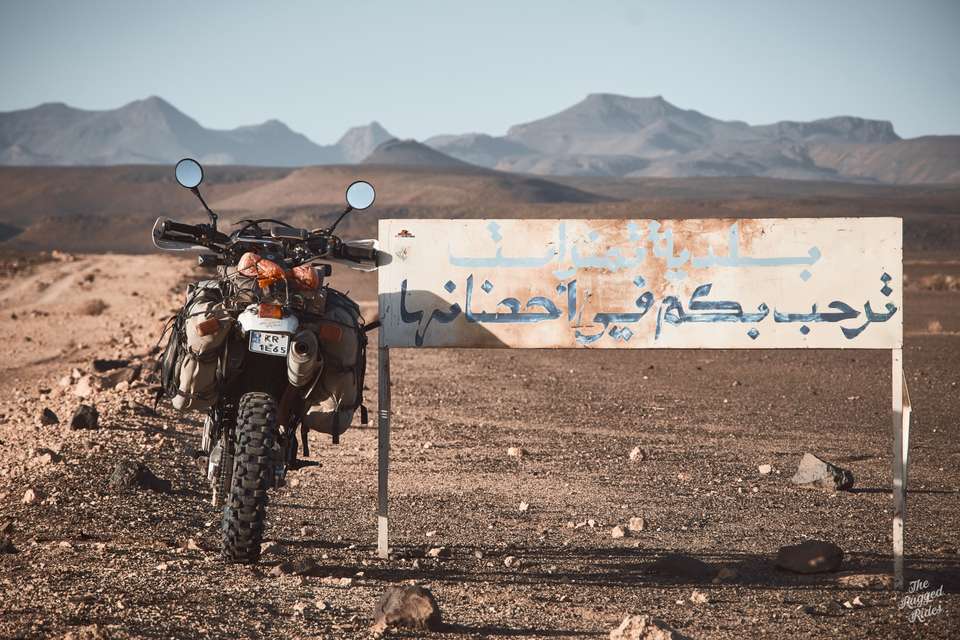
The best way to enter Algeria is by sea, that way you basically have near 100% chances to entry. Various sources say the whole procedure takes between 1.5 and 6 hours, usually. The alternative is a land border. I recommend the northernmost one, near Tabarka in Tunisia. The further south you go, the more problematic the borders become, and sometimes you may even be turned away and redirected to another crossing, usually further north. Motorcycles obviously have priority at the border, and this is carefully enforced by customs officers :-) In our case the whole procedure was extremely quick, about 1.5 hours. Other land borders are currently closed: Libya, Mali, Niger, Morocco, with the exception of Mauritania, where the crossing near Tindouf has recently reopened.
Unfortunately, nowadays you have almost a 100% chance of being accompanied by an escort. In our case it was called by customs officers at the end of the border process, already at the douane stage. It seems to be a top-down rule and difficult to avoid. From what I've learned, the most common scenario is escort for the first day, and by the middle of the second day you are allowed to continue alone. Most common, but not the only one. In theory, riding in the northern part of the country is free, but roughly from the line of Ouargla and Ghardaia southwards, further travel is usually not possible and you will be asked gentle to turn back or escorted north by the gendarmerie.
So what actually increases your chances of riding free and independently? If you speak French, even a little, if you don't look like you're a million dollars, if you are not a massive convoy stretching to the horizon (ideally no more than 4 people), if you come across as reasonable and confident, showing you know what you're doing, and you won't get lost round the next corner, if you have GPS and communications, ideally satellite, then your chances increase significantly. It also helps to always state your next city as your destination, it cuts down speculation. Of course, even with the same cards on hand, one person may come across better than another, that's life right? Checkpoints usually escalate calling upwards in hierarchy. Riding pistes also reduces the number of checkpoints, which are mostly at major city entrances and exits. And there is no strict rule, deep in the south we passed checkpoints where we were just waved through, and others where we had full conversations explaining where we came from, where we were going, who we were, where we work, and so on. Either way, a smile, good attitude, and confidence are the way to go. Remember officials are there for your safety, with good intentions and instructions from above. We didn't meet any police or gendarmes who were irritated or angry in any way. I also admire their patience, because we did negotiations quite fiercely :-)
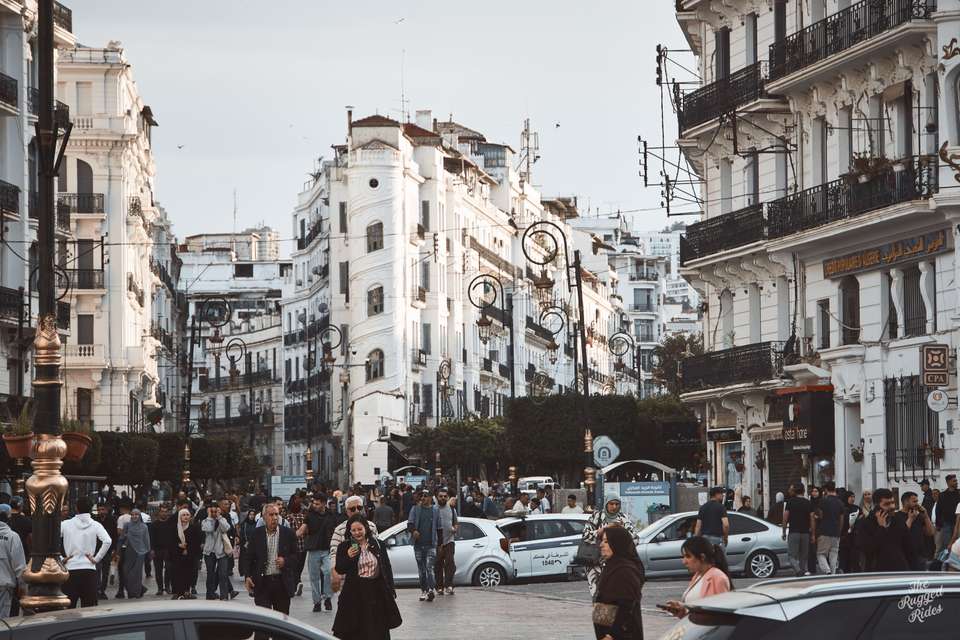
One more thing, blue vehicles and uniforms are police, while white-green vehicles and green uniforms are the gendarmerie. Police are mostly in cities and the north, gendarmerie are stationed in the south.
Safety
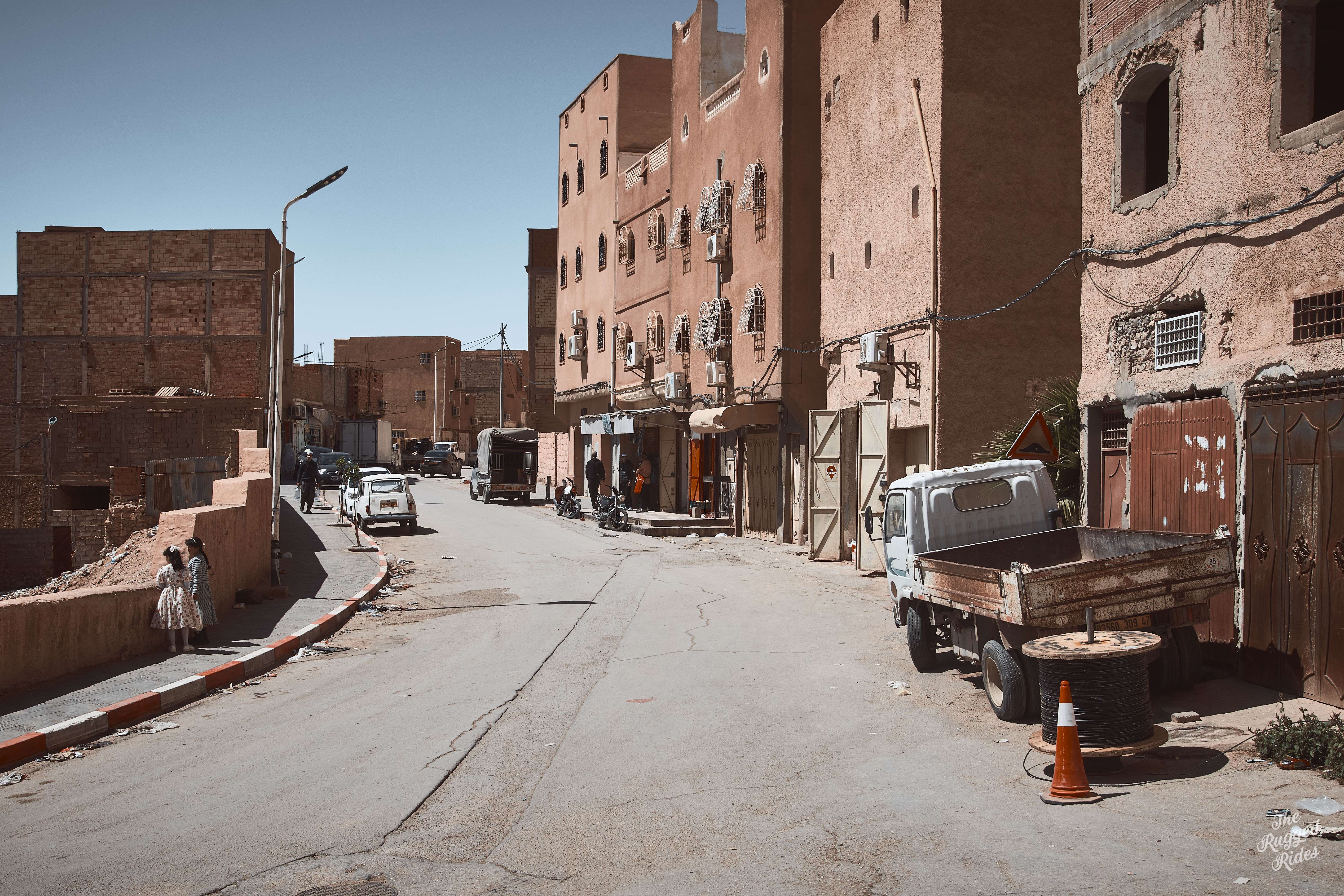
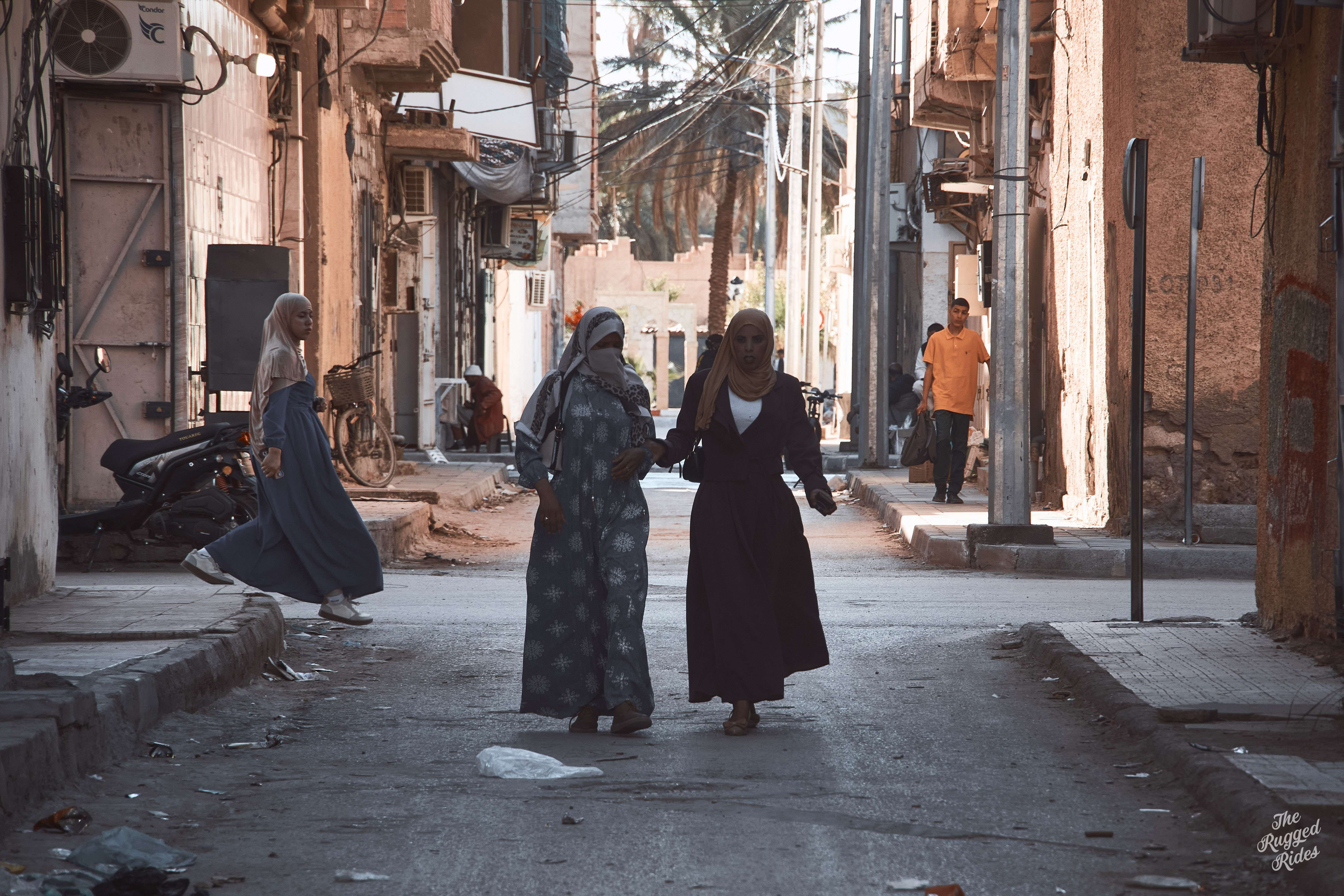
Is Algeria a safe country? Everyone must answer that for themselves. In my opinion, safety in Algeria has a completely different shade than in Europe. The country is dominated by gendarmerie checkpoints, and cities, especially in the south, are filled with visible police or gandermerie patrols.
People in Algeria treat you just… normally. I mean nobody rolls out a white tablecloth, nobody chases you down the street to drag you into a shop. People are not intrusive, not pushy. But once you start a conversation, they are interested and happy to have you. Everyone is very friendly, treating you as a guest in their country. Theft doesn't seem to be a real issue - I barely ever took the ignition key out of my bike during the entire trip, except at hotels. We hardly encountered begging, and when we did, it was mainly from migrants from Niger. Most importantly, we didn't encounter child begging directed at white tourists. Nobody treated us like walking wallets. That's refreshing, and largely thanks to the lack of mass tourism and irresponsible tourist behaviour that often creates and reinforces such patterns elsewhere.
There is, however, a darker side to Algeria, attacks and kidnappings. After the so-called "Black Decade", when the bloody civil war ended in 2002, kidnappings disrupted the peace. In 2003, the first kidnappings across the Sahara took place in Algeria. The most famous ones, where it all began, happened on the so-called Graveyard Piste near Illizi. 32 people were abducted, European tourists travelling in their own vehicles, and ransom was demanded. Following a swift Algerian army operation, all hostages were freed. However, a wave of kidnappings spread across the Sahara, gradually shifting south to countries like Niger and especially Mali. At the same time, the flow of European travellers, both organised groups and individuals, began to dry up. Kidnappings for ransom were accompanied by violent attacks on villages and oil infrastructure. In one such attack in 2013 near In Amenas, 40 workers and almost all 32 attackers were killed. Groups such as AQIM (Al-Qaeda in the Islamic Maghreb) and ISIS-linked ISGS were responsible, all operating for ransom or ideological aims.
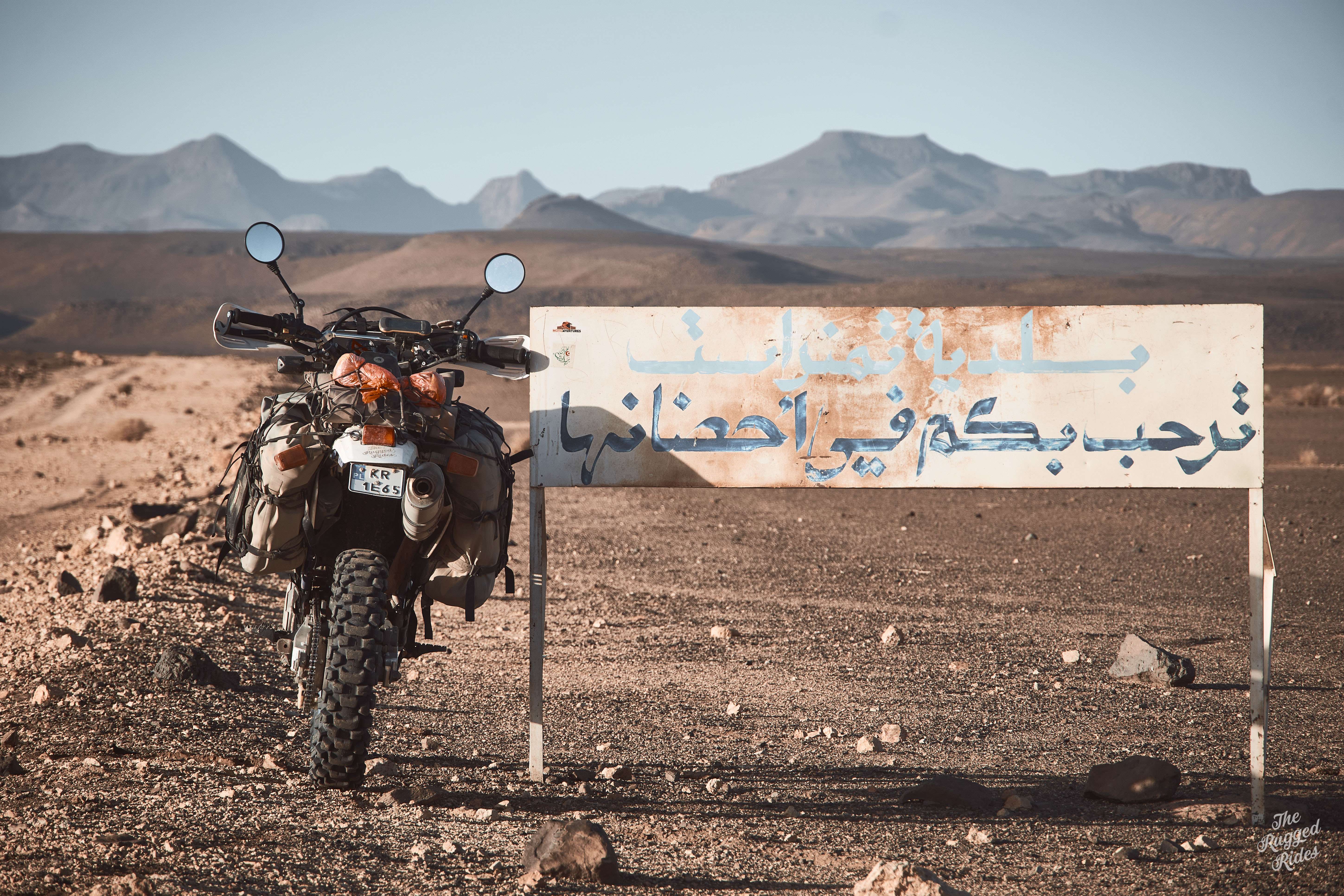
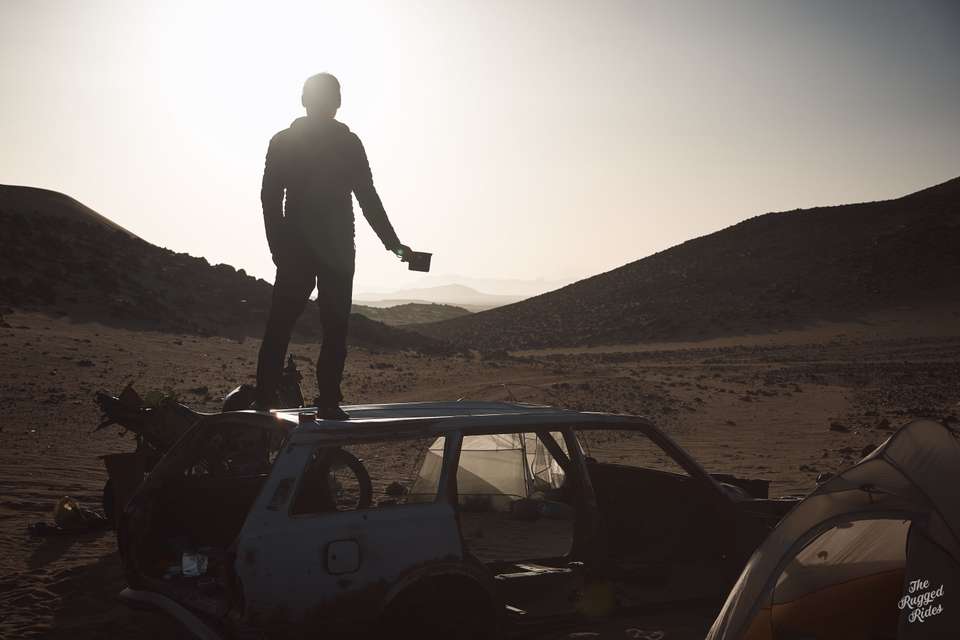
Today, kidnappings of foreigners are very rare in Algeria. Whether this is due to the dense network of military and gendarmerie posts, or the recently built berm along the Mali border, I don't know. But these forces cannot possibly control the vast stretches of sand and hamada of the Sahara. That's why, travelling off any defined route, deep in the desert, far from tarmac roads and tourist hotspots, we were completely unpredictable to anyone who might have been looking for us. We simply disappeared into the Sahara. We didn't reveal our intentions, and when asked about our destination we were deliberately vague. No lights on the bikes, discreet campsites, only a soft red light at night. And we always carried satellite communicators, in this case Garmin inReach.
Guide like section
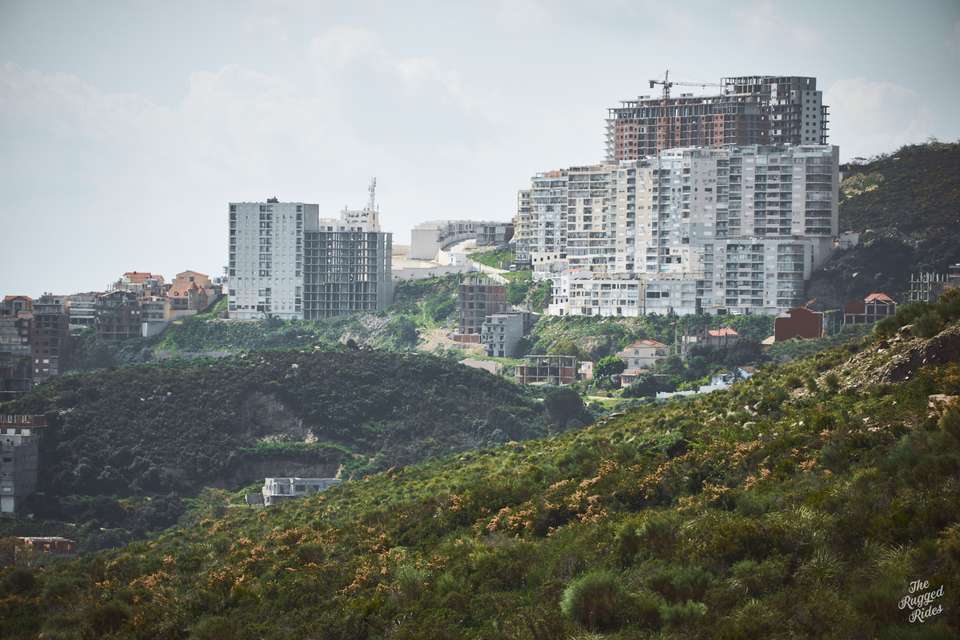
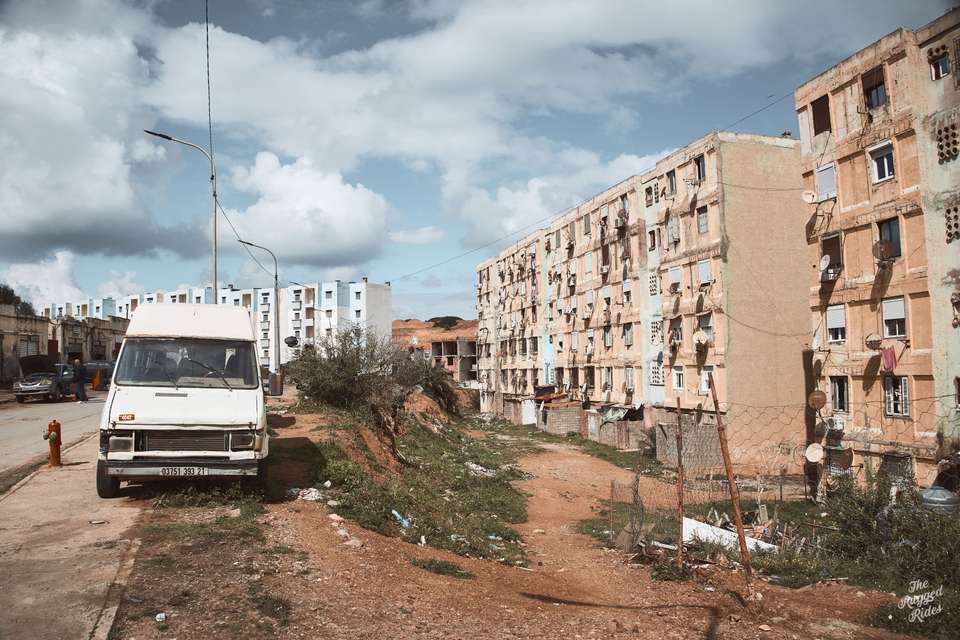
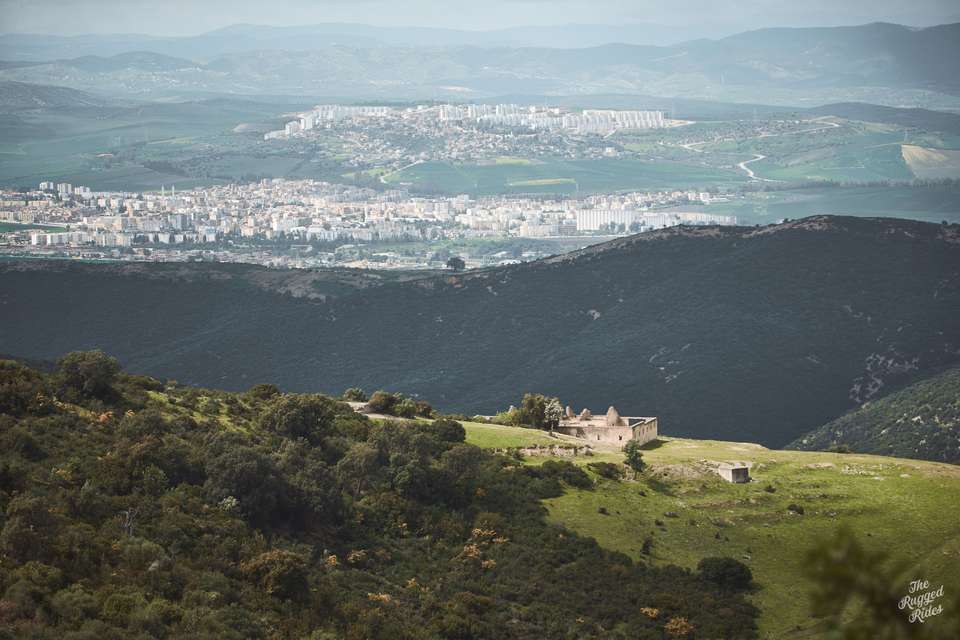
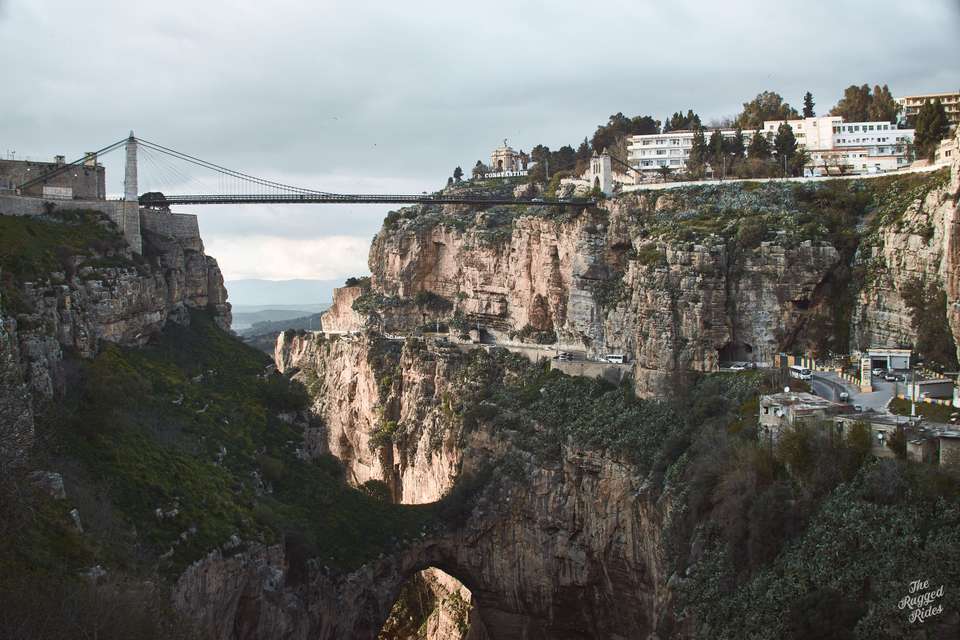
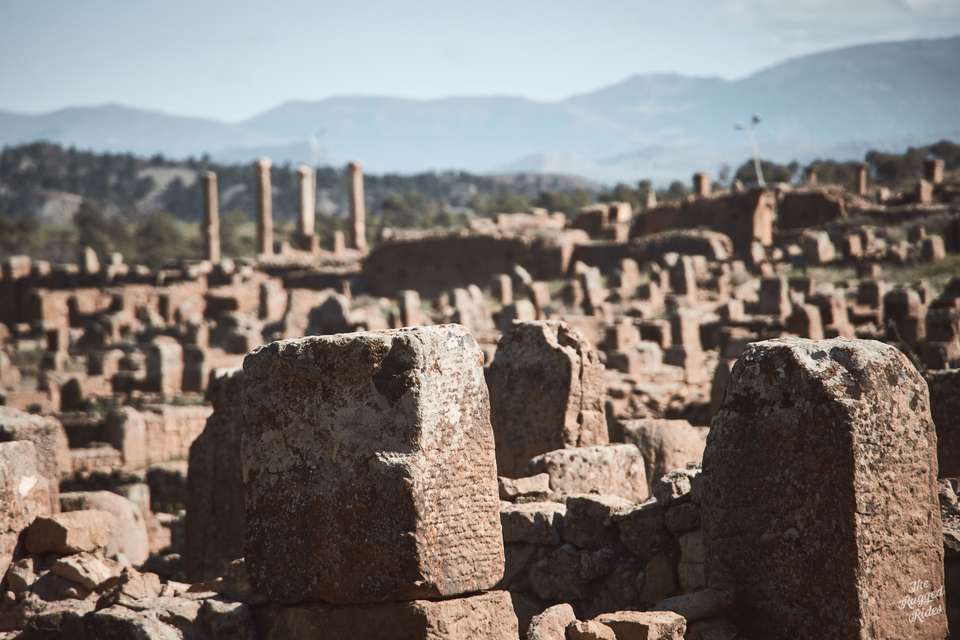
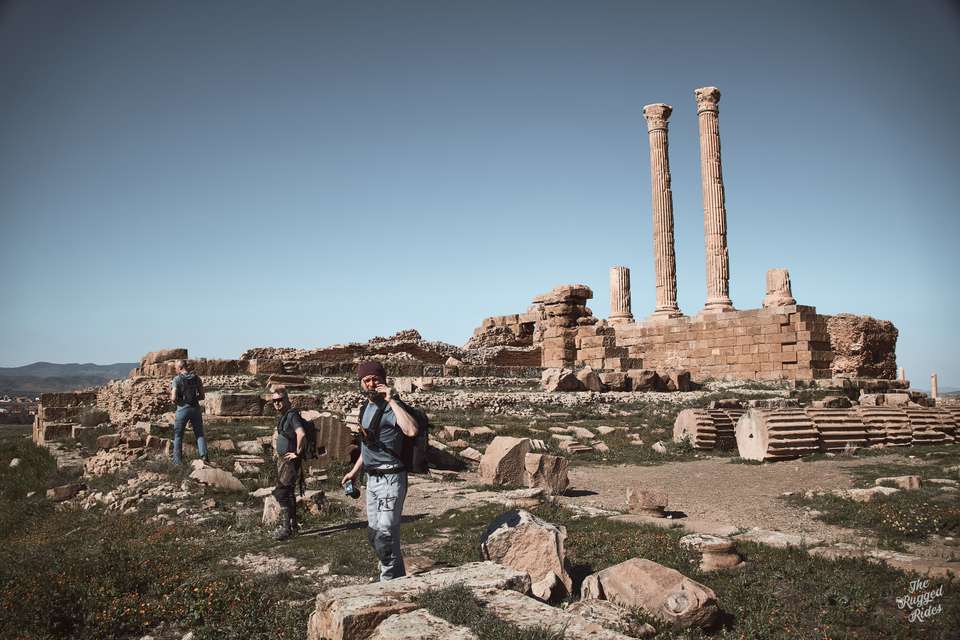
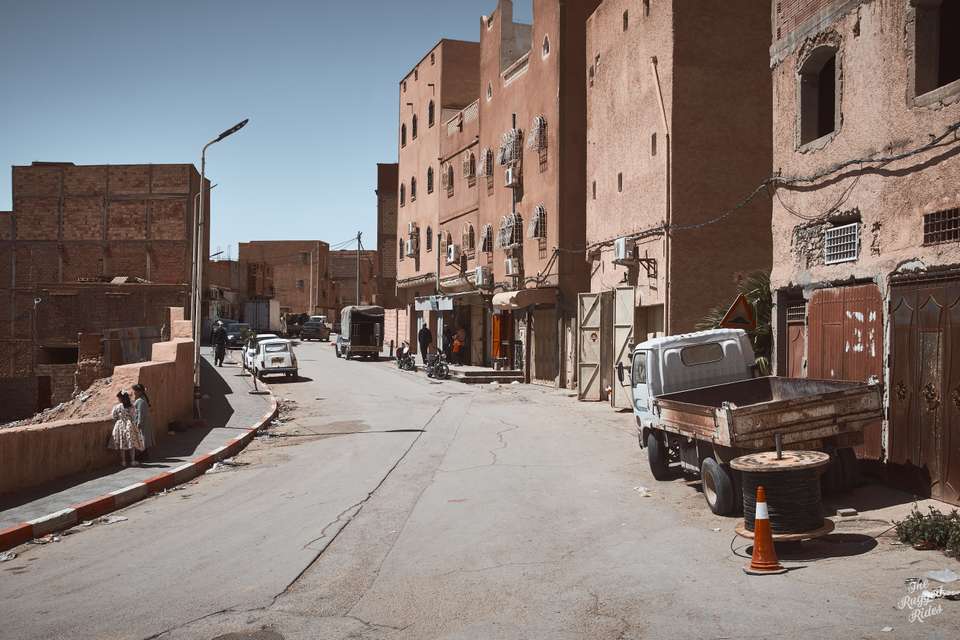
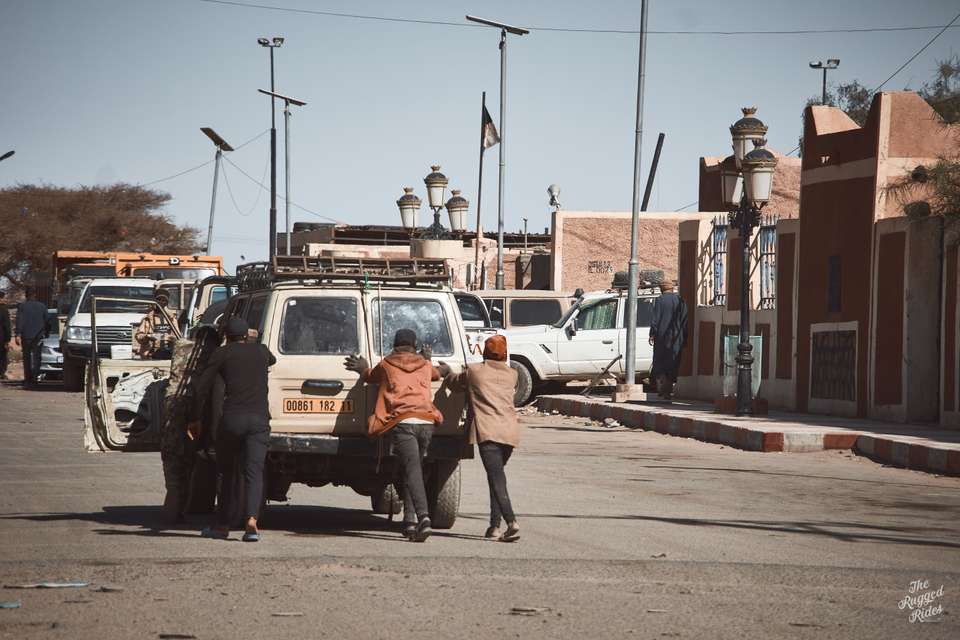
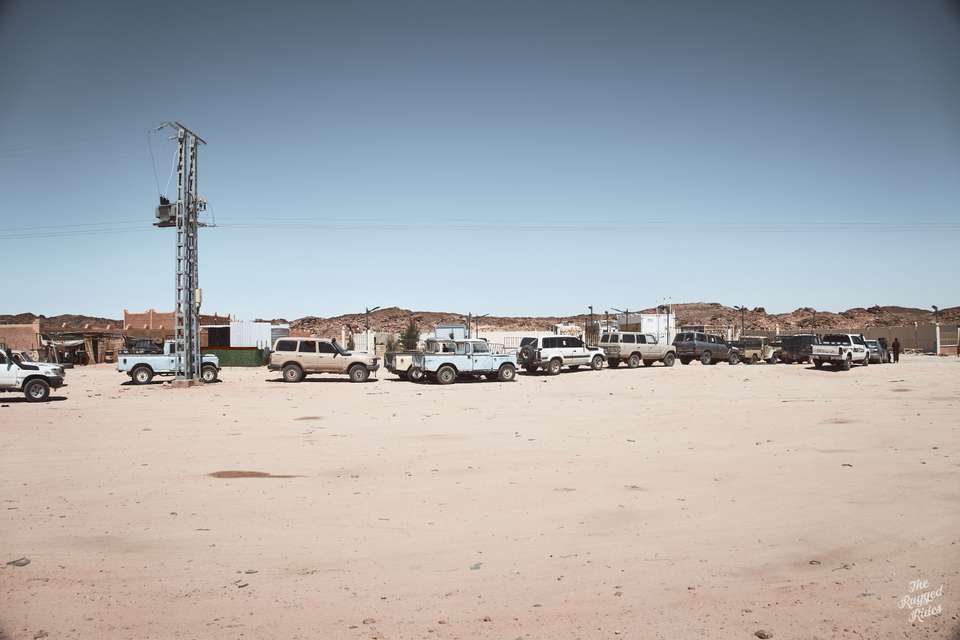
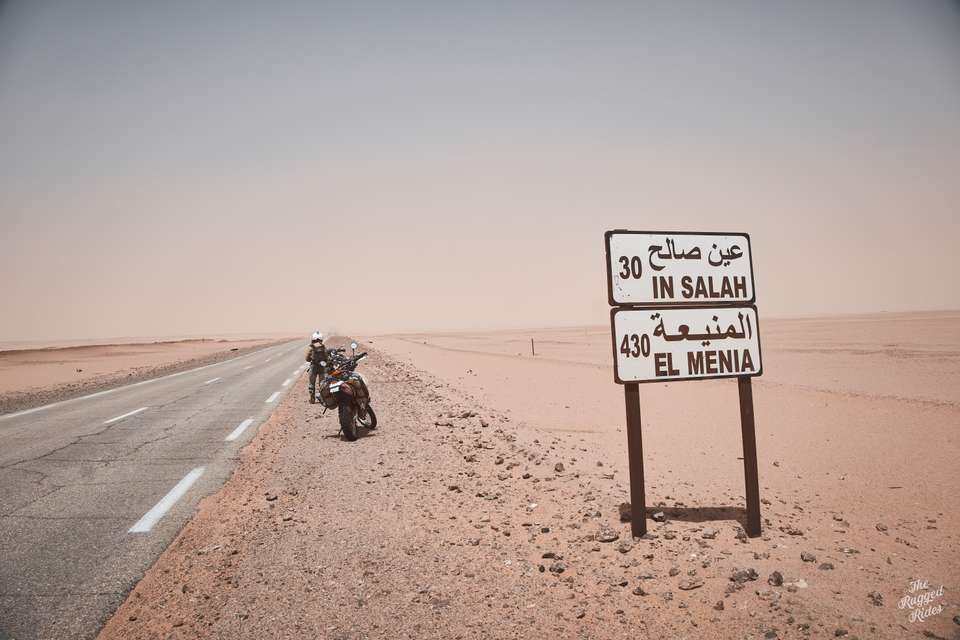
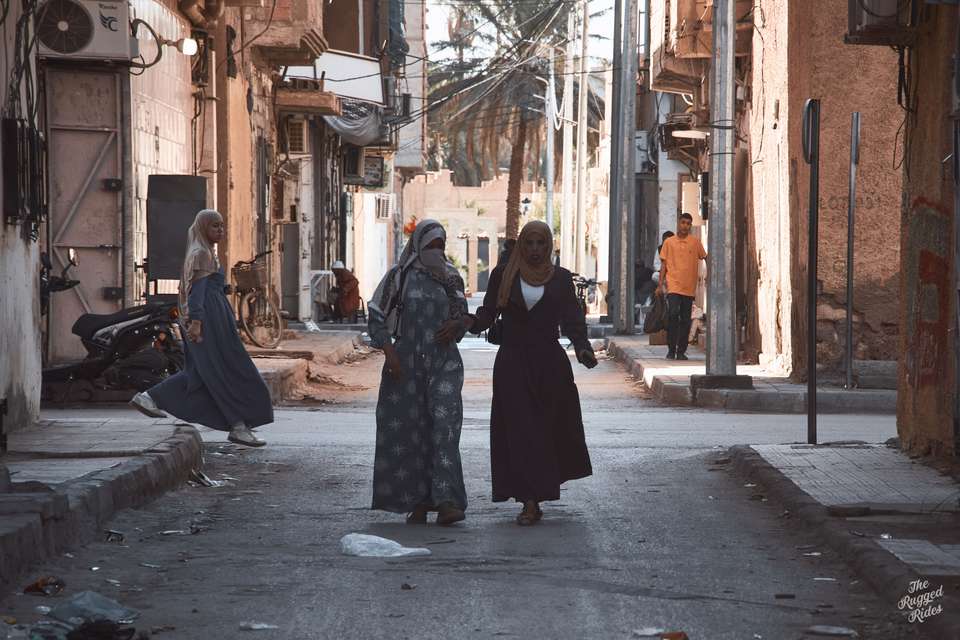
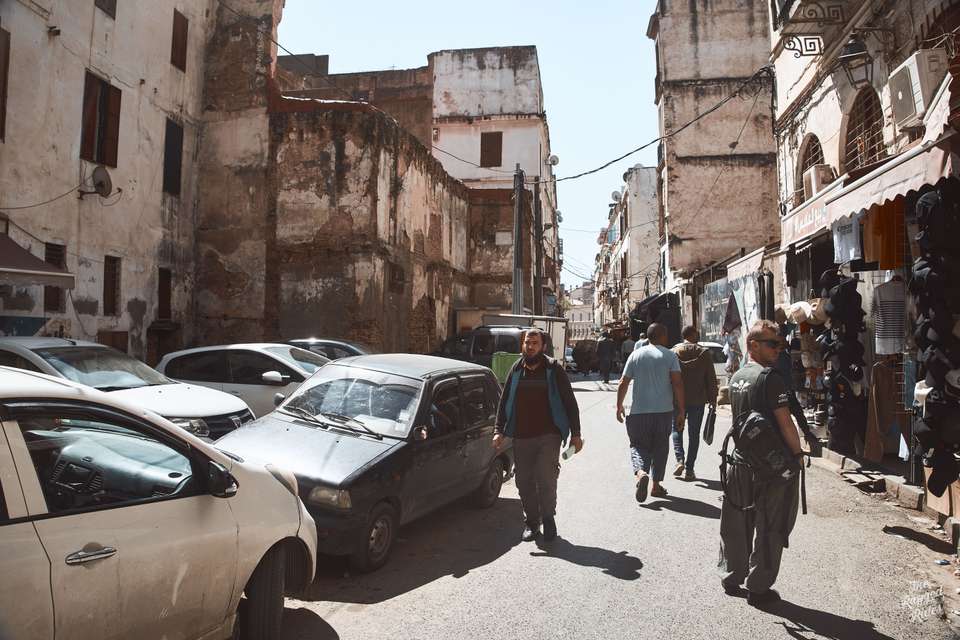
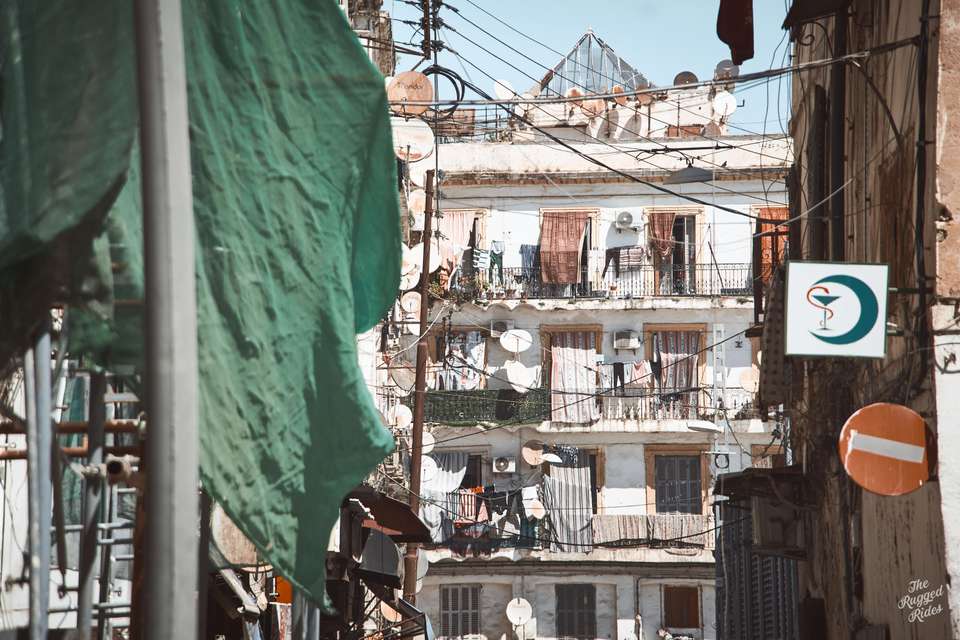
I would divide Algeria into three zones. The green, mountainous north is full of farmland and modern white cities. In many ways it feels European. Cities typically consist of a Casbah, Ville Nouvelle, and modern housing estates (but former east block mood like). The north is also rich in Roman ruins. After the Atlas Mountains, the desert begins, two large ergs and a hamada between them. Up to the line of El Menia, things are still relatively easy, cities are alive, women are visible in the streets, and irrigated agriculture surrounds urban areas. Below that begins what I would call the deep south. Only trucks move on the roads, loaded southbound, empty northbound. Checkpoints monitor traffic constantly. Cities are hundreds of kilometres apart, with no fuel between them, and gas stations in towns often have kilometre-long queues. Towns are among the poorest, often dirty, similar in some ways to Mauritania. You see not only Berbers but also migrants from Niger, often working in the oil industry. Women are almost absent.
French is the official language in Algeria. It's best to know a few basic words and phrases; the rest is handled by gestures. With that, you can communicate almost everywhere. In larger cities or tourist honeypot places like Djanet, you may find English speakers, but it's not guaranteed and mostly applies to young people.
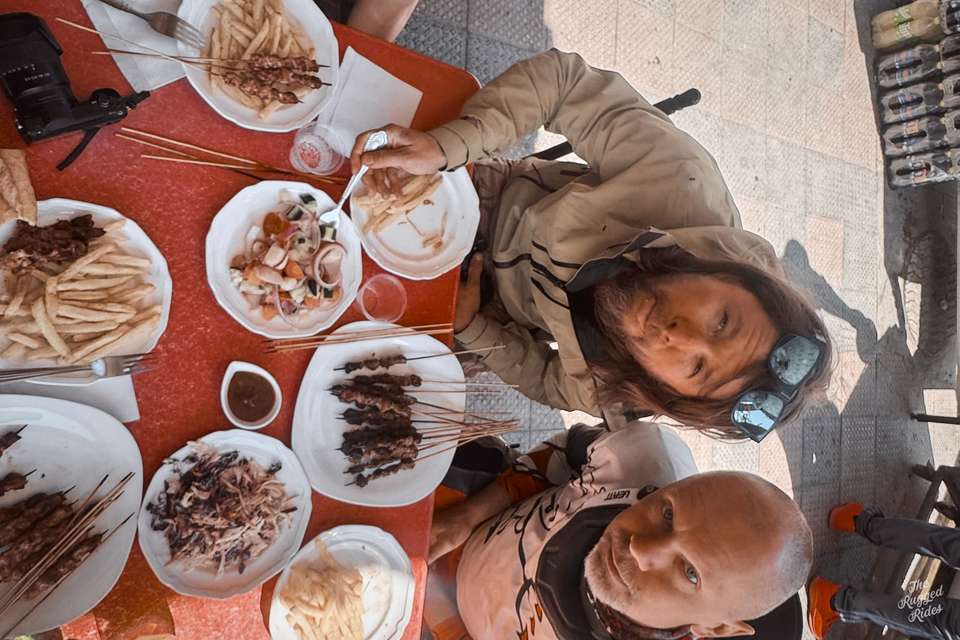
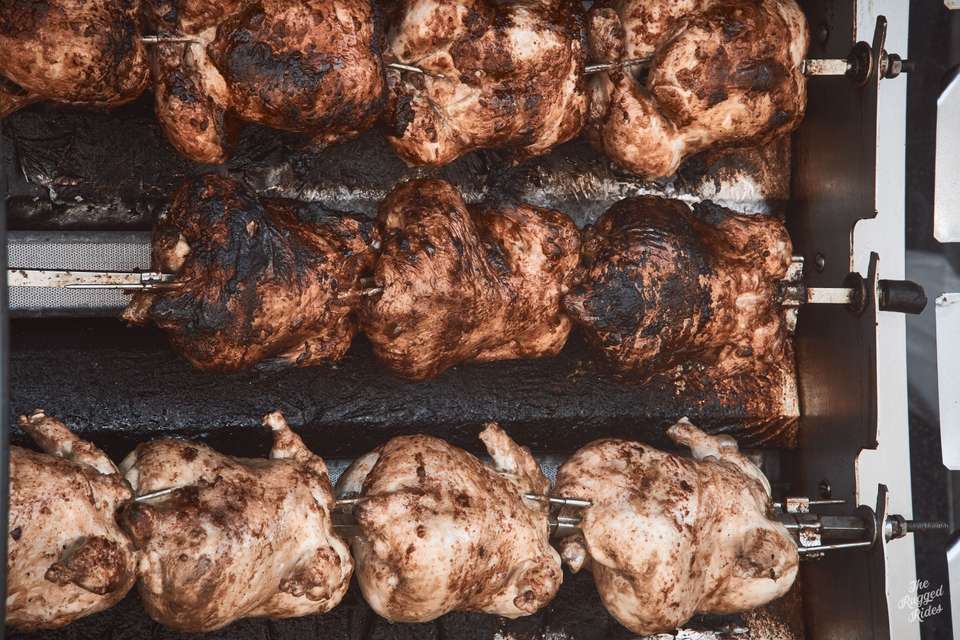
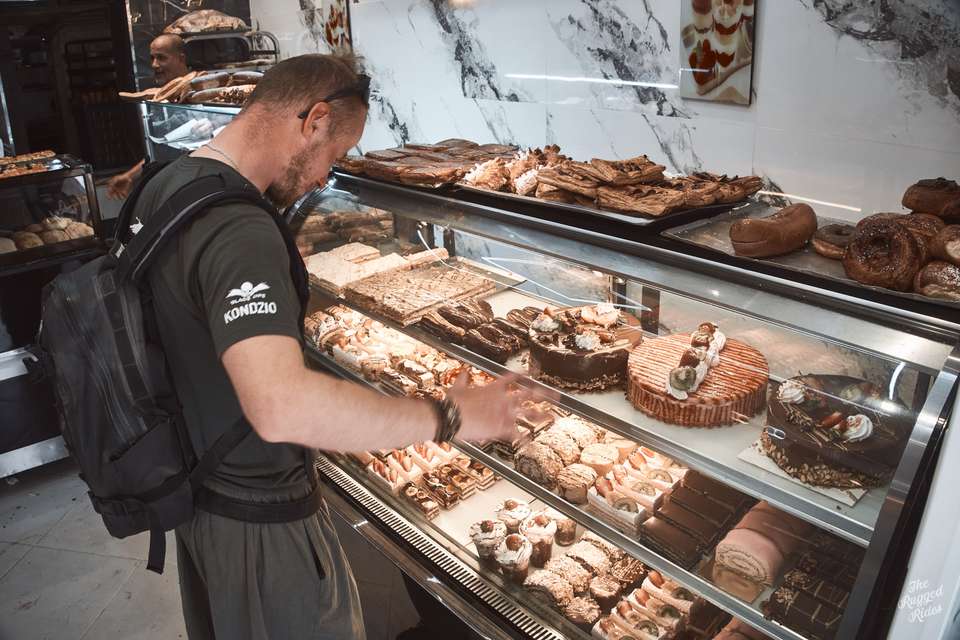
Food-wise, there's no point sugar-coating it - nothing spectacular. Algeria is fairly standard North African fare, neither amazing nor terrible. Breakfasts are boiled eggs with baguettes, croissants and coffee, sometimes cakes. The coffee is excellent, made on big lever espresso machines. In the north you get national dishes like harira, lamb tajine, and couscous in various forms, but I'm personally not a big fan. In the south, chicken dominates everything, grilled chicken, chicken skewers, chicken sandwiches, chicken stews. Shops follow the typical North African pattern, processed sweets, tins of tuna and tomatoes, sweet drinks, rice and pasta. But bakeries are excellent, very French-style. Vegetables, dates, and other goods are available at markets. Algeria produces wine, but it's honesty bad and only available in the north, alcohol is generally not used. On the other hand, tea is excellent, the kind present in the north Africa..
Money, the key tip is, exchange money with unofficial exchangers, the rate is about 260 DZD per EUR, while the official rate is around 140 DZD. You can do this near borders or big hotels. Fuel costs about 47 DZD per litre. A grilled chicken meal for four people costs under 2000 DZD, including salad, sides, cola, and coffee. Prices are genuinely pleasant. And as mentioned, there are basically no tourist traps with inflated pricing.
Oh, and for those who care, Airalo works well, you can scroll through funny cats on the internet. A friend using an Orange package bought in Europe will also watch cats but in more places, apparently with better coverage.
I've reached the end, so maybe a conclusion. So antoher clitche, Algeria is a wonderful place on Earth. I already dream of going back, sketching blurry plans in my head. I haven't even seen a quarter of the Sahara yet, but the Algerian part left a deep impression on me. If global trends continue shifting in the right direction, travelling to Algeria will become easier.
Finally, I sincerely recommend this gentleman, who is truly seasoned in the Sahara. It is thanks to him that I became fascinated not only with the Hoggar Mountains, which eventually led me to Algeria, but also with most of the solid knowledge about this country and the Sahara: Chris Scott Sahara Overland
Comments
S
Amazing pictures! Thank you for sharing :)
S
It would be exciting to read if you added a little description of your own trip or route.
TRR
Simon, thank You! Soon I will post some ride reports from the trip, I will also post some interesting tracks here.
HT
Amazing read! Thanks a lot!
Leave a comment