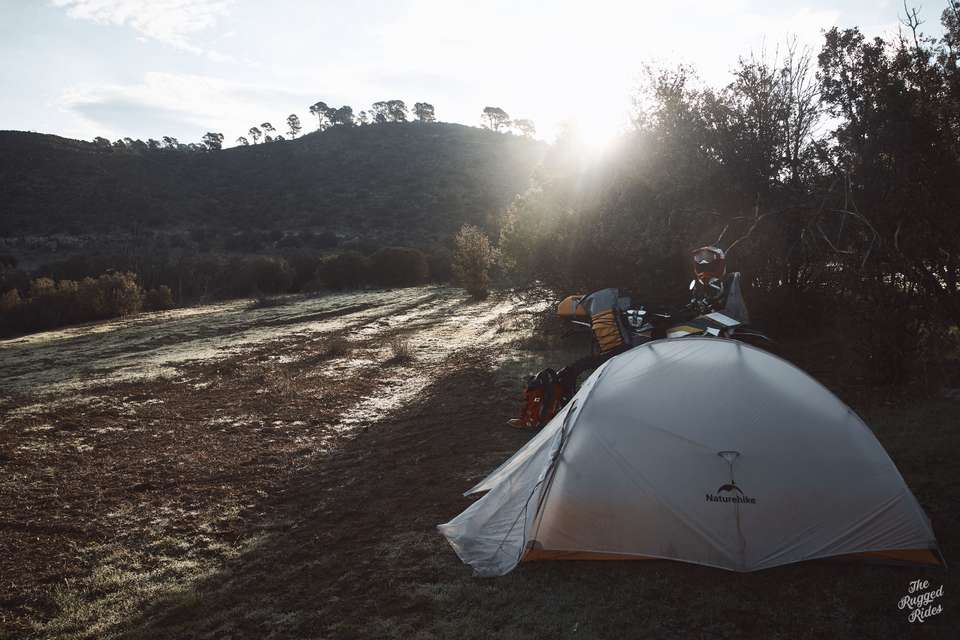
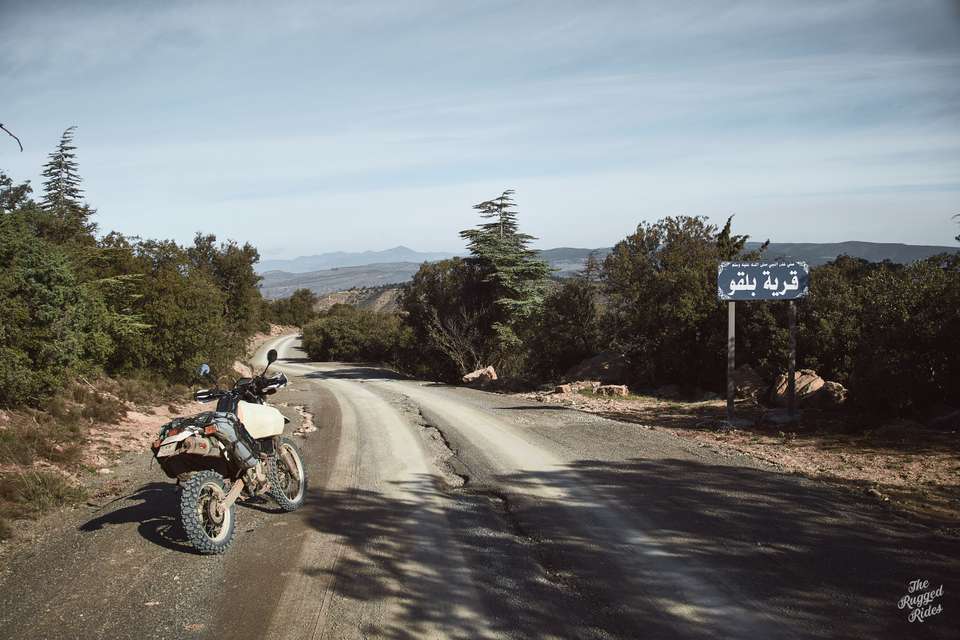
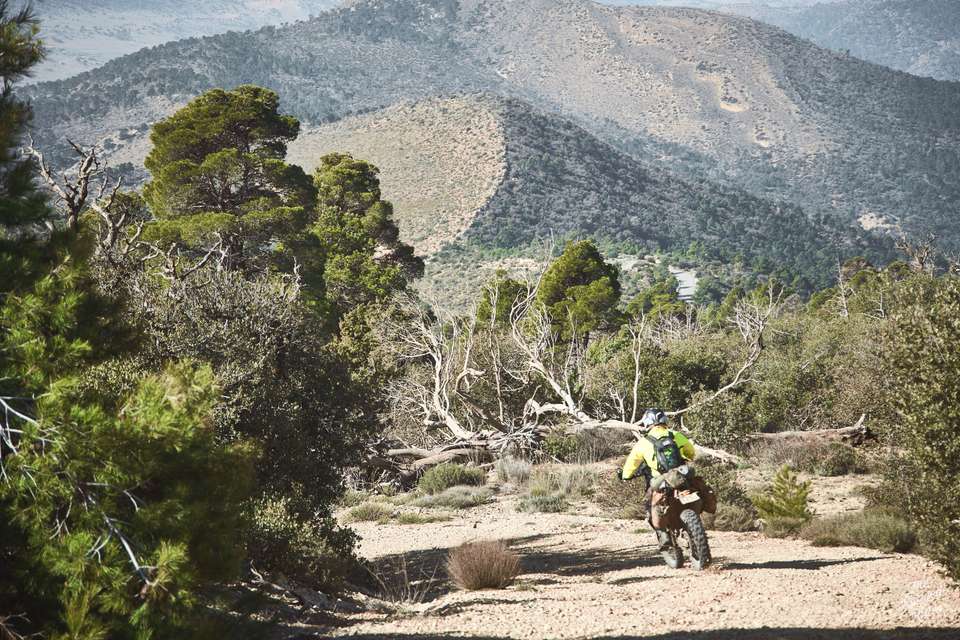
The night was one of the chilly ones. When we wake up, there is still a bit of frost on the tents and somehow a campfire had survived the night, so we coax it back to life, brew some coffee, and slowly get ourselves ready to hit the road again. We’ve got our first casualty with a stomach bug, but it seems to be under control. I set off first, with one thing on my mind – heading south, and as quickly as possible. We've still got three mountain ranges to cross before dropping through an incredible canyon straight into the sands of the Sahara. The road is an absolute masterpiece, flowing, scenic, beautiful. I pass military trucks, exchanging waves with the soldiers. The landscape looks like a national park, and the vegetation makes it obvious we're still at quite a high altitude.
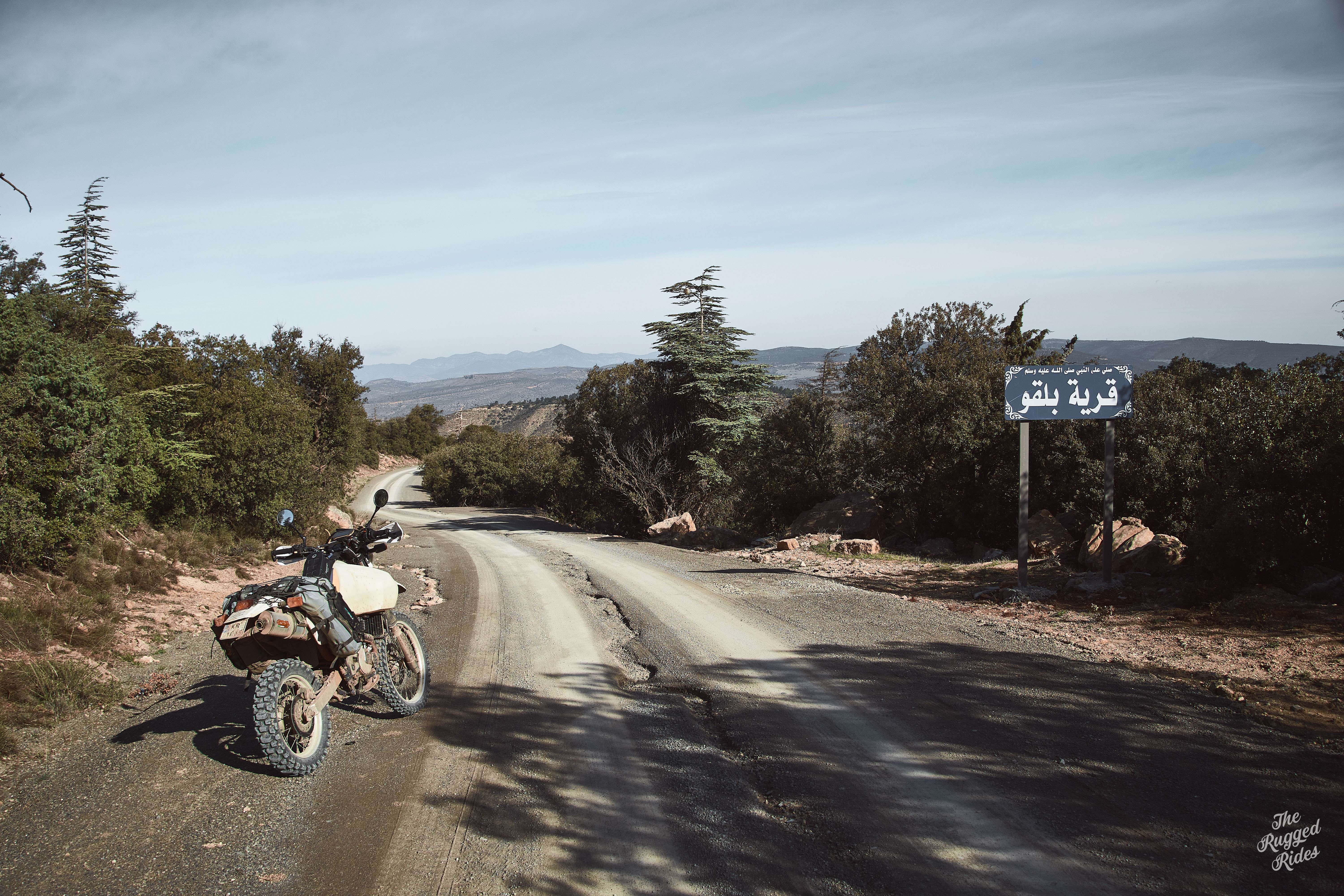
Konrad catches up, and together we begin the descent. We spot an observation tower on the opposite ridge before turning towards a nearby settlement... and finding a barrier across the road. Never mind, it's slightly open, so we carry on, following a barbed-wire fence. Around the next bend there's another barrier. This one is firmly shut. I wave at the guard standing nearby. "Bonjour! Passable? Destination Arris!" He starts opening the gate, but at exactly the same moment something else happens. Another man comes running downhill, shouting for him to close it again. So there we are. Stuck. By the time Tomek and Kuba arrive, more and more military personnel have gathered around us. Among them is one bloke in civilian clothes, classic local secret service vibes. My first instinct is simply to turn around and disappear somewhere else, but there are four of us. Would everyone make the same move? Besides... the sight of several assault rifles carried by our hosts isn't exactly encouraging spontaneous manoeuvres.
Turns out we're about to be honoured with yet another escort. This time it's the gendarmerie, cruising around in white and green military Mercedes 4x4s. They need two hours to get to us. Brilliant. I'd been genuinely excited about the mountains ahead. Now I'm almost certain we'll be sent around them on tarmac instead. I'm truly annoyed, but at the same time I accept it as simply another unavoidable part of this expedition. So we wait.
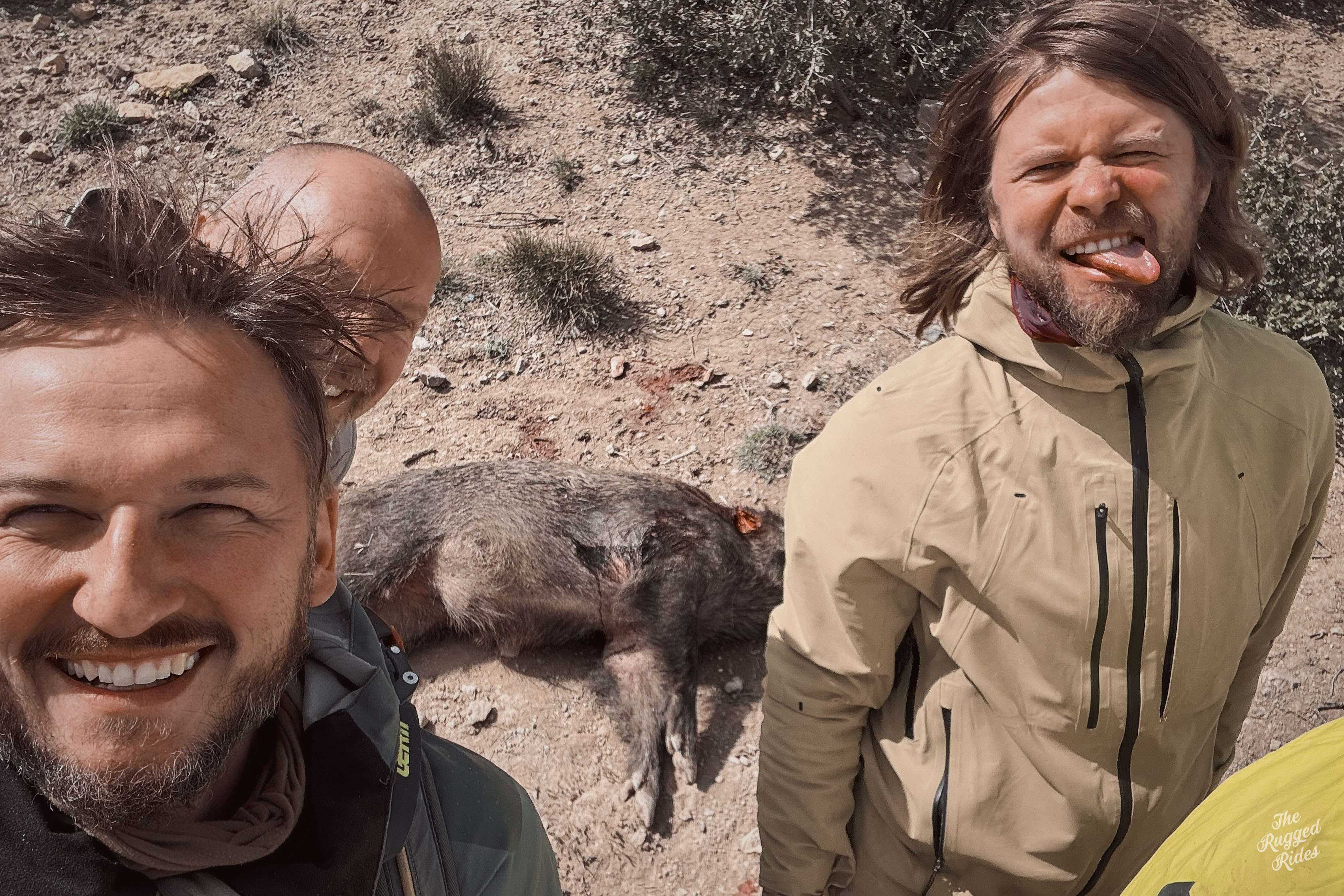
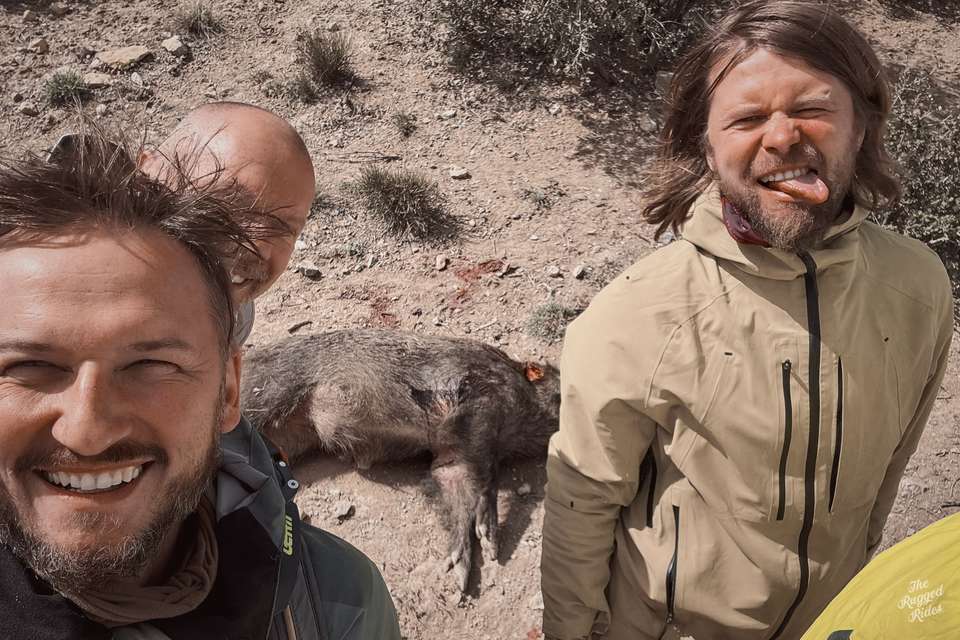
Our companions make the time pass surprisingly well. We chat about life, religion, and naturally, motorcycles. Naturally, at some point the subject of eating pork came up, as it always seems to. It's funny how every white traveller is automatically assumed to be a devoted to eating those poor creatures. Nevertheless, our hosts have something to add to that discussion. They lead us over to proudly show off a wild boar they'd shot from the nearby watchtower. Poor thing is missing half its neck and part of its head. We all take selfies together and happily tuck into the strawberries (fraises) they've offered us. Not a bad day, this captivity.
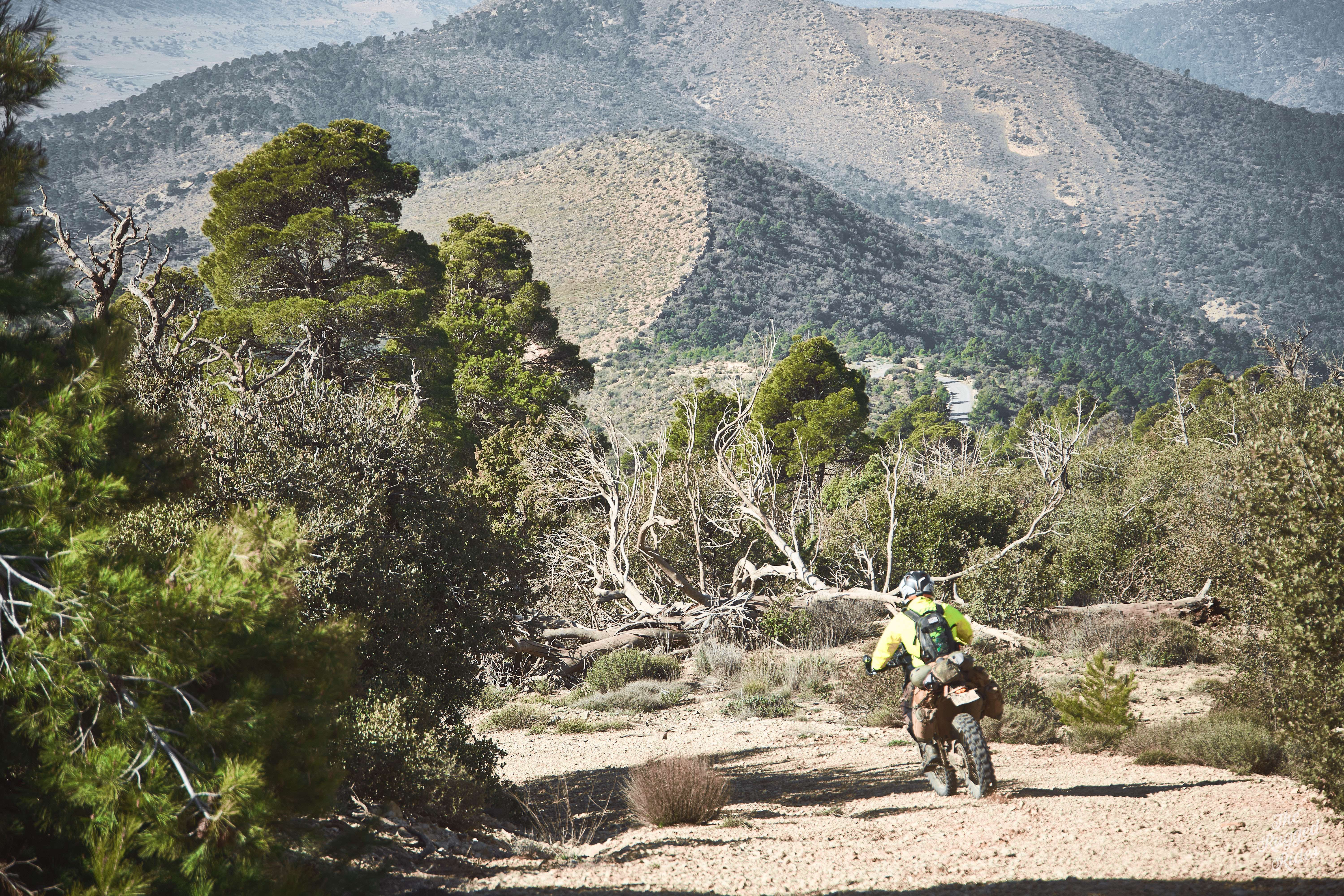
Eventually two gorgeous Mercedes G-Wagens roll in. The deal is simple, they'll escort us to Arris, and that'll be the end of it. Off we go. We ride in a jerky rhythm, fast, then painfully slow. One Mercedes in front, one behind. We pass endless groups of marching soldiers, observation towers and more barbed-wire fences. Right... looks like we've accidentally stumbled upon some kind of military training area. With growing frustration I watch our carefully planned GPS track peel away into the spectacular mountains, climbing right to the ridges, while we're kept on the boring asphalt looping around the whole thing. Hopefully this escort won't last much longer.
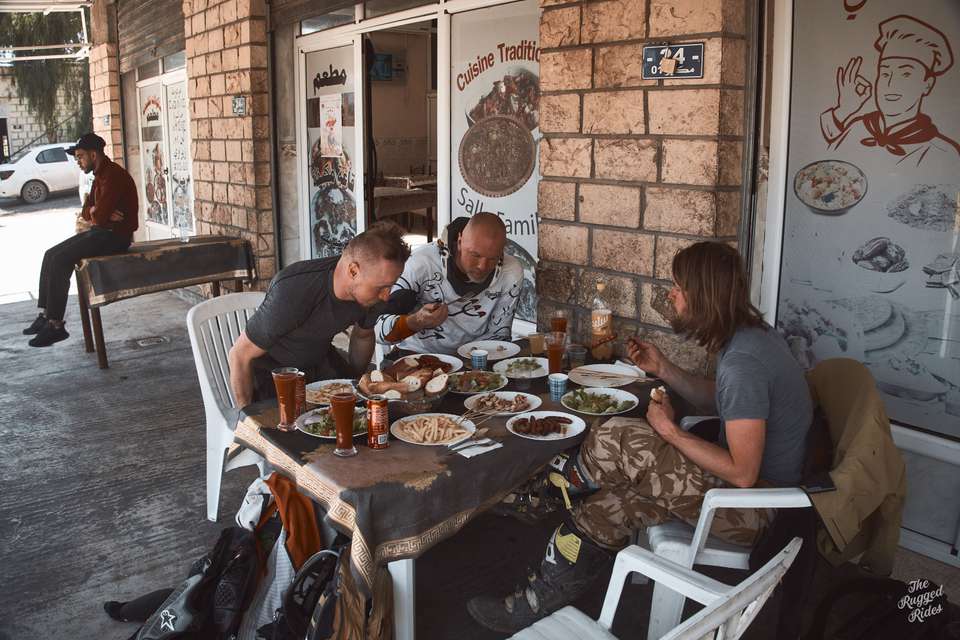
Reaching reach Arris, instead of letting us continue, the soldiers casually hand us over to another team. Right then, time to negotiate, this wasn't the deal. Tomek handles it brilliantly, firm, calm and respectful. The officers are equally polite, calmly lay out their case, and we all play our parts perfectly. We've heard the arguments before. They want to show us their country, we're their guests, everything is for our own safety. The discussion drags on. We're determined, they're equally determined. In the end nothing is formally decided, we simply get back on the bikes and ride away. Fine then, let's have lunch together. We reach Ghoufi and settle into a food place recommended by our protectors. Skewers, grilled sausages, chips, salads, fresh baguette, coffee, and a strawberry cocktail to wash it down. How sweet.
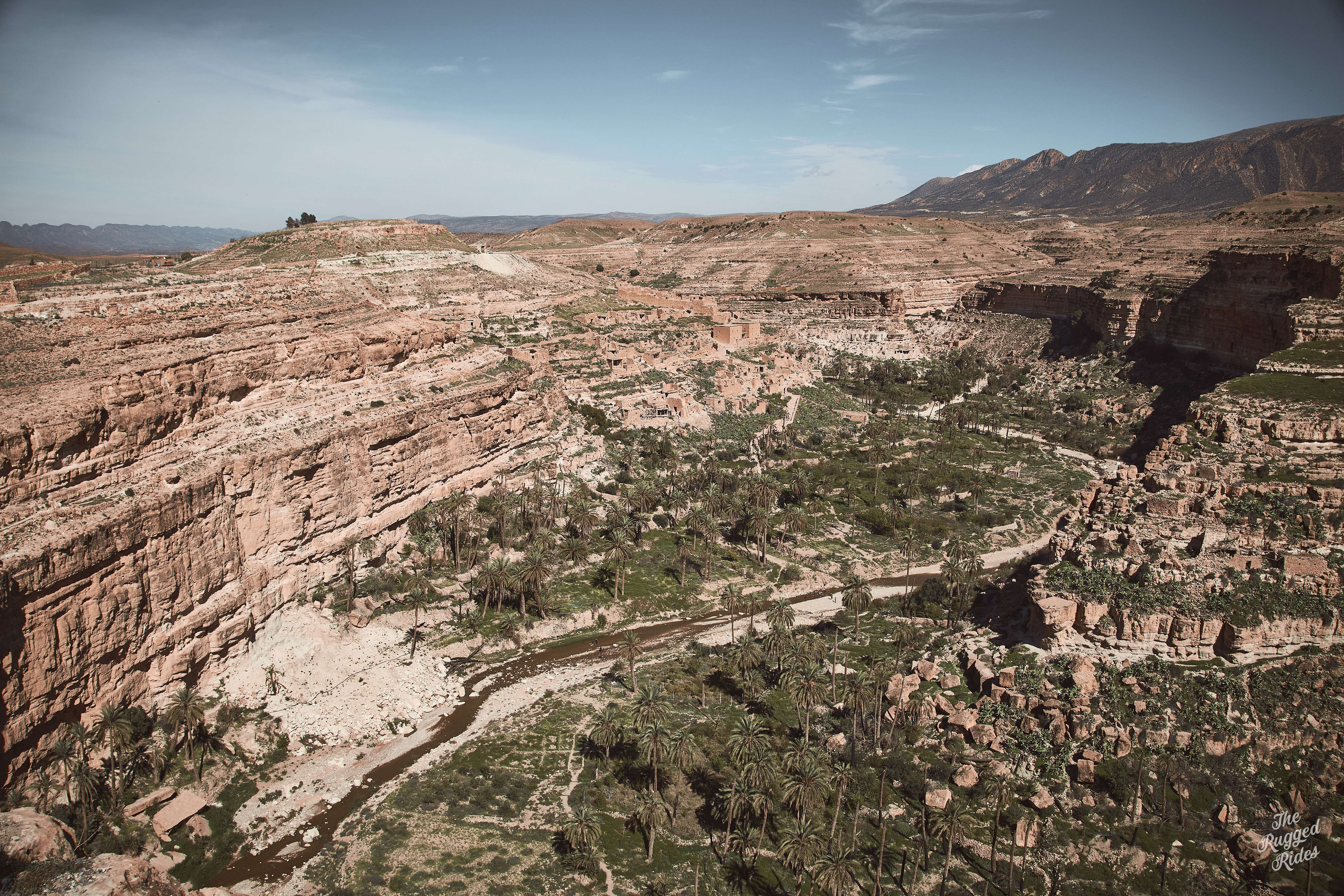
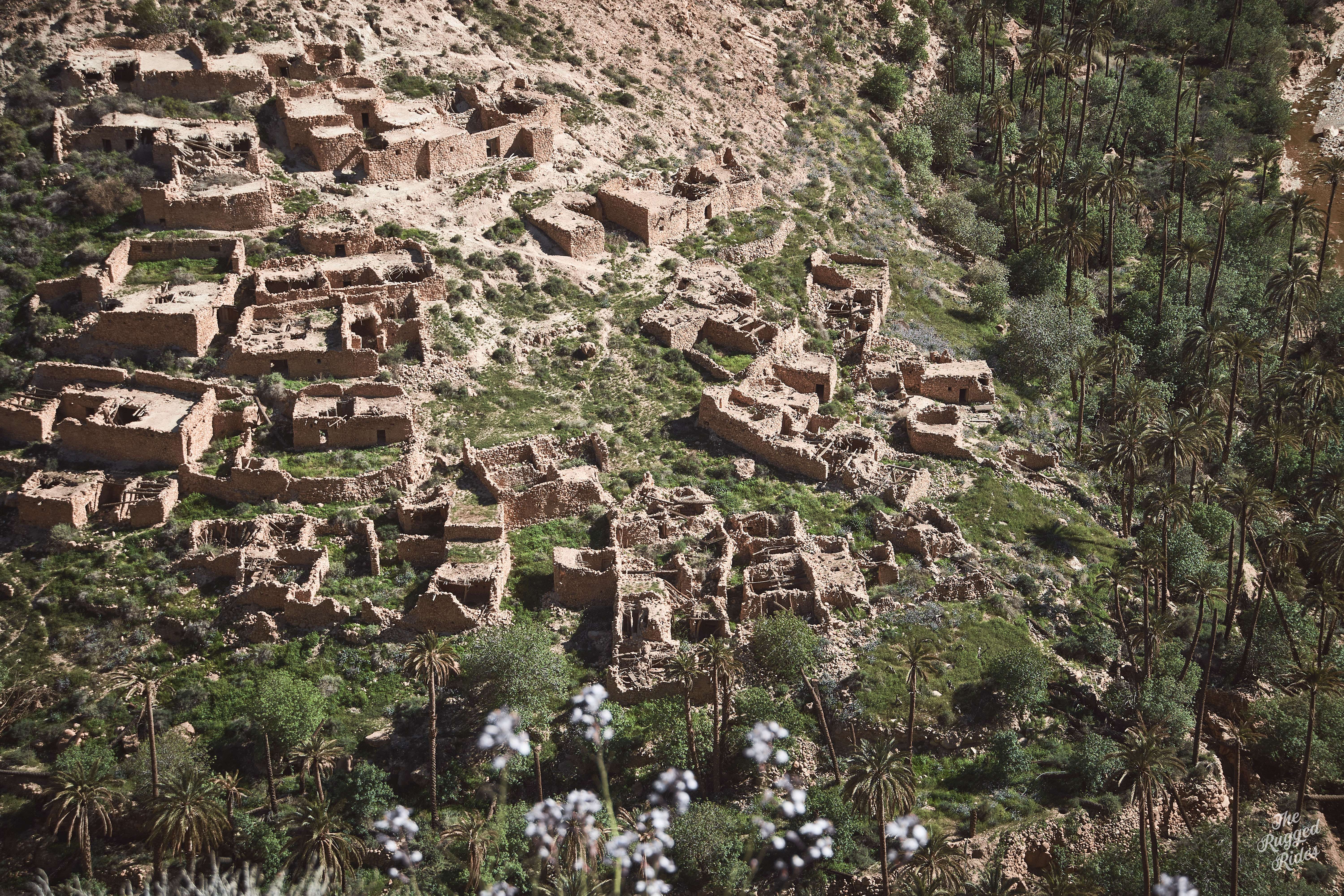
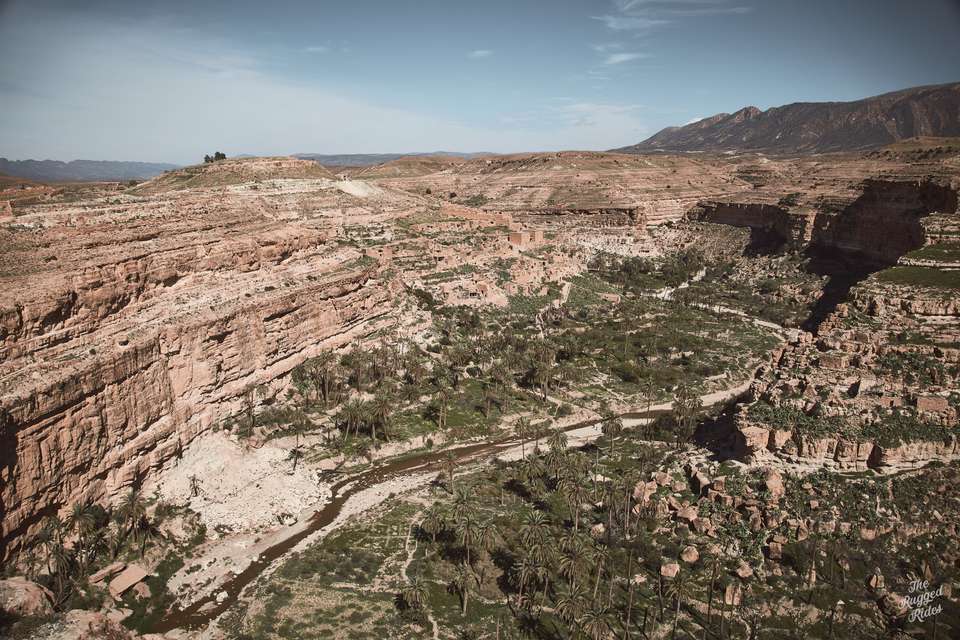
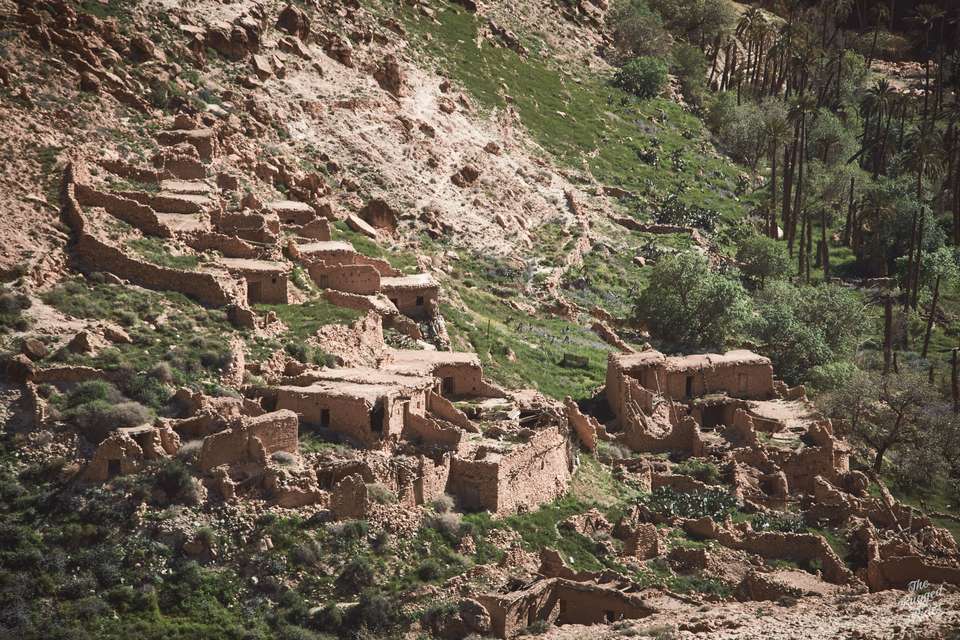
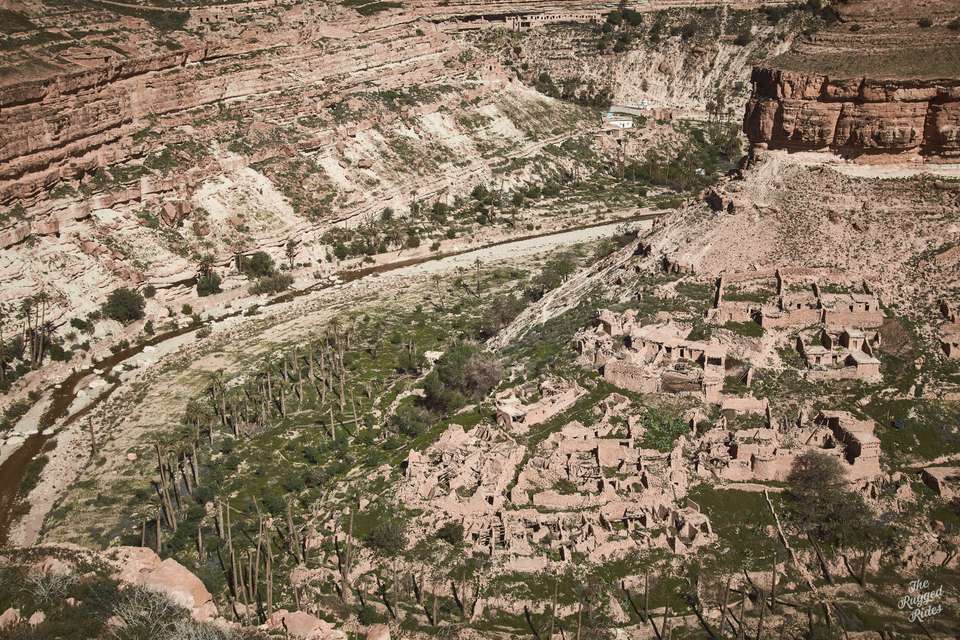
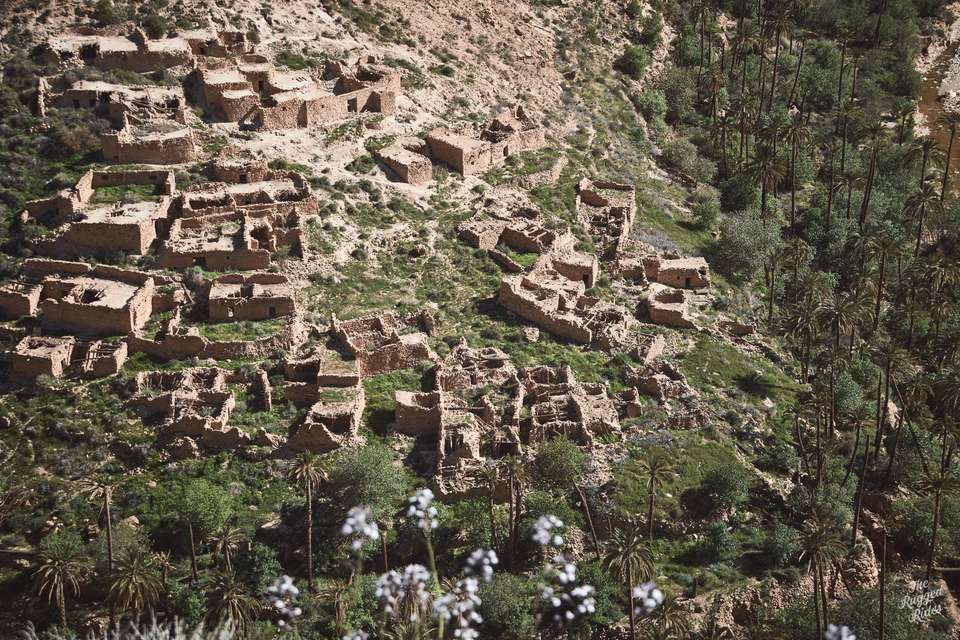
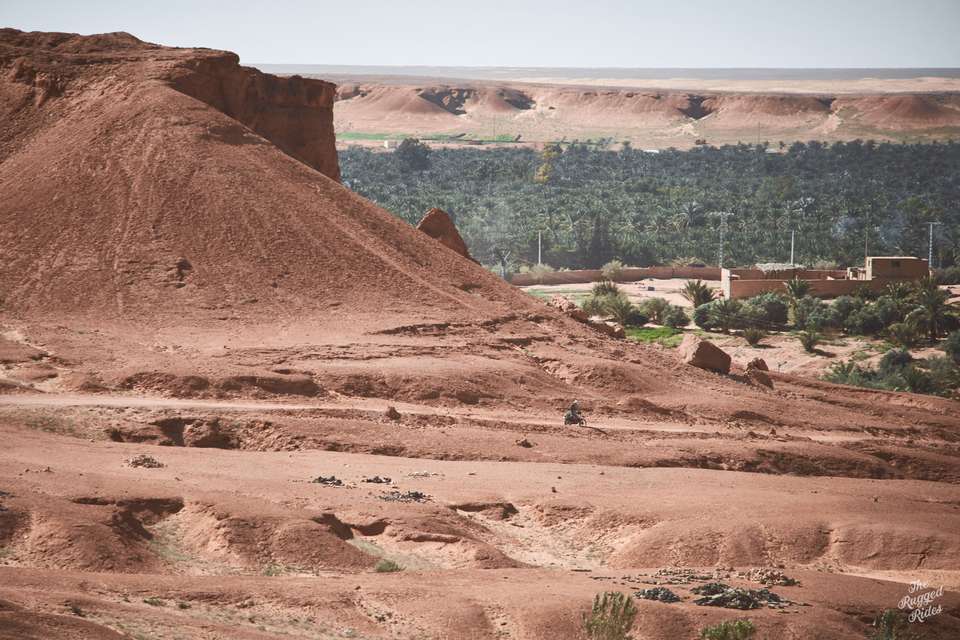
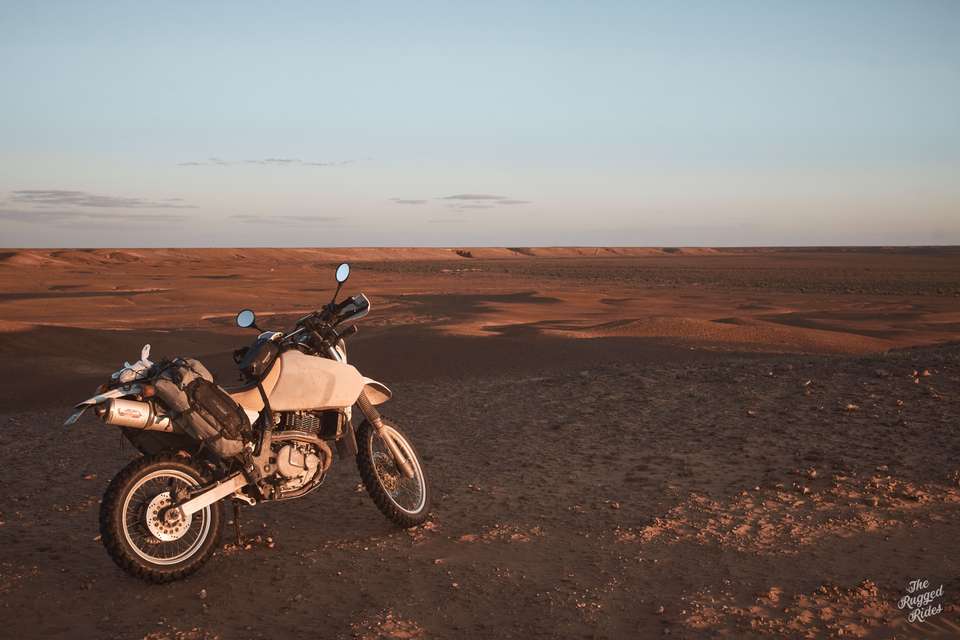
As we get up from the table and start gearing up, our Mercedes mates notice but aren't exactly rushing. We hit the road without them, heading for Ghoufi Canyon. Its cliffs drop up to 200 metres in places, with a lush oasis of date palms at the bottom, cradling an ancient Berber settlement. Many houses are carved directly into the rock face. Some were inhabited well into the 20th century, alongside old granaries and terraced fields. We're taking it all in, partly in awe, partly with one eye over our shoulders because, unfortunately, our escort has decided to catch up after all. But then… something changes. They signal for us to ride ahead. Then they start driving suspiciously slowly, while we somehow become suspiciously quick. The moment I realise what's happening, I hit on the DR throttle and promise myself I'll never again stop at another checkpoint with a closed barrier. Time to begin the real chapter of this journey. Desert Divers. We dive into the desert like submarines slipping beneath the surface, disappearing from the asphalt world above.
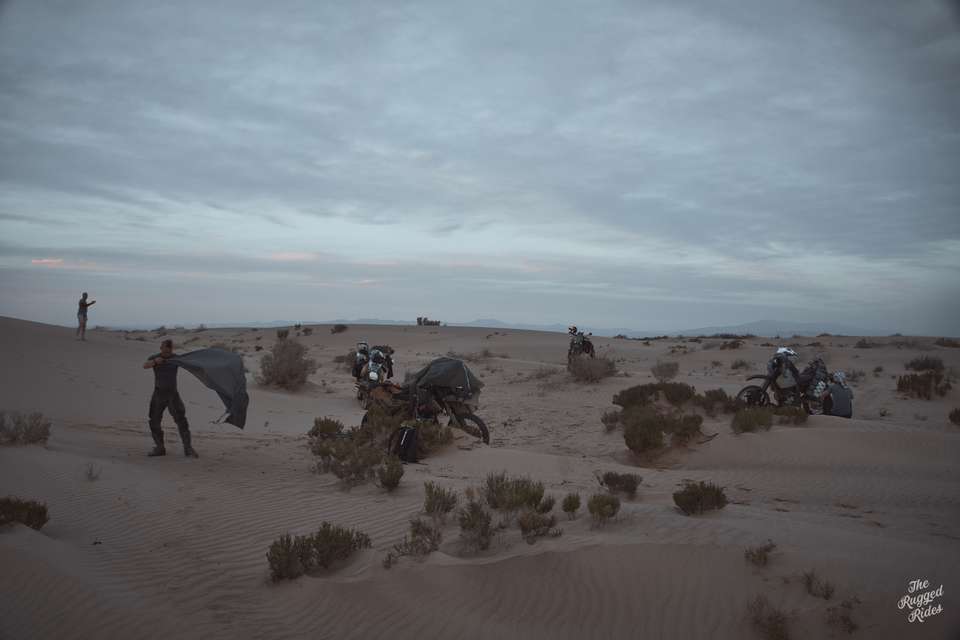
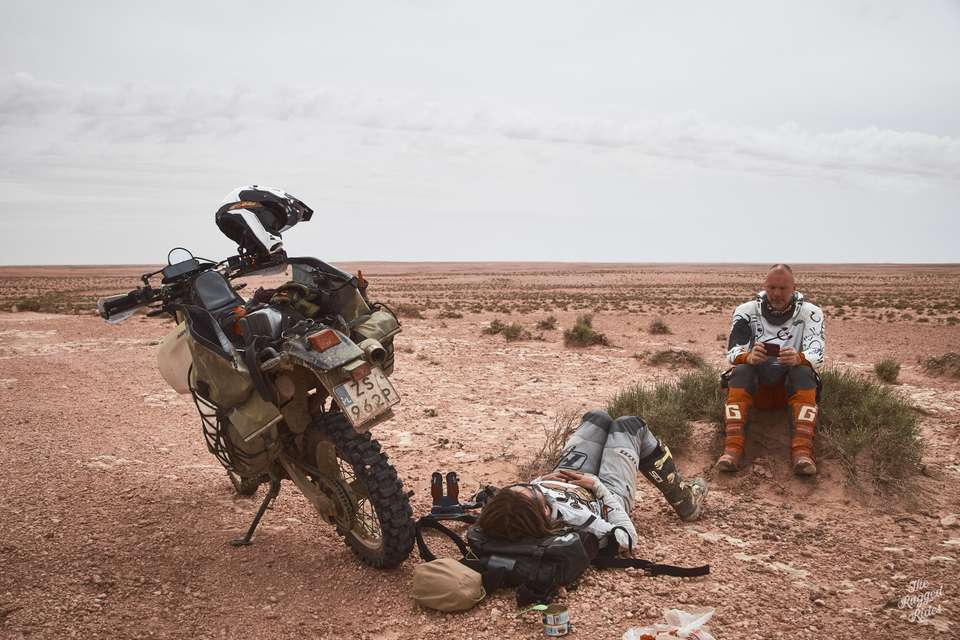
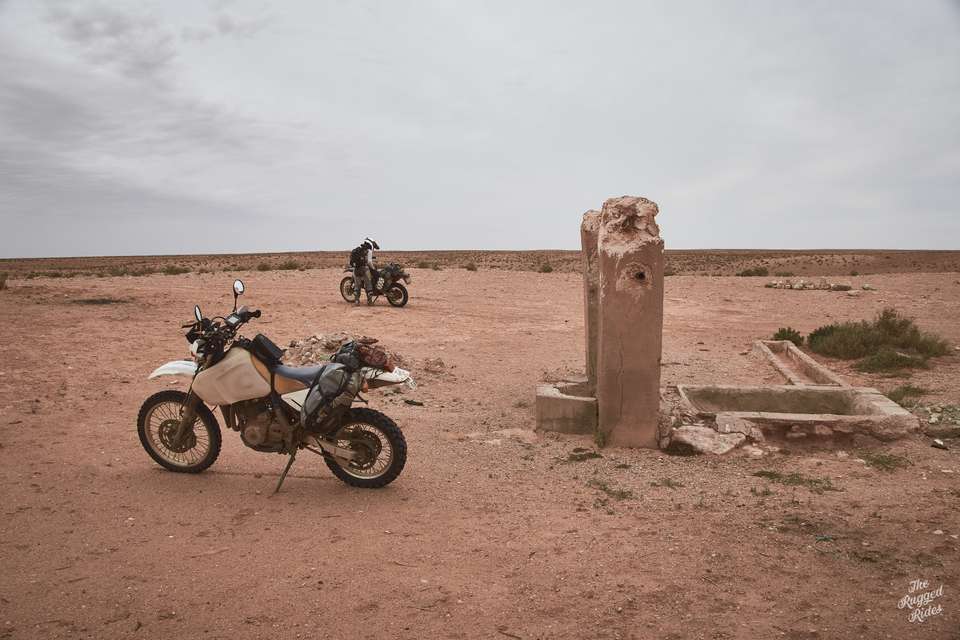
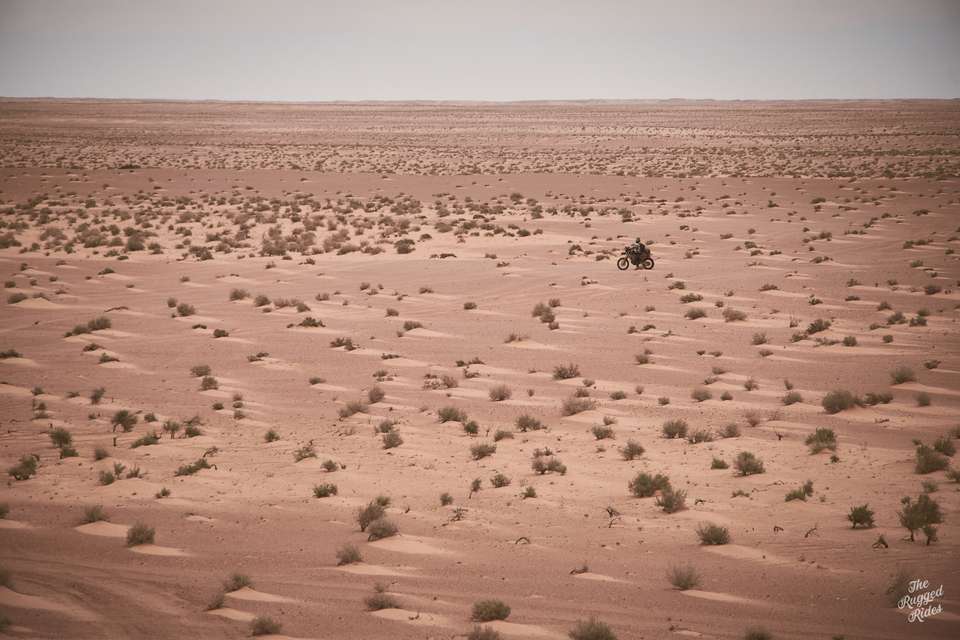
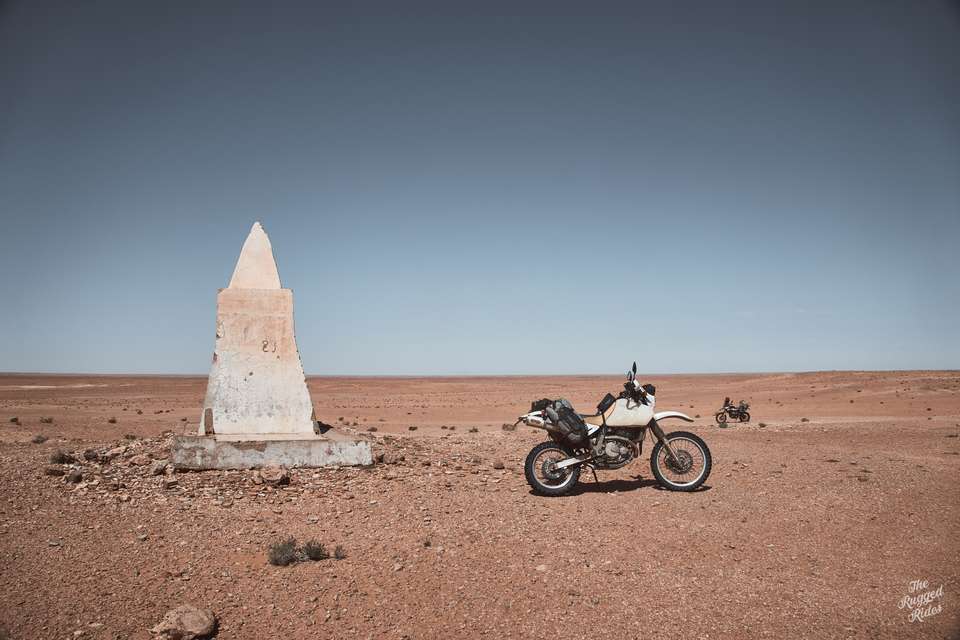
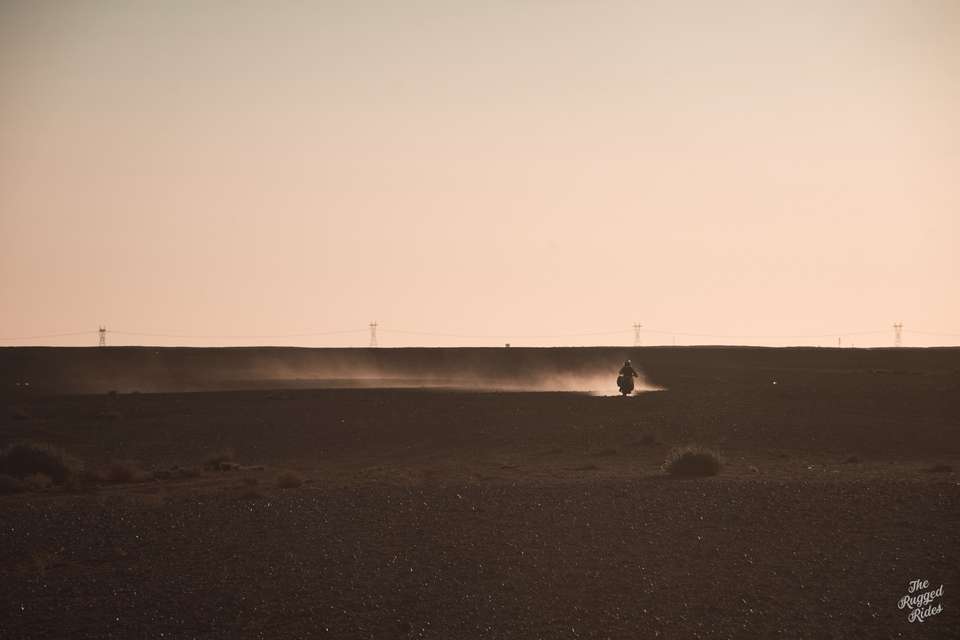
Next stop, Biskra. The last proper city before vanishing into the Sahara for real. Now we're ghosts. Moving quietly. Drawing no attention. Gliding through the landscape without turning heads. We enter the city from the hamada, grab supplies, fill the tanks and get moving again, fast. We're carrying a lot, aiming for a stretch that’s likely around 400 km. It works. We set a bivouac directly on the sand just as the sun slips below the horizon. Before bed we call Piotr. We rode our Dakar adventure together, but this time he couldn't join us. I know he'd have absolutely loved this campsite. After a quick discussion we decide to continue towards Ghardaia. We don't really expect to reach the deep south before being turned back somewhere, so this direction should let us experience more of the desert. Everything feels exactly as it should.
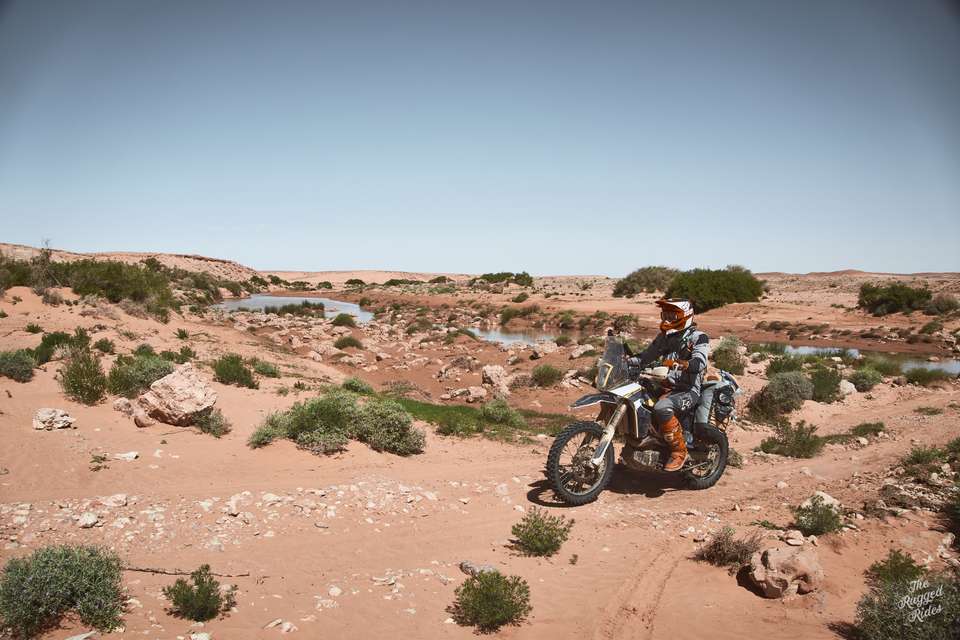
The following morning brings an unexpected surprise. Just beyond camp, a small river cuts straight across our way. When I was mapping the track, I'm certain it wasn't here, you could clearly see car marks crossing. Now we're staring at marshland and about fifteen metres of water that would make each of us stuck for sure, no questions. I poke around along the edge for a while, but eventually we decide to follow the river downstream until we find somewhere safer to cross without getting stuck.
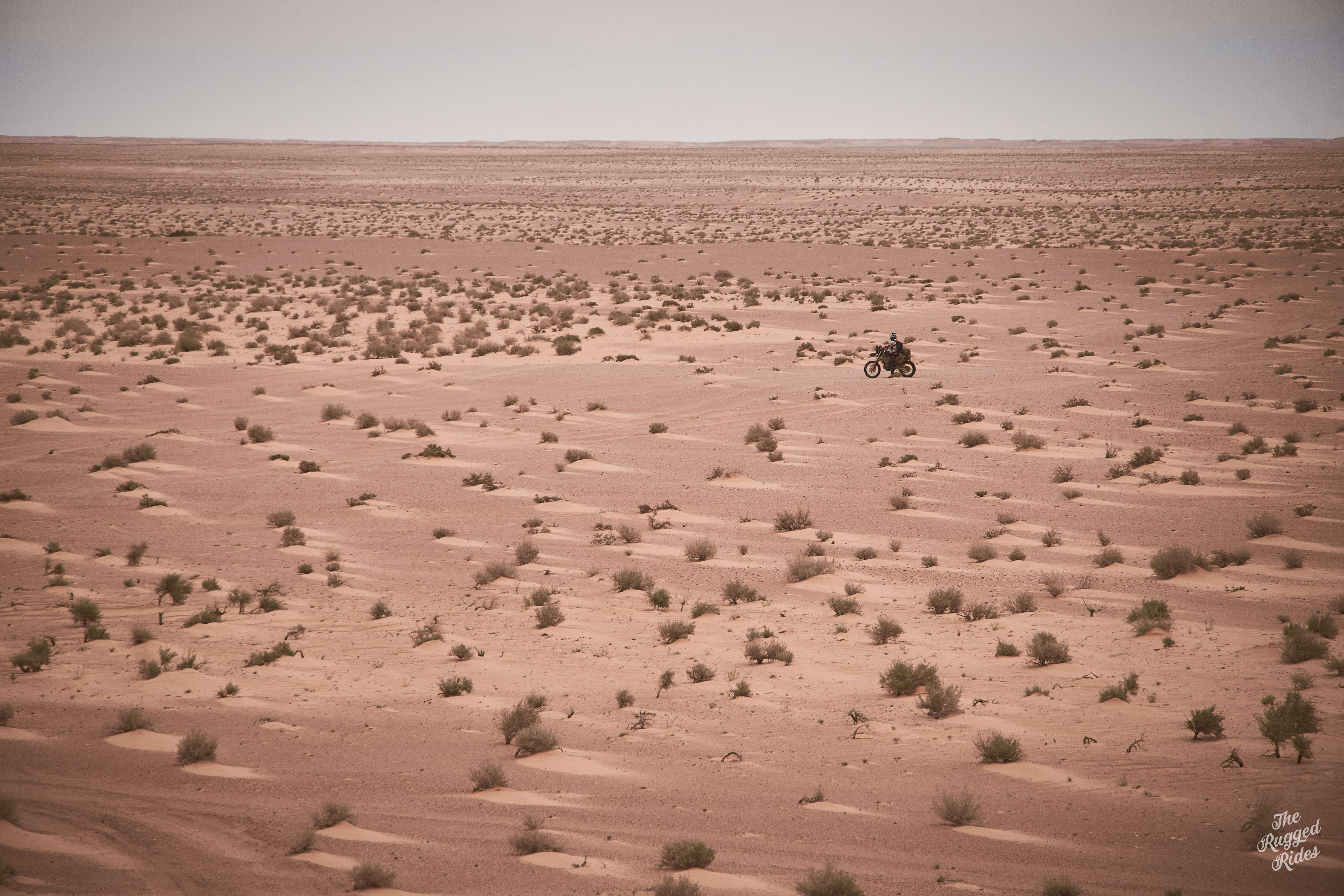
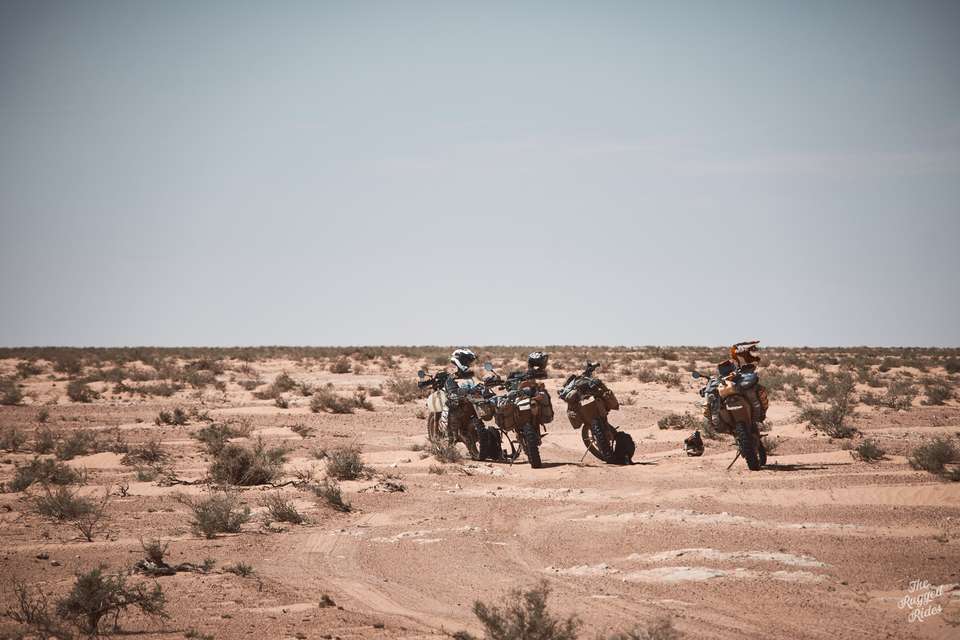
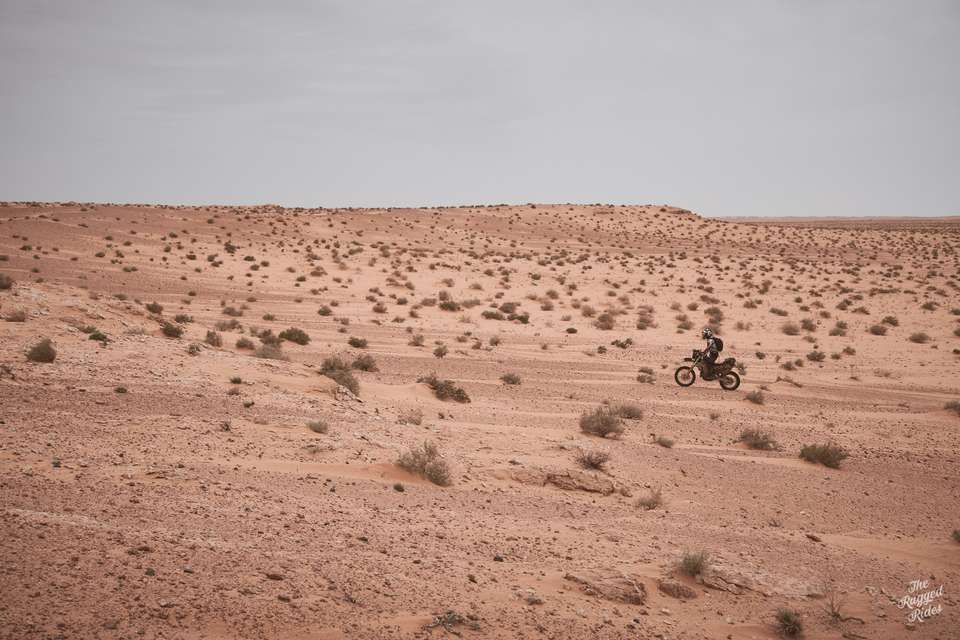
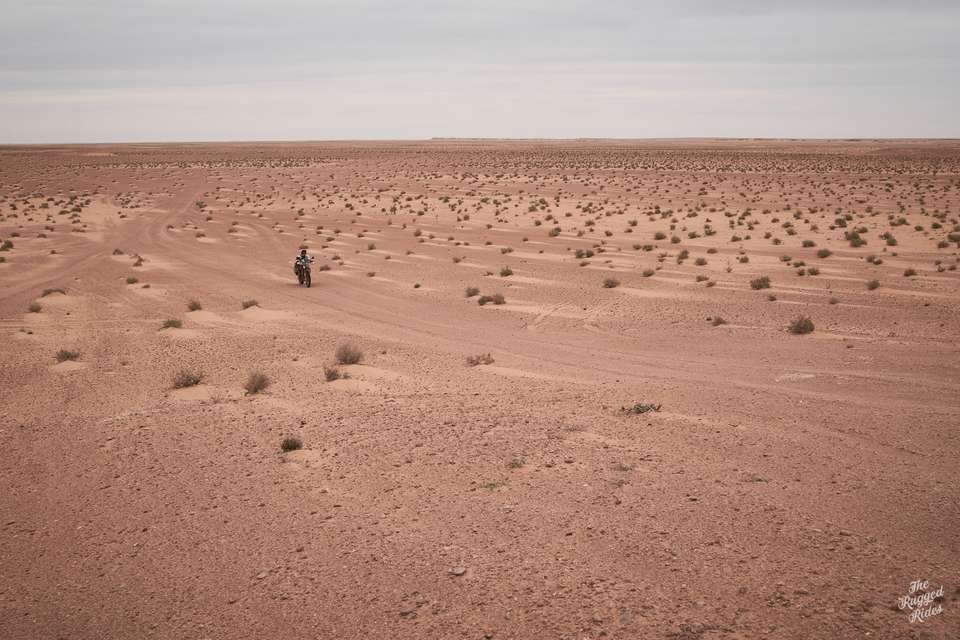
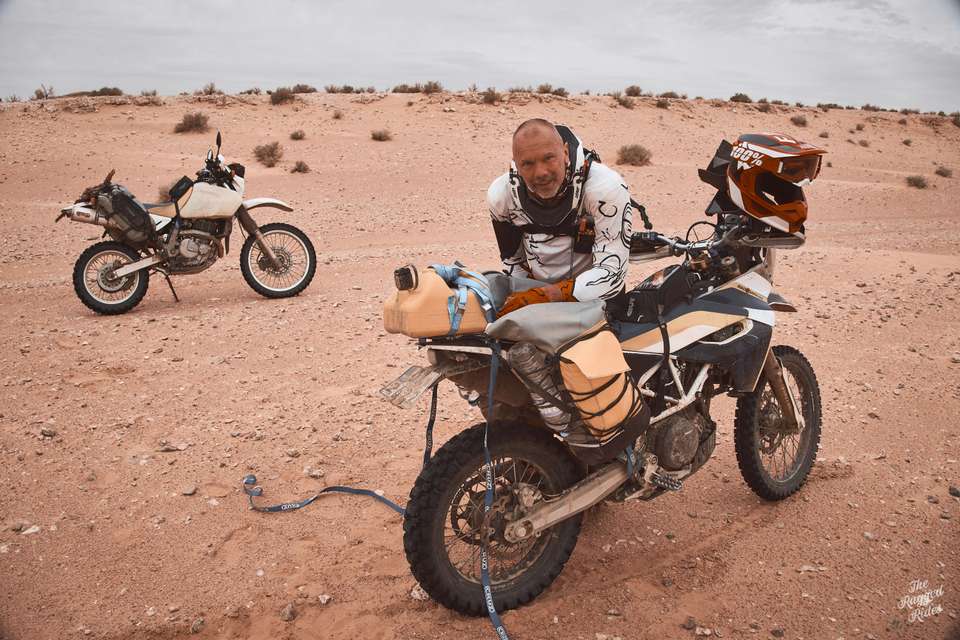
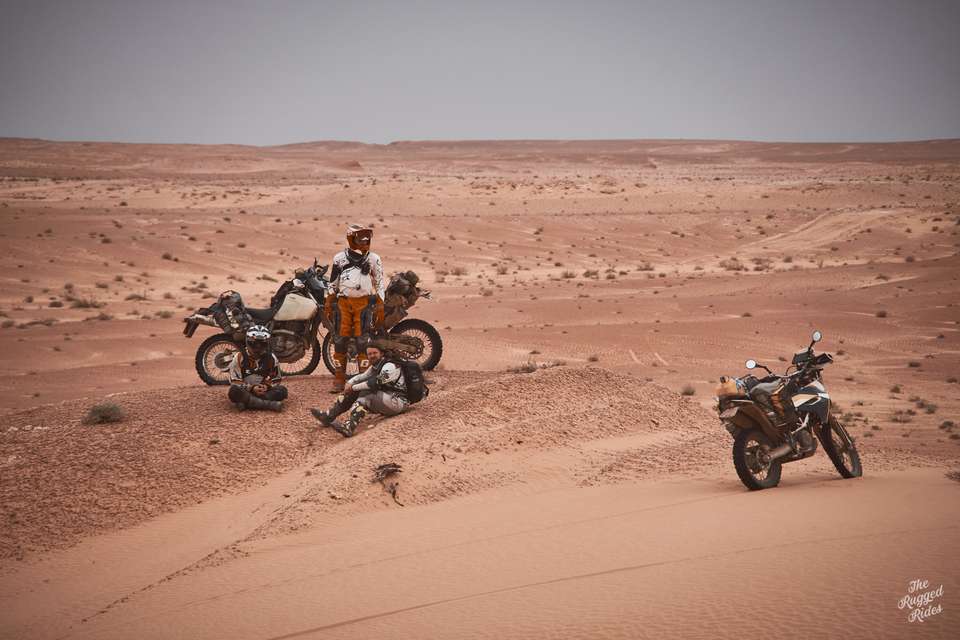
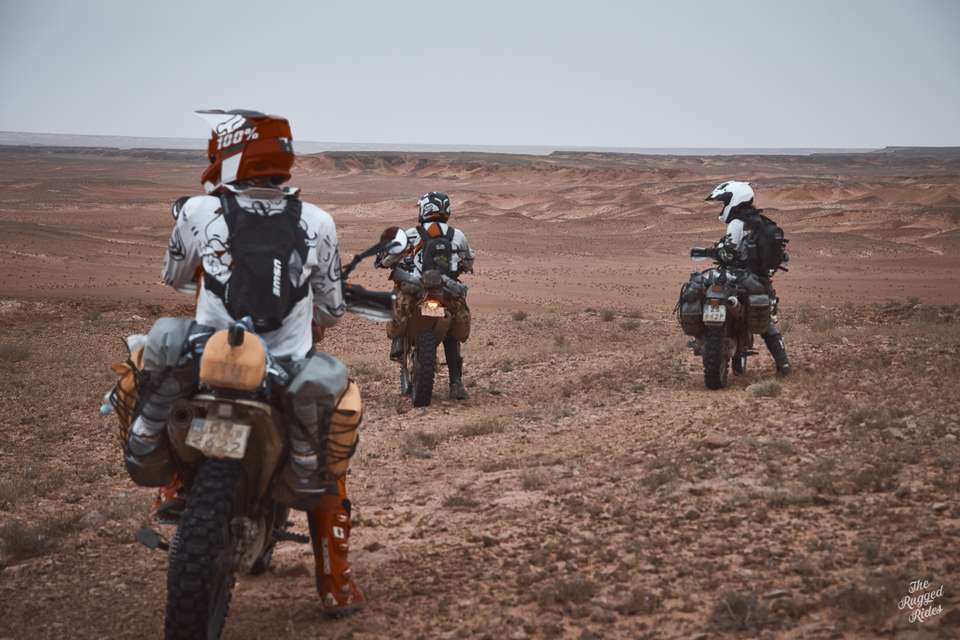
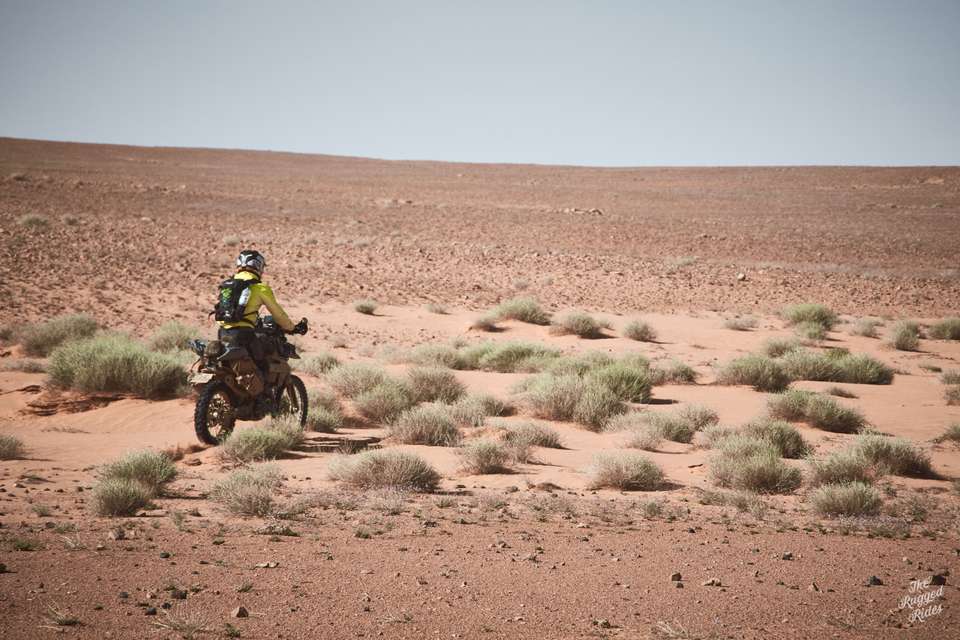
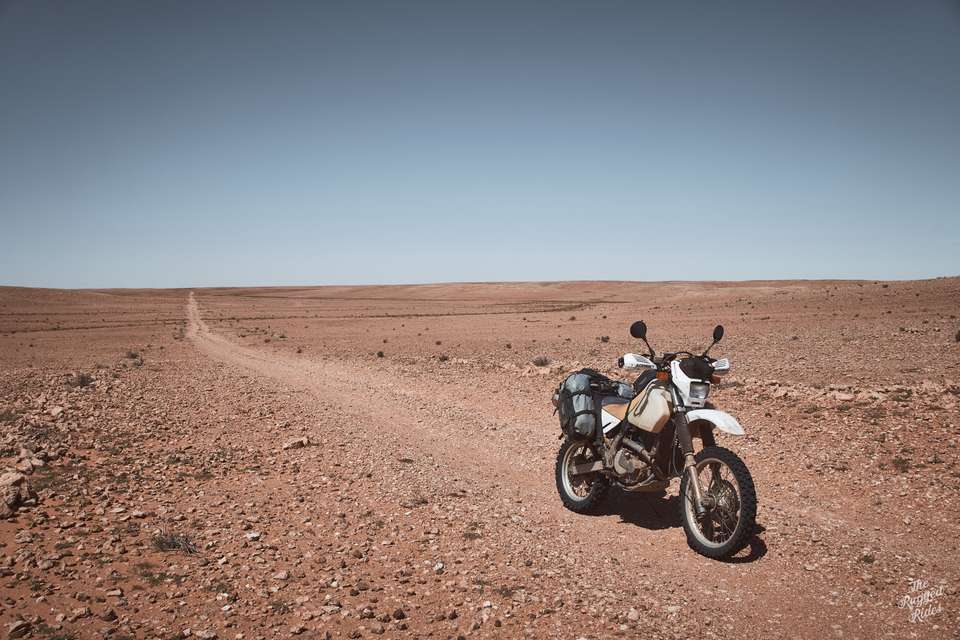
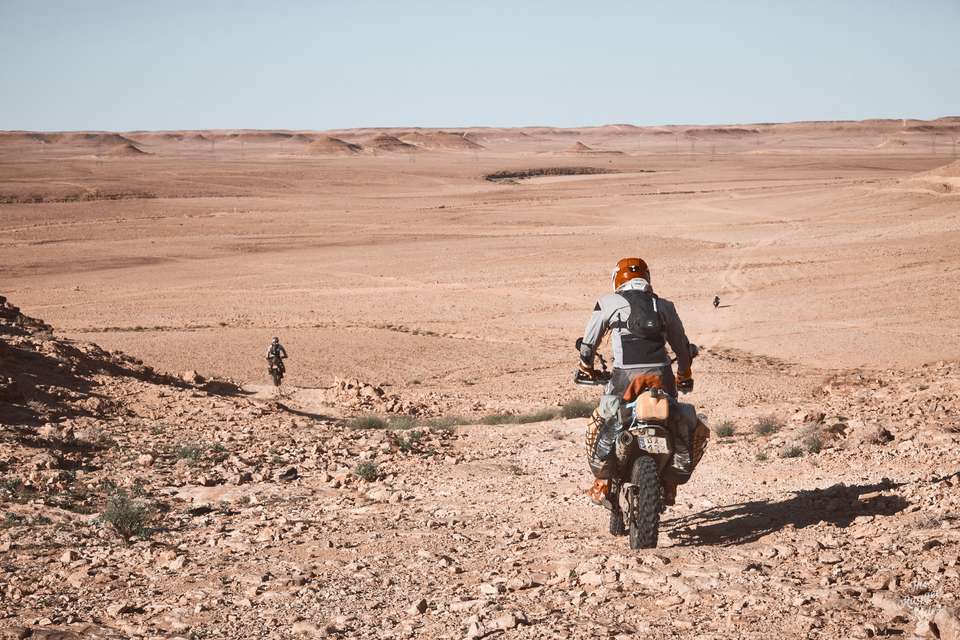
Now our track heads straight into completely untouched desert. I remember planning this area, zooming endlessly into satellite imagery, searching for the tiniest hint that someone had ridden here before. Of course we could simply ride cross-country, straight line, but following even the vaguest trail makes for a smoother, more engaging ride. So off we go. My first impression - it's unbelievably slippery. An untouched track, barely visible under our tyres, with a carpet of gravel sitting on top of soft sand. The rear wheel goes sideways through every single bend. Before long, the first wadi beds appear. Man, it feels good to be crossing the Sahara again! Suddenly, a radio crackle snaps me out of the zone—someone’s down at the back, looks like Tomek. Riding back, I see bad luck strikes when you least expect it. On top of Tomek being a bit battered, Konrad's fuel bladder has unsealed. It's pouring out. Our total fuel reserve for the toughest desert sections ahead just shrank by 5 gallons. Seriously?! Giant Loop had never let us down before. What to do, we push on, we'll figure it out later. We have to.
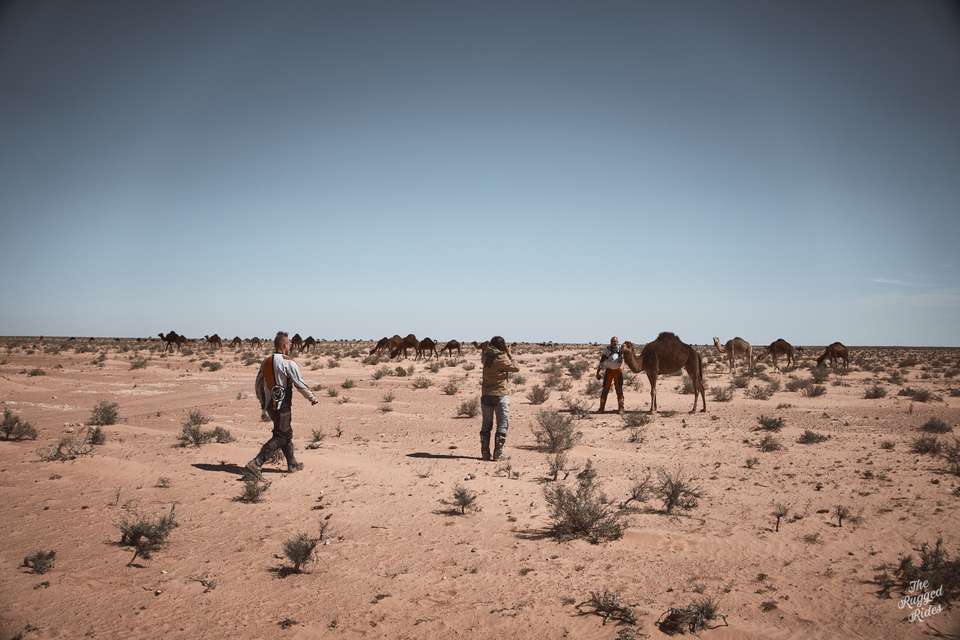
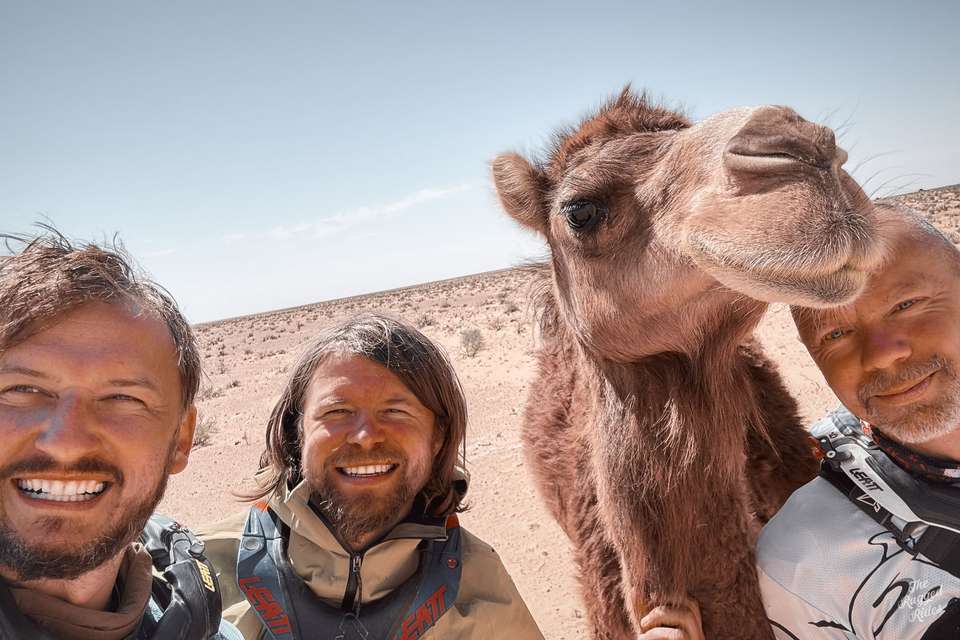
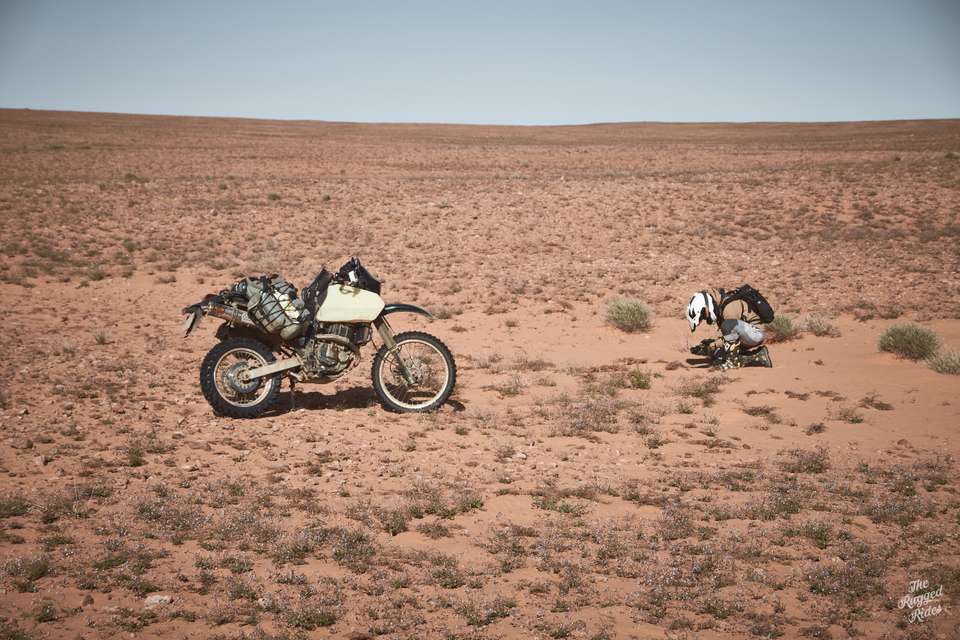
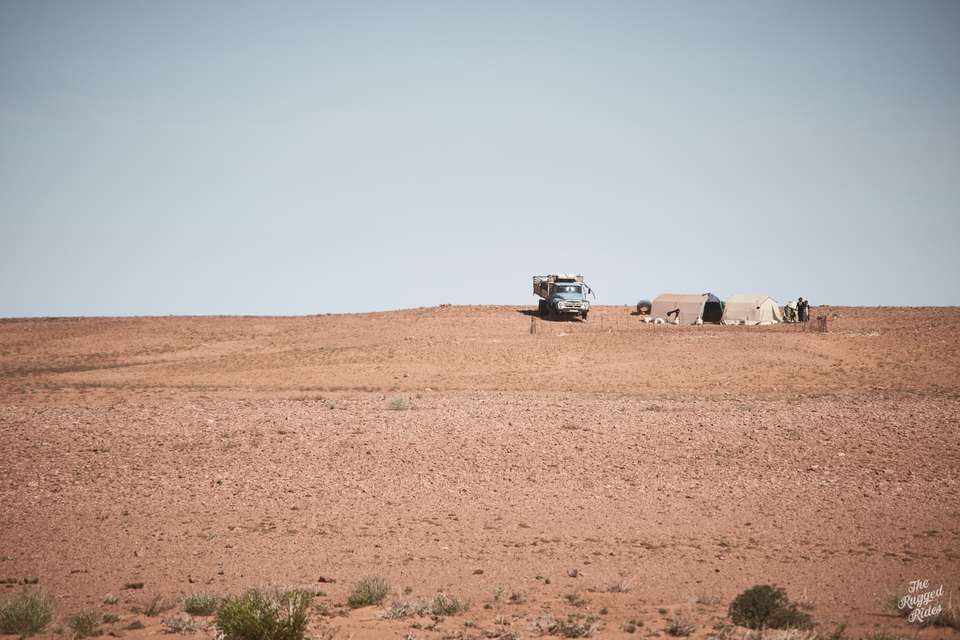
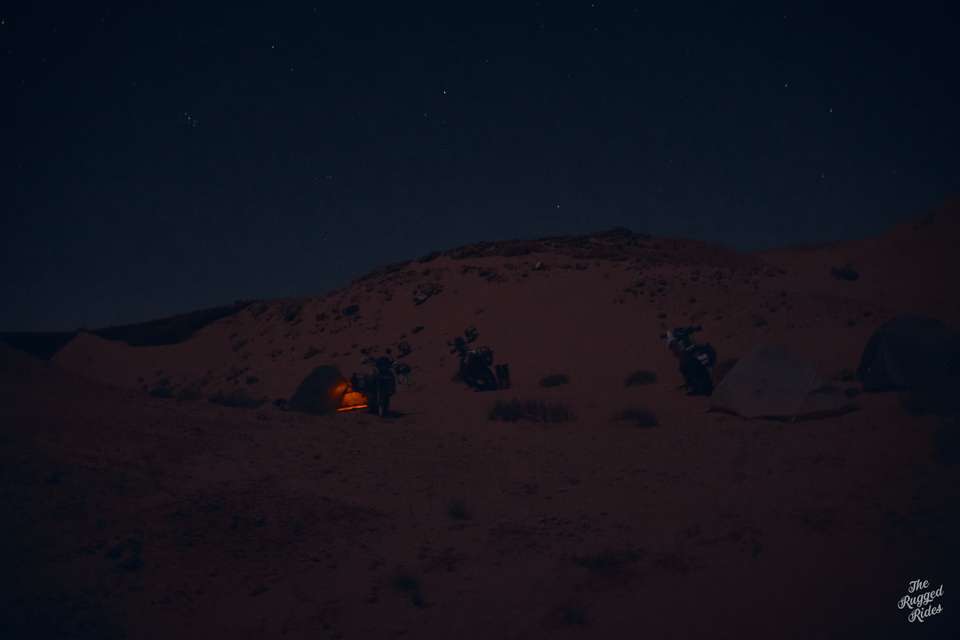
This Sahara feels emptier than Morocco's. Emptier than Tunisia's. And we're only just getting started. What will it be like further south? We pass camel herds that barely bother moving out of our way. Occasionally we find wells. Sometimes the track disappears entirely. Only once do we come across a camp of nomads. That night we camp in the absolute middle of nowhere, tucked beneath a cliff on soft sand. The following day we finally reach Ghardaia.
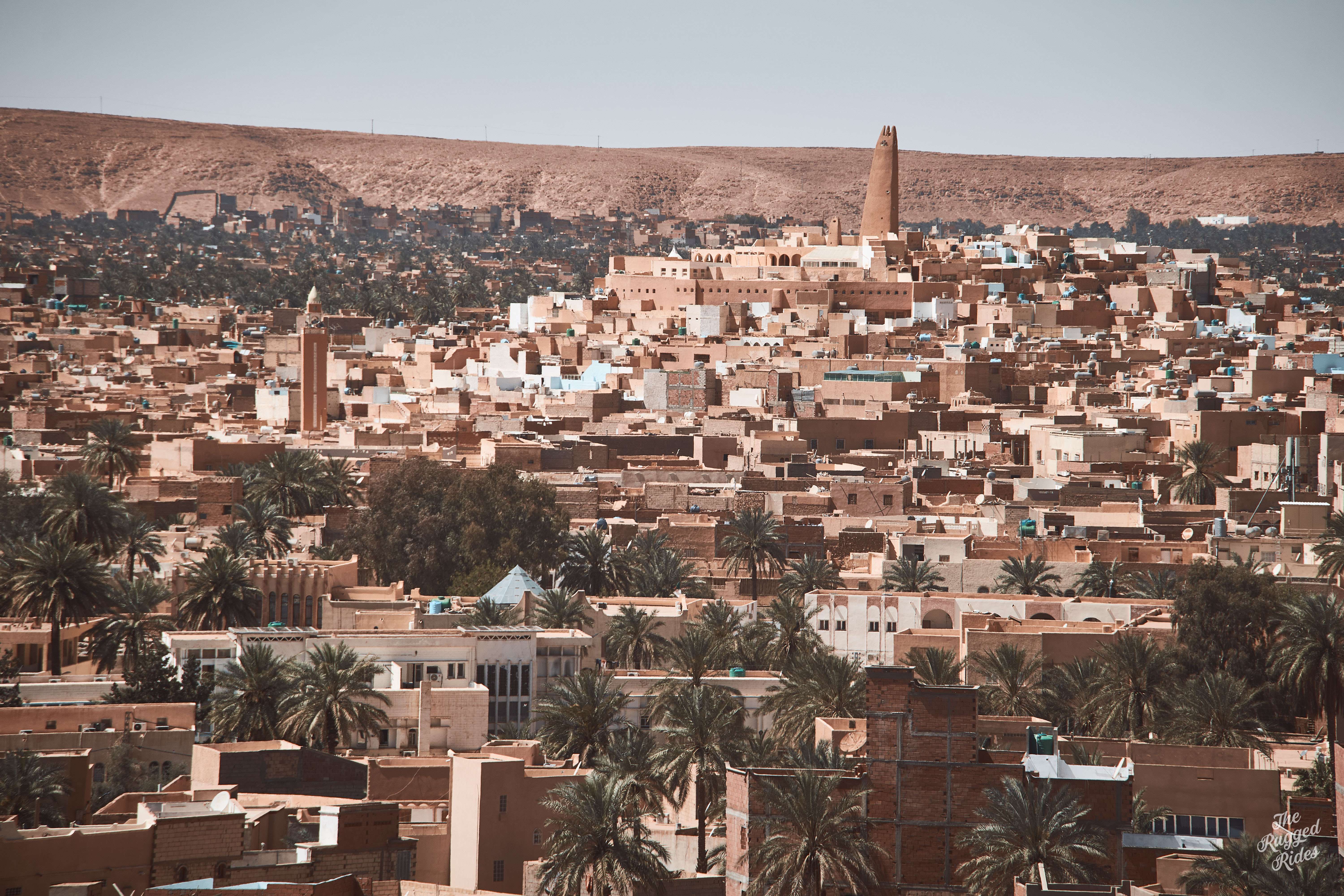
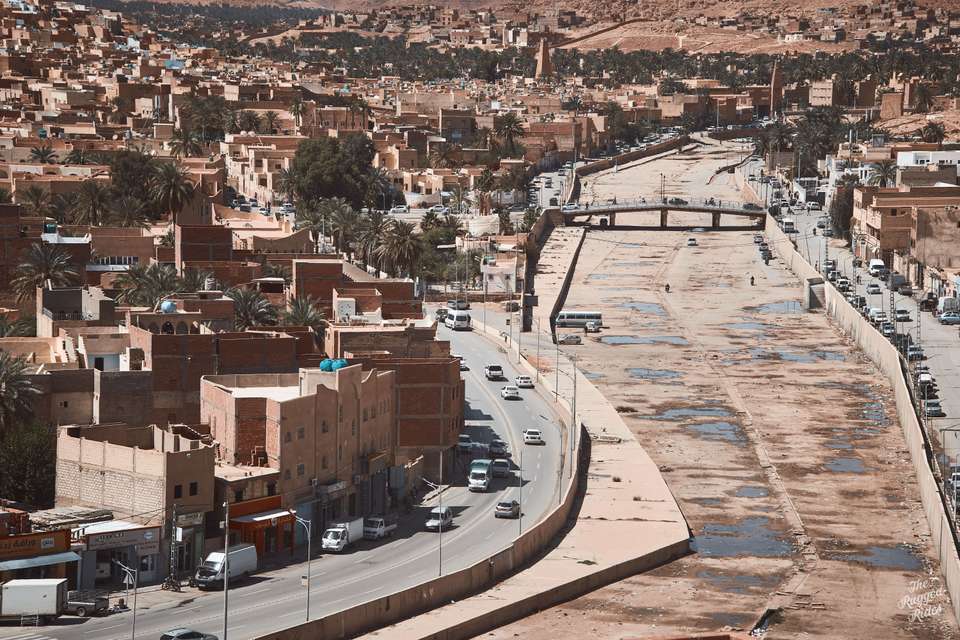
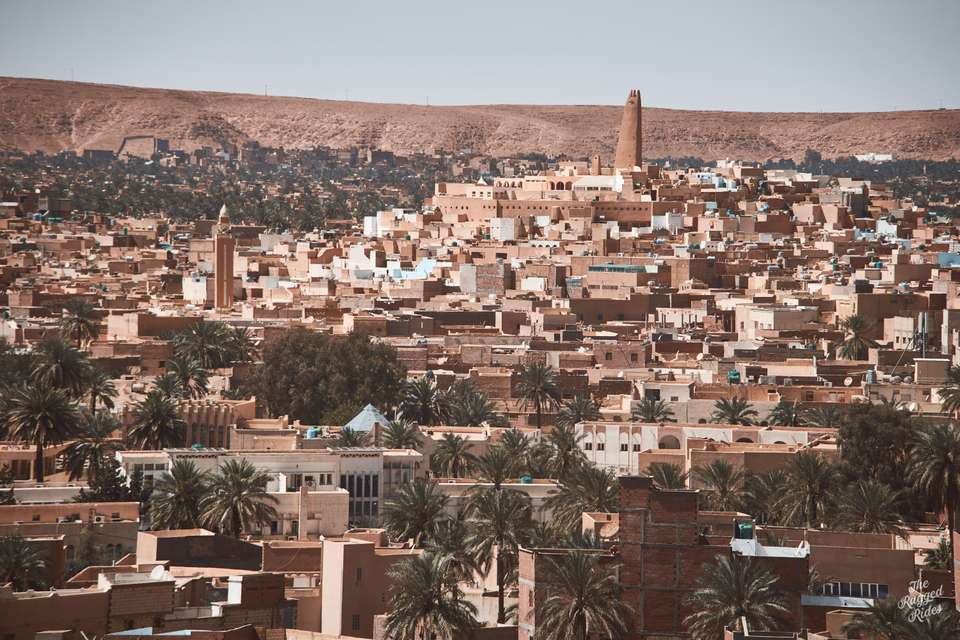
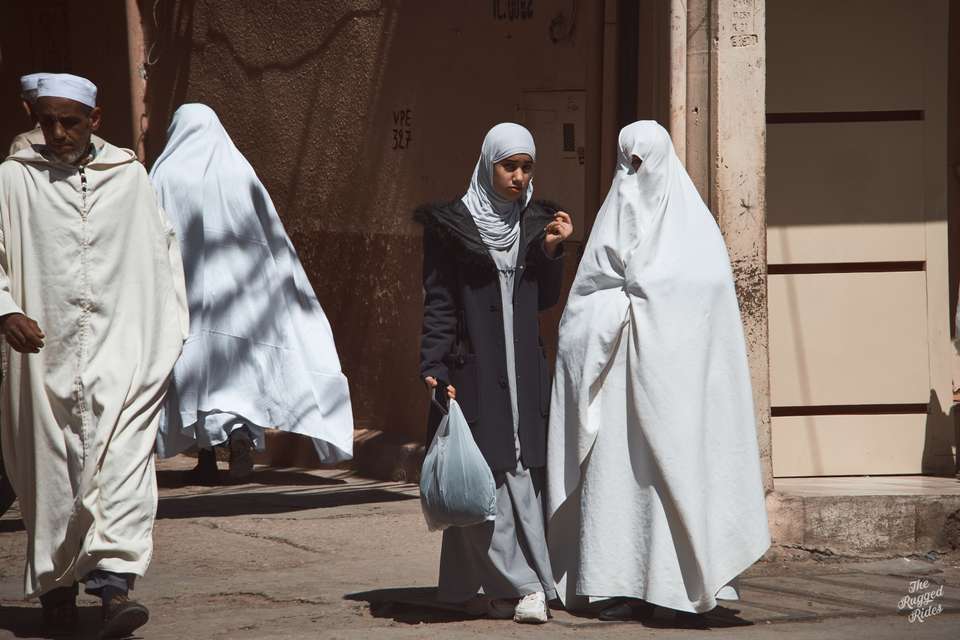
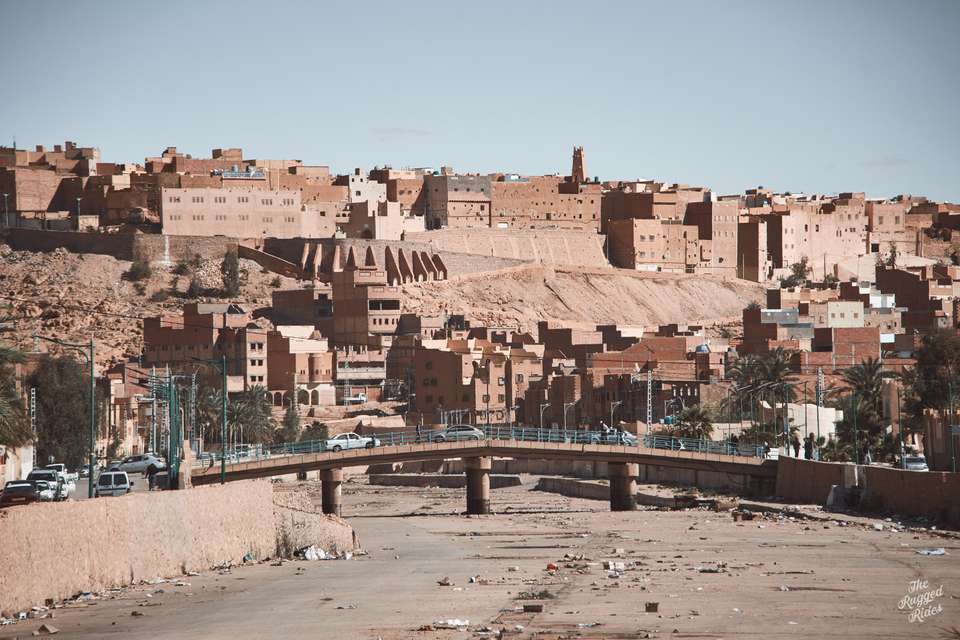
Before me stretches a sea of thousands of box-shaped houses, all the same dusty hamada colour. They fill the valley completely. Only one thing breaks the pattern, a vast concrete river channel cutting brutally through the middle of the city. We're standing there taking it all in when I notice two women. They're dressed in long white robes. Each reveals only one eye. The other remains hidden beneath the fabric. They're Mozabites, the local inhabitants, Amazigh (Berbers) who follow Ibadism, one of the oldest and most conservative branches of Islam. But why here? Hidden so deep within the Sahara, 600km south of Algiers?
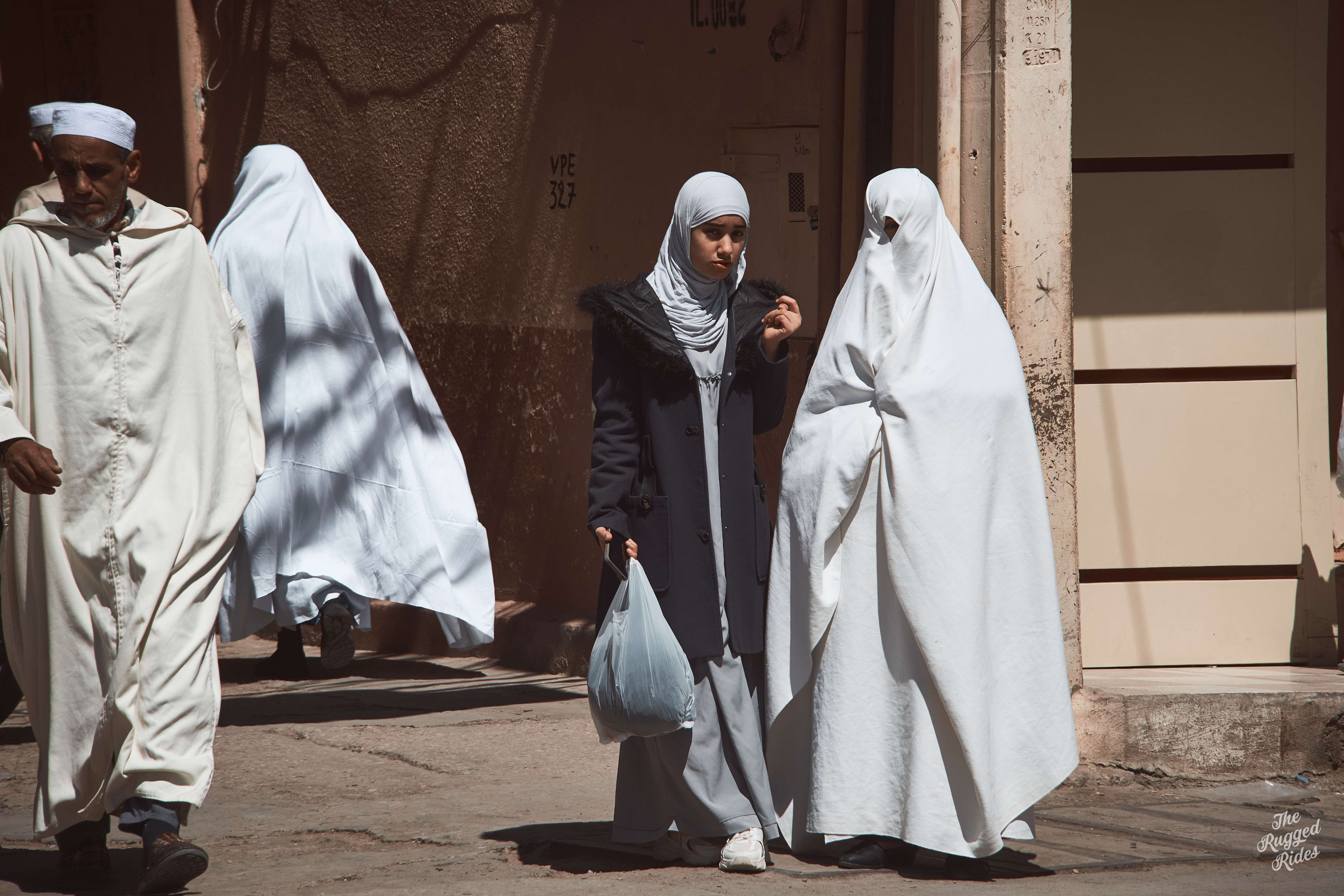
The Mozabites created a schism within Islam, claiming they were the only true followers of the traditional rules, the Sunnah, described in the accounts of Muhammad's life. They saw themselves as a chosen people, much like the Jews, and held a deep aversion to war and militarism. They wanted to strip the Quran of later influences, establish elected governance based on morality, and ground their entire society in religion as a legal and ethical framework. Unsurprisingly, with that mindset, the Mozabites had to flee. They founded a new kingdom 150 km from the coast in Tahert. Still too close, not before long, they were on the run again. Their exodus was long and gruelling, finding hope in the Quran, which, like the Bible, tells of the Jewish escape from Egypt. Finally, they reached the sprawling M'Zab Valley, where they built five fortified towns called ksars, all nestled at the bottom of interconnected ravines. The new land wasn't kind, they needed incredibly deep wells, white walls to guard against the blistering heat and invaders, and terraces for sleeping under the night sky.
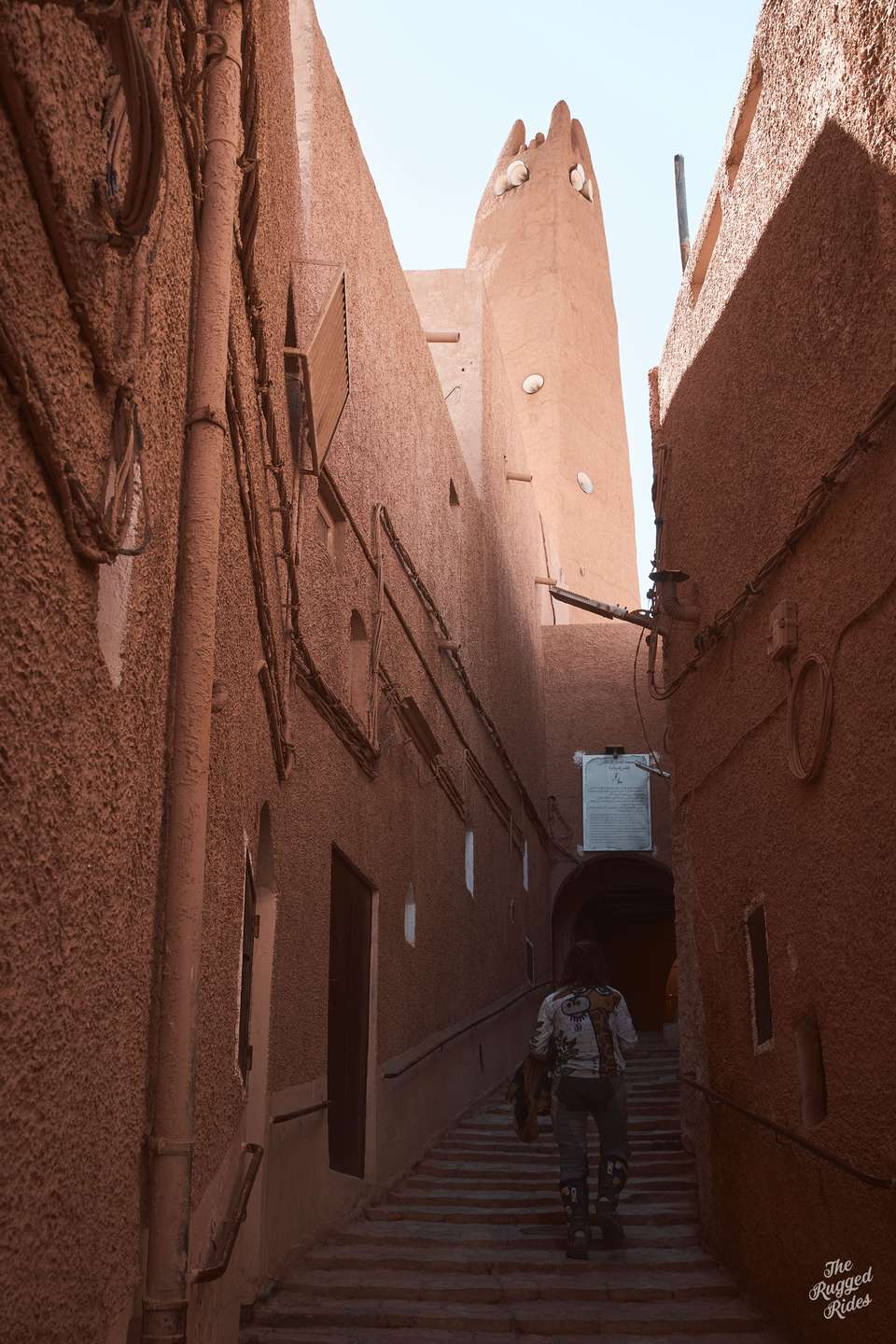
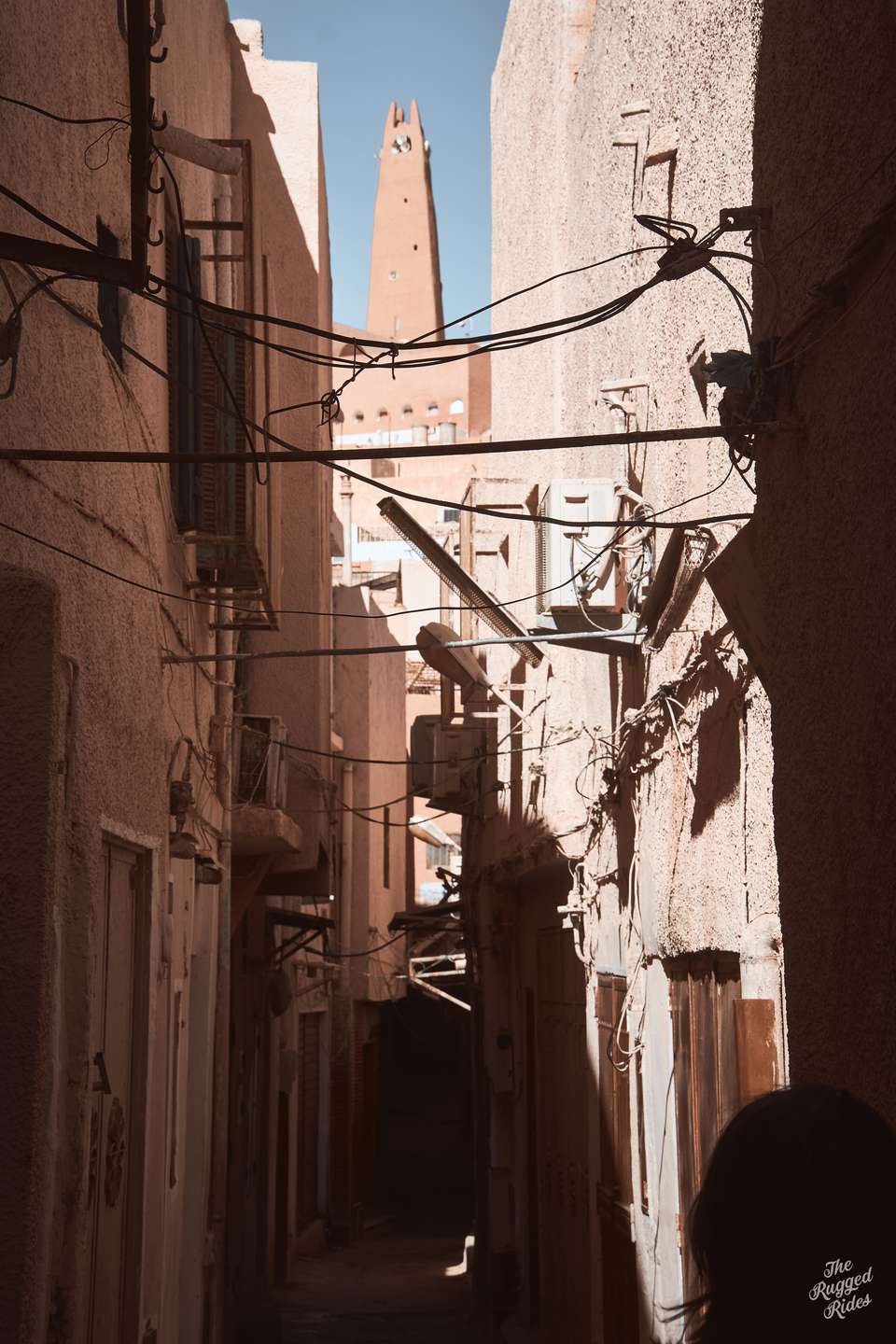
Each settlement was designed around a mosque standing proudly on a hill. The minaret doubled as a watchtower. For centuries strict building regulations ensured nobody could build higher than their neighbours. An advanced water distribution system operated here long before much of Europe had proper water infrastructure. A fascinating detail, in the 20th century, modernist architects went wild for this layout. M'Zab was frequently cited as the ultimate example of cities perfectly adapted to both climate and community life. Le Corbusier himself strolled these very streets of Ghardaia, admiring what he found.
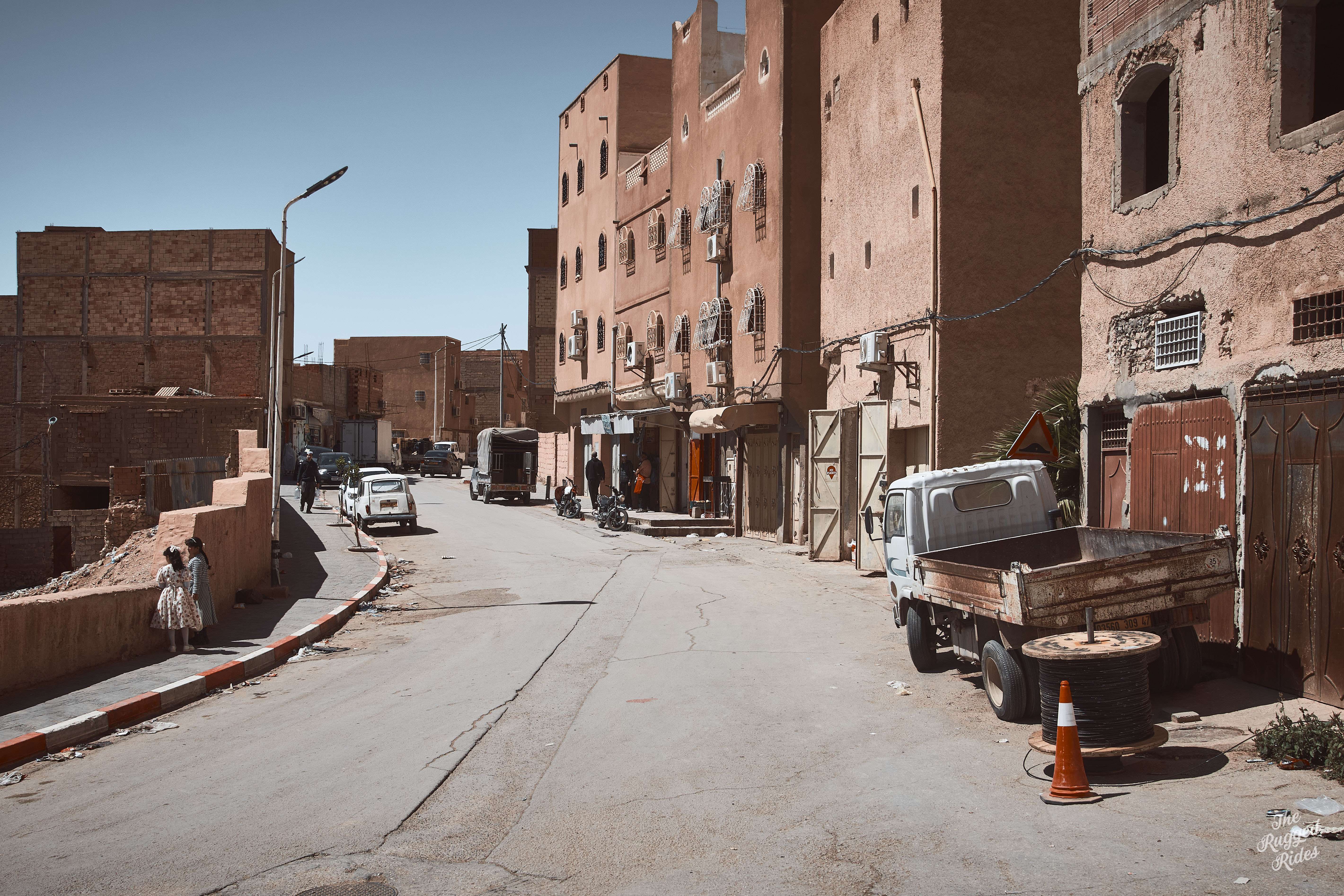
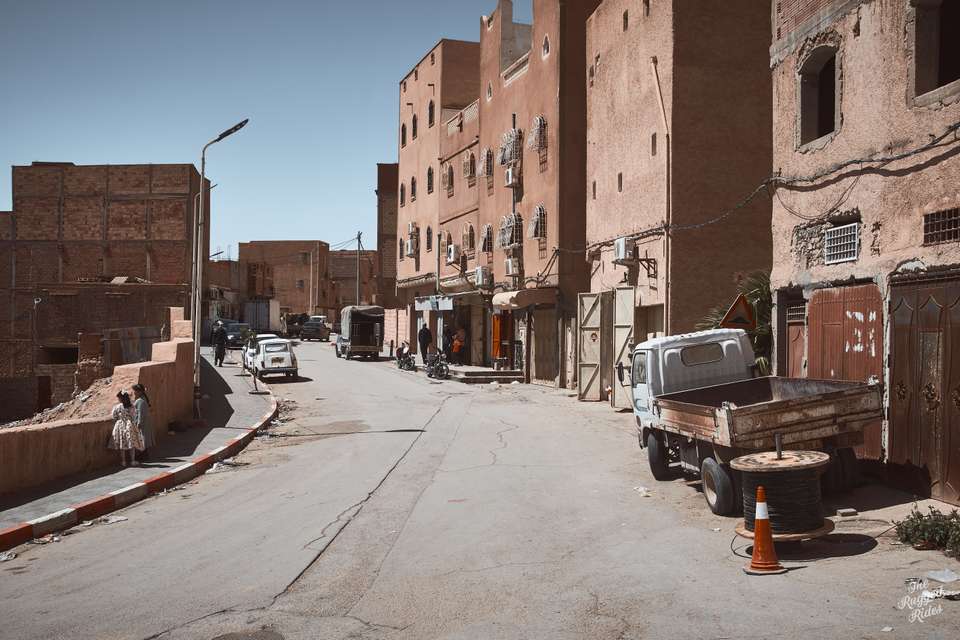
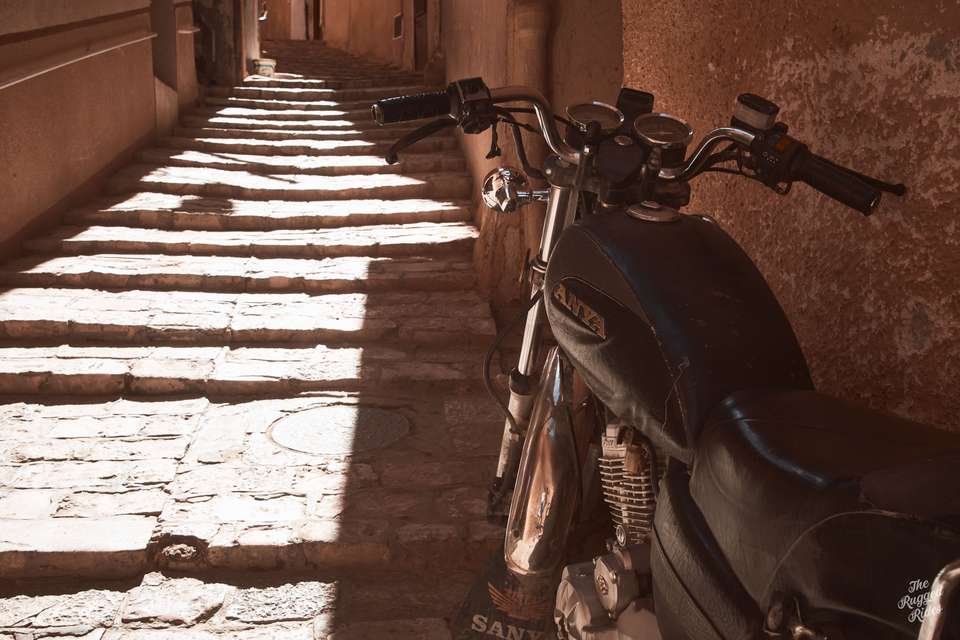
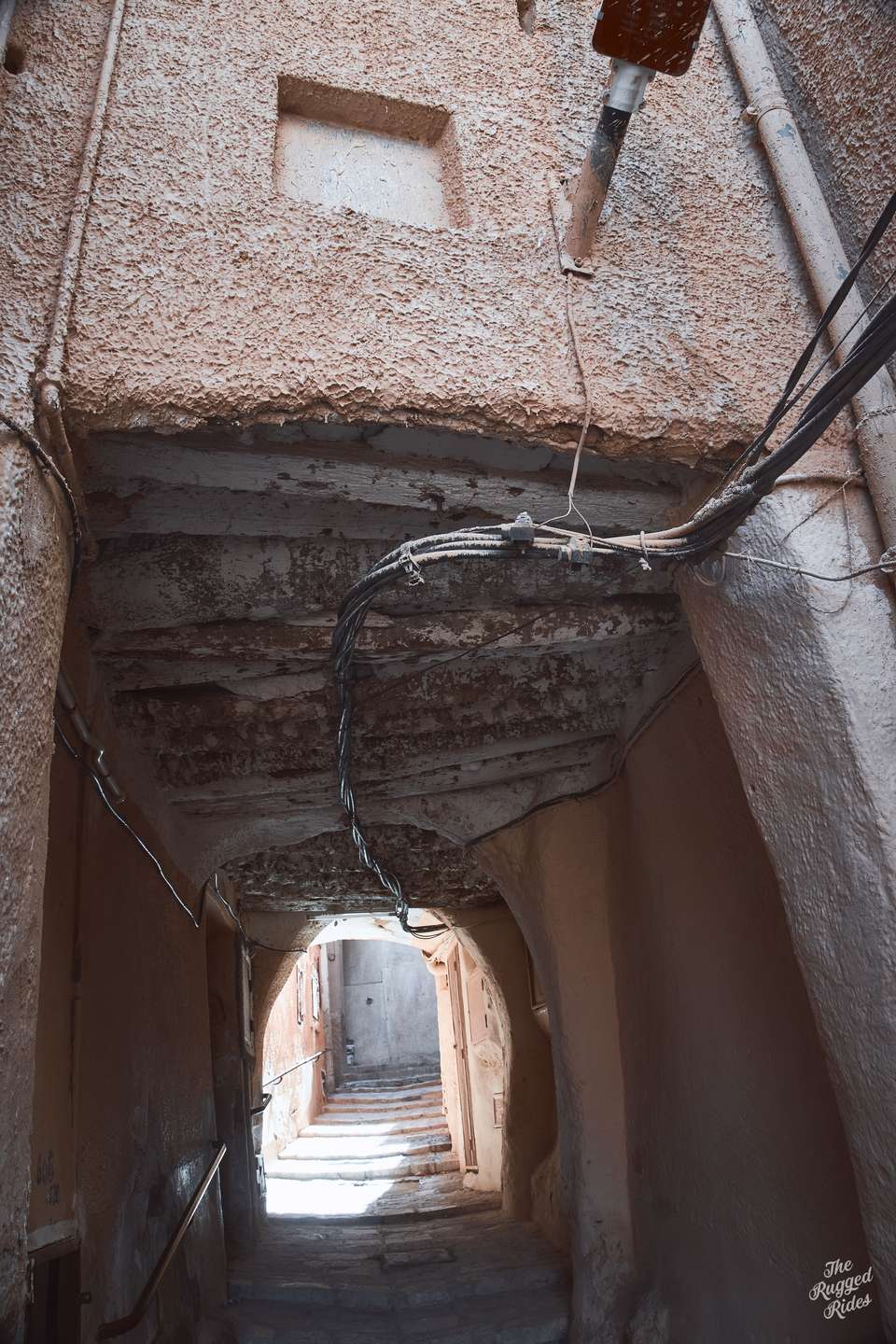
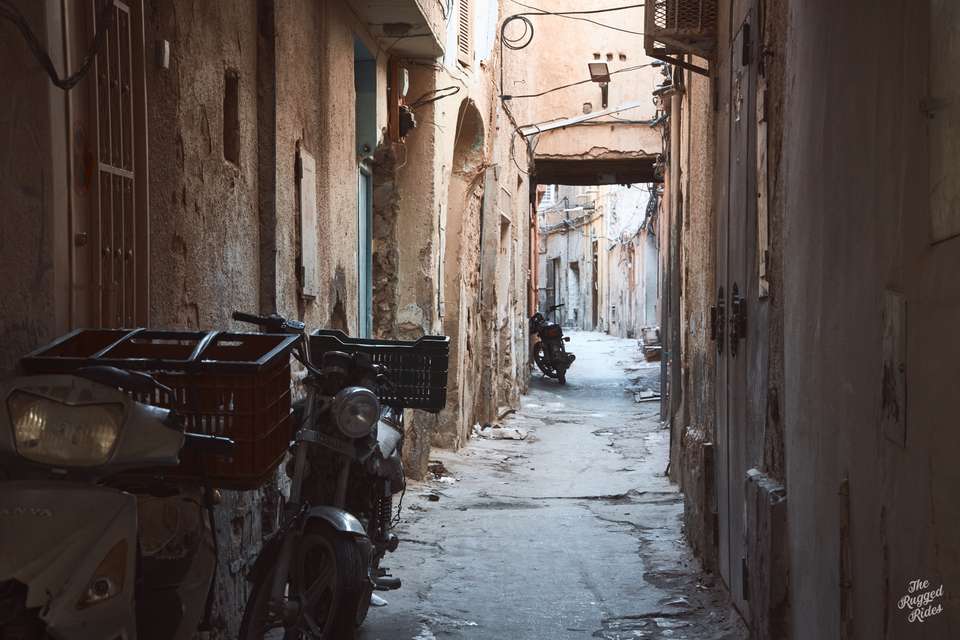
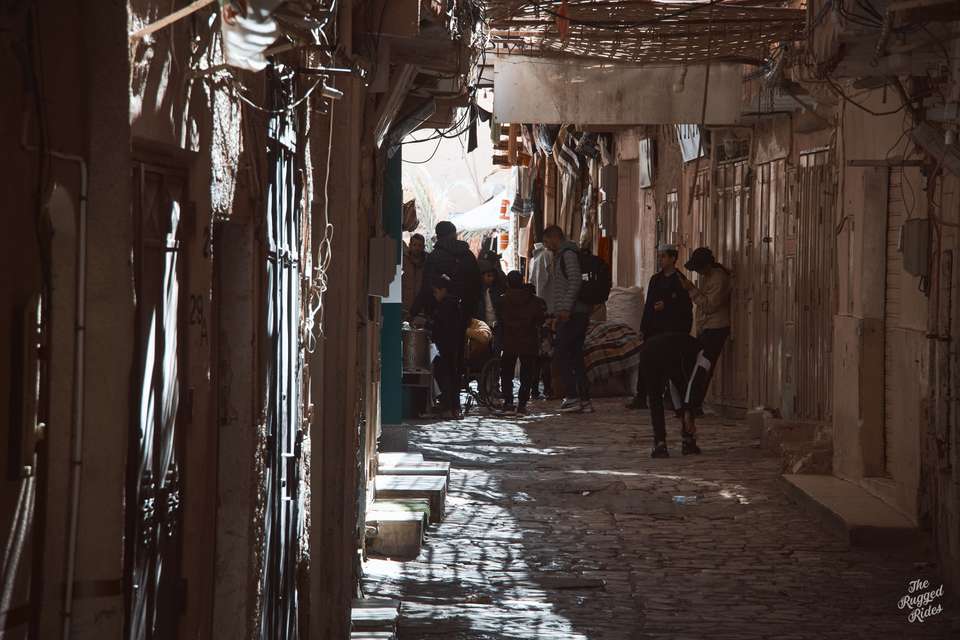
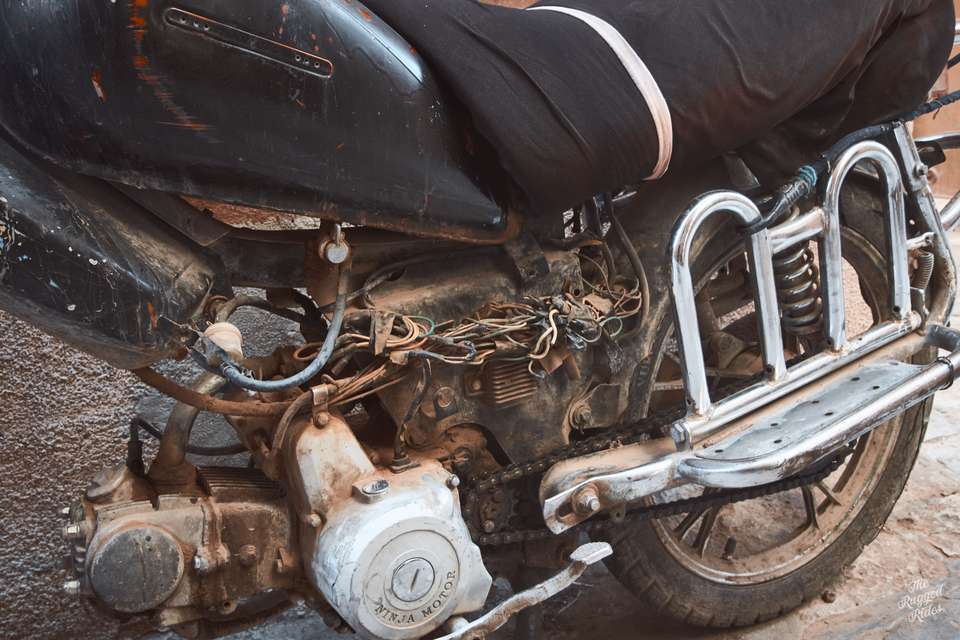
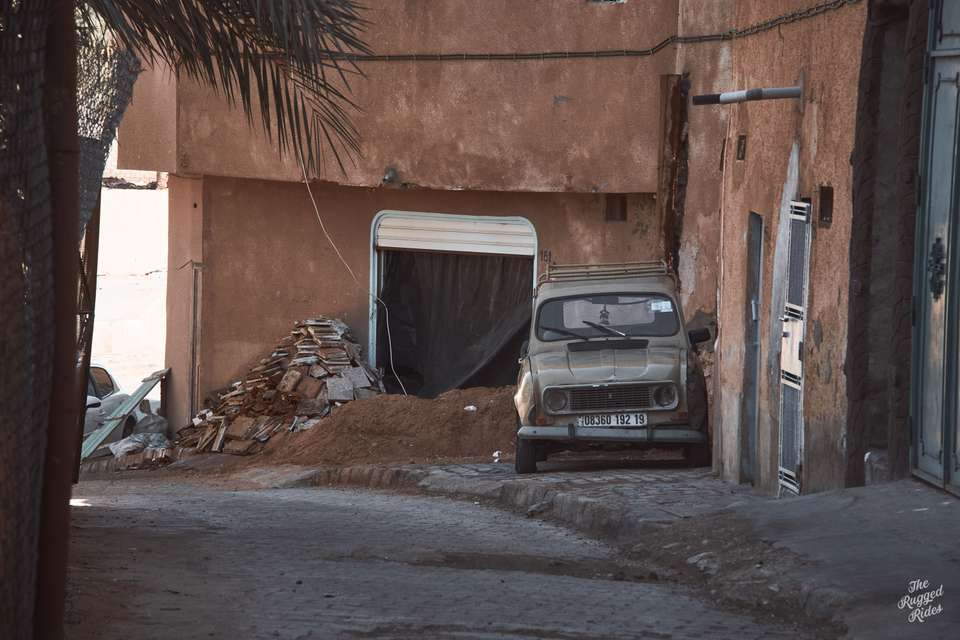
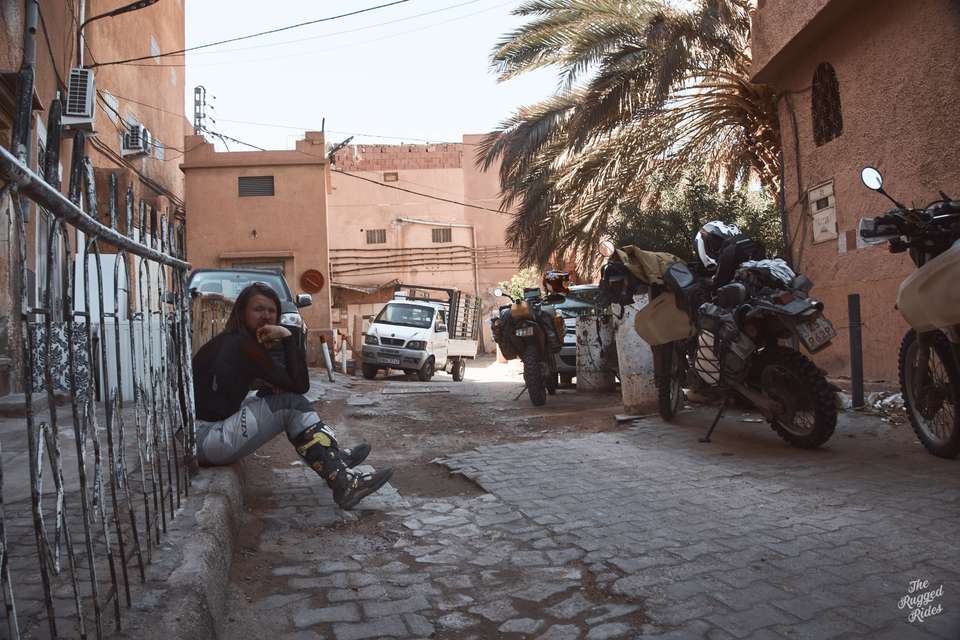
So there we stand, quietly taking it all in. One of the very few places on Earth where a medieval vision of the ideal city never became a ruin and is still alive. We disappear into tiny alleyways, walls propped up by little Chinese motorbikes, half-open doors revealing dark, twisting interiors. We're searching for the mosque's minaret. A few turns later, bang! It suddenly rises right in front. Turns out the labyrinth isn't nearly as big as I'd imagined.
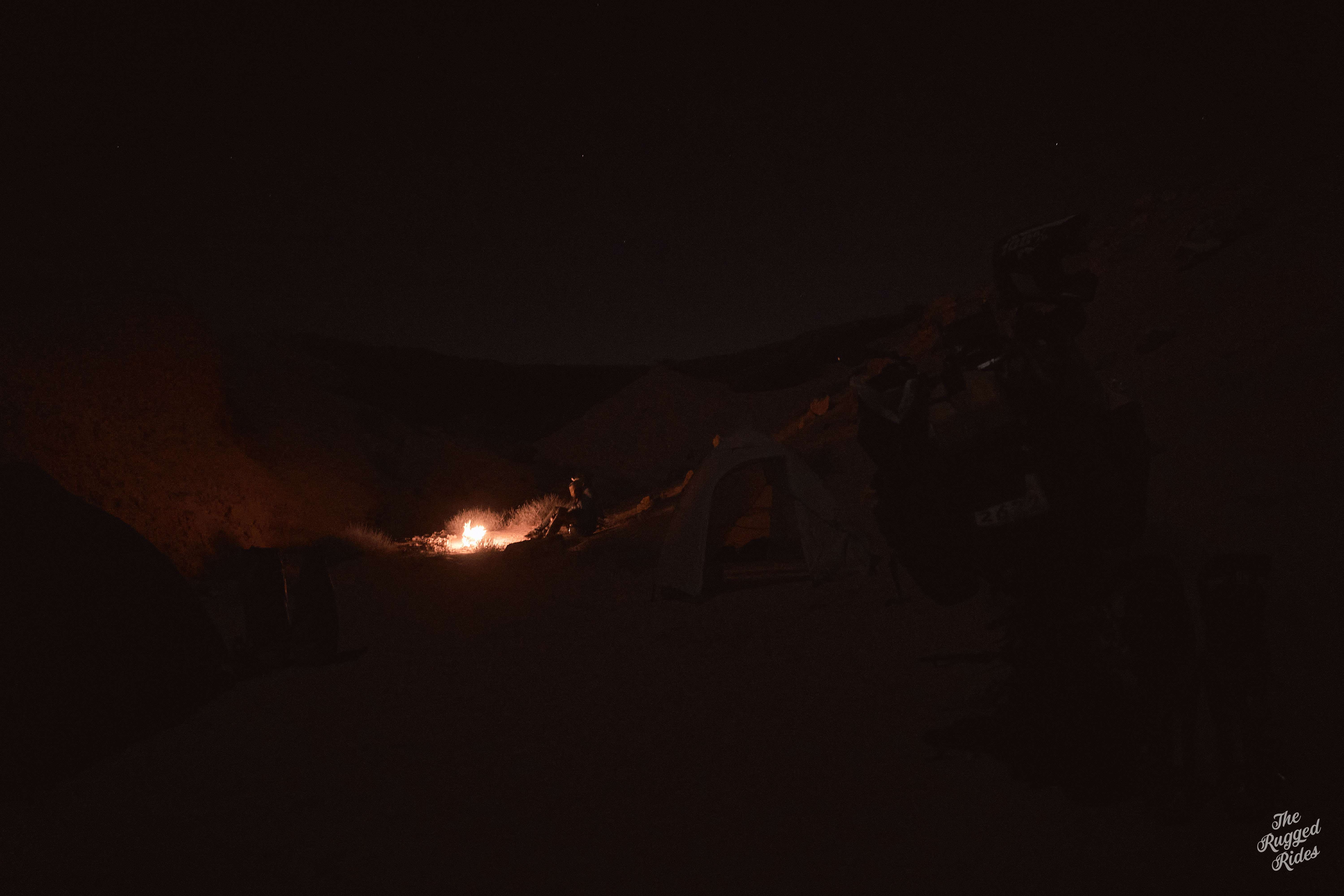
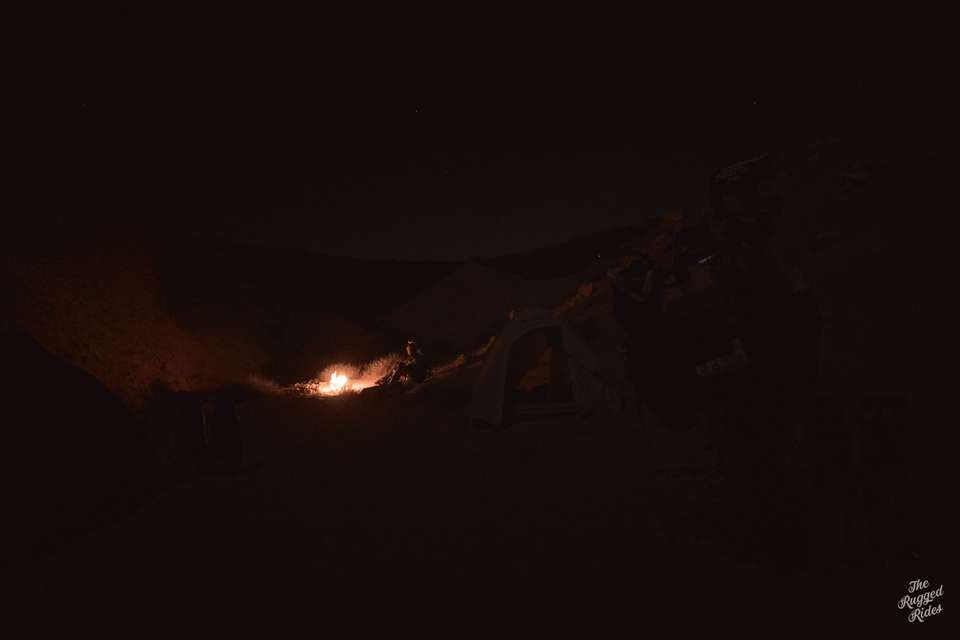
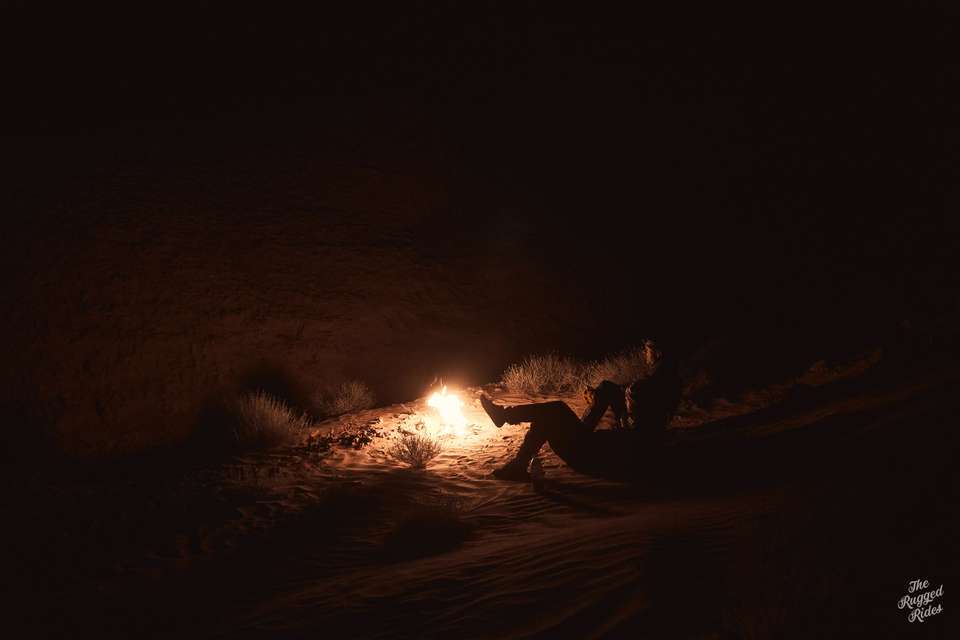
Evening is approaching, so we head back towards the desert. We're still taking much care to keep a low profile. On the way to our planned bivouac the radio crackles once again. Konrad has lost the spare engine oil and made a proper mess back there. With the sun dipping low, Kuba and I figure out a rough spot to regroup with Tomek and Konrad, then head up front to scout a camp right on the river cliff. The M'Zab riverbed is immense, and the campsite is pure special, a tiny rocky corridor filled with golden sand. That night, the campfire burns late into the night.
Track: https://loc.wiki/t/271342611?wa=sc
Leave a comment